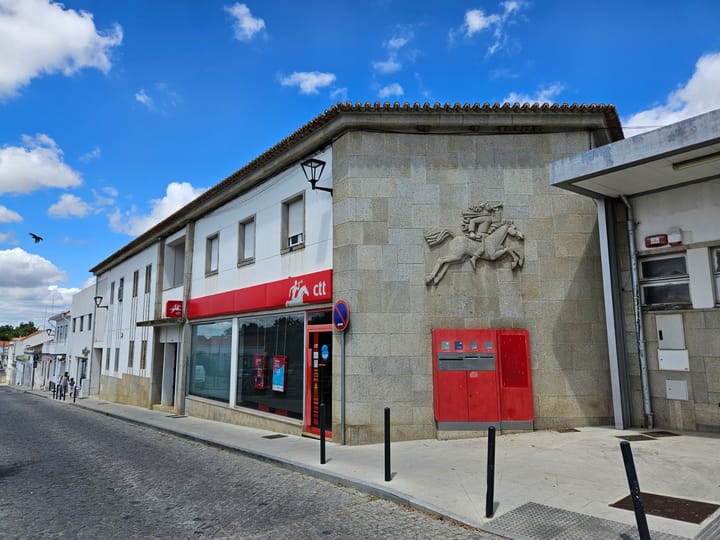
Portugal's Banking System for Expats: Millennium BCP, Novo Banco, and the Rise of Digital Banks in 2026
Opening a bank account in Portugal is a rite of passage — and one of the most complained-about expat experiences. Here's what actually works in 2026: traditional banks vs digital banks, fees, and the optimal setup.

Opening a bank account in Portugal is a rite of passage for every expat. It's also one of the most complained-about experiences in the entire relocation process — and for good reason. Traditional Portuguese banks are bureaucratic, slow, and can be baffling to navigate without fluent Portuguese.
But the landscape has shifted meaningfully in the last two years. Digital banks now offer genuine alternatives, the big traditional players have improved their non-resident services, and expats in 2026 have more options than ever. Here's what actually works.
Why Portuguese Banks Are Difficult for Expats
Portugal's banking culture was shaped by decades of domestic-only retail banking. Until recently, a Portuguese bank account was almost exclusively for Portuguese residents. The requirements for non-residents were onerous: in-person visits, certified translations of foreign documents, prolonged waiting periods, and in some cases, an impossibly circular requirement — you needed a tax number (NIF) to get an account, but the bank you wanted to use was also where you were supposed to get your NIF.
That system still broadly exists, but the edges have softened.
The key things to understand:
- NIF is essential. Almost every Portuguese bank will require a fiscal number before opening an account. Non-residents can get a NIF at any Finanças office (or via a tax representative service like Bordr or NIF Portugal — typically €150–300).
- Proof of address is tricky. Many banks want a Portuguese utility bill or rental contract, which you don't have yet. Some accept a foreign address; others require a Portuguese one.
- Language barrier is real. Especially at smaller branches. Millennium BCP and Novo Banco have English-language interfaces; most others don't.
The Main Traditional Banks
Millennium BCP
Millennium BCP is consistently the most expat-recommended traditional bank in Portugal. It has the widest branch network (around 400 branches), the best English-language online banking, and an explicit non-resident account offering.
- Non-resident account: Can be opened without a Portuguese address. Requires NIF, passport, and proof of foreign address.
- Monthly fee: €5–7, waivable with direct salary deposit or minimum balance (usually €500)
- Online banking: Works well; mobile app is functional
- English service: Available by phone (limited hours); branch quality varies
Expat verdict: Best traditional bank for most people. Not perfect, but reliably functional.
Novo Banco
Novo Banco is Portugal's second-largest private bank, born from the controlled collapse of Banco Espírito Santo in 2014. Despite its troubled origins, it's now fully operational and competes well on the retail side.
- Monthly fee: €4–8
- English online banking: Available
- Mortgage products: Improved significantly — worth considering if you plan to buy property
- Notable: Account can sometimes be opened before you arrive via their international services team
Expat verdict: Solid alternative to Millennium BCP, especially for Lisbon metropolitan area.
Caixa Geral de Depósitos (CGD)
Portugal's state-owned bank and the largest in the country. Government salaries often paid into CGD. English service is limited; non-resident account opening is possible but can be longer. Not recommended as a first account unless you have specific payment requirements tied to the Portuguese state.
Santander Portugal
Benefits from the global brand. Useful if you already bank with Santander in UK, Spain, or Latin America. Smaller branch network than Millennium/CGD; not a standout for most expats otherwise.
BPI
Mid-sized bank owned by CaixaBank. Stronger in the north (Porto region). Good online banking platform. Worth considering if based in Porto.
Digital Banks: The Real Alternatives
Revolut
Revolut isn't a Portuguese bank — it's an EU-regulated electronic money institution. Account opening takes under 10 minutes, entirely via app, from anywhere in the world.
- No NIF required to open
- Free plan available; premium from €2.99/month
- Multi-currency accounts with real interbank exchange rates
- Portuguese IBAN available (technically Lithuanian)
What it doesn't do: Cash deposits, some Portuguese utilities require a traditional bank IBAN, no mortgages or complex financial products.
Best use: Day-to-day spending and travel. Most expats use Revolut alongside a traditional account.
Wise
Wise offers a bank account with a genuine IBAN and low, transparent international transfer fees (typically 0.3–1.5% depending on currency).
- Multi-currency balances in 50+ currencies
- Debit card with real exchange rates
- Best-in-class for cross-border transfers
Best for: People with international income, freelancers paid in multiple currencies, anyone moving money from abroad.
N26
German digital bank with a European banking licence (Austrian), widely available in Portugal. Full banking licence — more protection than Revolut/Wise. Free basic account, Portuguese IBAN, growing in expat communities.
The Recommended Setup in 2026
Option A: Standard Setup
- Primary account: Millennium BCP or Novo Banco (for rent, utilities, Portuguese government interactions)
- Spending account: Revolut (for daily spending, travel, foreign currency)
- Transfers: Wise (when moving money in from UK/US/elsewhere)
Option B: Minimalist (Digital Nomads)
- Primary: Wise or N26 (Portuguese IBAN)
- Backup: Revolut for spending
Opening a Traditional Account Step by Step
Here's the typical process for Millennium BCP (broadly similar for Novo Banco):
1. Get your NIF first. Book at any Finanças office or use Bordr/NIF Portugal (€150–300).
2. Book an appointment online. Millennium BCP has an online booking system.
3. Bring required documents: Valid passport, NIF card, proof of address (foreign accepted), proof of income (payslips, employment contract, or pension evidence).
4. Complete KYC at the branch. Typically 30–60 minutes.
5. Card delivery: 5–10 working days.
6. Online banking: Activated same day or within a few days.
Fee Comparison
International Transfers: Getting Money Into Portugal
| Bank | Monthly Fee | Waiver Condition |
|---|---|---|
| Millennium BCP | €5–7 | Salary deposit or €500 balance |
| Novo Banco | €4–8 | Salary deposit or average balance |
| Santander | €5–9 | Active card use + balance |
| BPI | €4–7 | Salary deposit |
| CGD | €4–8 | Salary deposit or balance |
| Revolut Standard | €0 | n/a (paid tiers from €2.99) |
| Wise | €0 + card fee | n/a |
| N26 Standard | €0 | n/a |
Use Wise or Revolut — not bank wire transfers. A bank-to-bank international transfer can cost 2–5% in fees and exchange rate markup. On a €50,000 transfer, that's €1,000–2,500 in unnecessary costs.
For large one-off transfers (property purchase, pension), consider CurrencyFair, OFX, or XE for competitive rates.
Pension transfer note: Transferring a UK pension to Portugal (QROPS or SIPP drawdown) involves tax and regulatory considerations. Get specialist advice — this is not a DIY job.
Common Pitfalls
- NIF-first trap: Get a proper NIF from Finanças before going to a bank. Don't accept a bank-issued NIF.
- Foreign IBAN doesn't work everywhere: Some Portuguese utilities require a Portuguese IBAN via a traditional bank.
- Joint accounts: Both parties must usually be present; significantly more complex to open.
- Large incoming transfers: Have source-of-funds documentation ready for compliance checks.
The Bottom Line
Portuguese banking in 2026 is manageable, not easy. Millennium BCP and Novo Banco are the traditional picks. Digital banks have closed the gap dramatically and should be part of every expat's setup. (Background: see our piece on the Bison Bank crypto-asset launch under Lei 69/2025.)
Get your NIF first. Open Millennium BCP for your "official" Portuguese financial life. Add Revolut for daily spending. Use Wise for transfers in from abroad. That combination handles 95% of what you'll need — at a fraction of the cost of doing it all through one traditional bank. On the housing-credit policy tape, our read on the under-35 public housing guarantee — 32,338 contracts, €905M drawn, and the 31 December 2026 cliff against the BdP macroprudential brake sets the latest reference. For foreign residents on the Portuguese-banking documentary chain, our 2026 guide to opening a Portuguese bank account — the NIF prerequisite, the Lei 83/2017 AML documentary chain, the CGD vs Millennium vs Santander vs BPI vs Novobanco vs Bankinter matrix, the ActivoBank and BiG digital tracks, and the Conta-Base / Serviços Mínimos Bancários free-account backstop sets the latest reference. On the banking-supervision side, our read on the Banco de Portugal Folheto de Comissões reformulation (multi-year programme through 2028, Comparador de Comissões expansion, €8.91M undue commissions refunded in 2025) sets the latest reference. On the Portuguese payments-infrastructure and conduct-of-business tape, our read on SIBS-FPS's 13 May 2026 withdrawal of its sixteen-month-old TACL administrative action against the Banco de Portugal on the EU 751/2015 scheme-vs-processor separation file sets the latest reference. On the property-transaction and registry-counter architecture, our 2026 Casa Pronta guide — the property-transaction one-stop counter inside the conservatórias do registo predial, the €375 single-act and €700 multi-act tariff sheet, the SIGA portal booking architecture, the documentary stack for foreign-resident buyers, and the mortgage-bundled compra-e-venda route that replaces the notarial escritura sets the latest reference. For how the SIBS Multibanco and MB Way rails actually work in 2026, our 2026 MB Way and Multibanco guide — the SIBS-operated domestic card rails, the 11,000-plus ATM network, the Entidade-Referência-Montante bill-payment substrate that carries IRS, IVA, IUC and utility settlements, the €750-per-transaction MB Way P2P caps and the MB Spot agent-based cash-in/cash-out service for freguesias without a bank branch sets the latest reference. On the rural cash-access and Multibanco Social rail, our 21 May Multibanco Social read — the SIBS pilot installing cash machines inside roughly twenty juntas de freguesia in the cash-desert interior, the 1,200+ parishes without any physical cash-out point, the seventeen-kilometre worst-case walk to an ATM, Banco de Portugal governor Álvaro Santos Pereira aligned on the rollout, and the cash-in-shop and mobile-branch tracks running alongside sets the latest reference. On the Banco Montepio executive-transition side of the banking file, our 22 May Banco Montepio CEO-change read — José Azevedo Pereira taking the executive seat at Caixa Económica Montepio Geral after Pedro Leitão's six-year run, the Banco de Portugal fit-and-proper clearance, two further board appointments flagged for the period ahead, and the Associação Mutualista pushing the opening mandate toward a higher and more predictable dividend payout from the next reporting cycle sets the latest reference. On the household-and-corporate-leverage side, our 25 May read on the Banco de Portugal March endividamento file — total non-financial debt at €868.1bn after a €5.4bn monthly build, €3.8bn of which lands in the private sector (€1.6bn household credit, €2.2bn corporate) and €1.7bn in public administrations, with the household line essentially carried by bank-originated crédito à habitação as the implicit mortgage rate sits at 3.077% sets the latest reference. On the digital-fraud and payments-safety side, our 25 May read on the Banco de Portugal launch of the Plataforma de Monitorização da Fraude Digital with SIBS, telecoms and the PJ — €6.5 million of losses blocked since the May 2024 IBAN-beneficiary tool, 2,577 fraud-related complaints in 2025 (+45% YoY), and 85% of fraudulent-transfer losses currently borne by the user the platform is designed to compress back to the institutional layer sets the latest reference. On the bank-executive-compensation side, our 26 May read on BCP's 25 May share distribution — 4,087,904 own shares moved to the executive committee at €0.9616 for a €3.93 million headline, Miguel Maya's 871,156-share envelope worth €837,700, Maria José Campos, Miguel de Bragança and João Nuno Palma in the table, settling 2020-2024 deferred variable pay and the 2022-2025 long-term plan sets the latest reference. On the foreign-buyer and crédito-habitação side of the file, our 29 May read on the Banco de Portugal 2025 housing-transaction tape — foreigners at 28% of all Portuguese home transactions and €859 million moved, with crédito-habitação to estrangeiros at 13.56% of the €19 billion national mortgage pool (€2.6 billion) and the foreign-borrower headcount at 11.74%; Brazilians at 44% of the foreign-borrower stack (up from 35% in 2021), Angolans at 6%, Ukrainians at 4% and Italians at 4% sets the latest reference. On the Crédito Habitação mortgage side, our 2026 practical guide to securing a Crédito Habitação mortgage in Portugal — the Decreto-Lei 74-A/2017 statutory frame transposing Diretiva 2014/17/UE, the BdP 45% DSTI cap on new contracts, the LTV ladder of 90% on primary residence, 80% on other purposes and 70% on non-resident purchases, the 12-month Euribor reference, the FINE comparison instrument under Aviso BdP 4/2017, the PARI/PERSI default-protection framework under Decreto-Lei 227/2012, and the Casa Pronta one-stop closing on the escritura, registo predial and hipoteca inscription sets the latest reference. On the BPF empresa-financing side of the file, our 31 May read on the Banco Português de Fomento tracking €3.5 billion of empresa financing through end-May 2026 — a €700 million monthly run on path to the €8 billion 2026 target and 20,000 firms, with €2.5 billion in national guarantees and €250 million in international guarantees carrying the frame and the triénio envelope pointing above €30 billion sets the latest reference. On the bank-funding and household-savings side of the file, our 5 June read on Portuguese households parking a record €13.398 billion of new term deposits in April with the average TANB ticking up 2 basis points to 1.44% in a third straight monthly climb — Certificados de Aforro Série F still paying 2.138%, the mortgage-deposit scissors widening to 142 bp, and Portugal slipping one rung to sixth-lowest in the eurozone against the 1.91% bloc average sets the latest reference. On the CMVM, Conta Poupança-Investimento, retail-investor savings vehicle, Lisbon capital-markets pipeline and Laginha 31 May architecture side of the file, our 14 June read on the CMVM's Conta Poupança-Investimento (CPI) proposal sketching a Portuguese retail-investor vehicle against the UK ISA, French PEA and Italian PIR reference set — how Luís Laginha de Sousa's architecture stacks up across contribution ceiling, tax envelope, eligible-instrument perimeter and the Lisbon capital-markets pipeline sets the latest reference. On the Portuguese bank account, non-resident track, Activobank, Millennium BCP, CGD, Novobanco, Multibanco, IBAN, MB Way and CRS/DAC2 cross-reporting side of the file, our 2026 practical guide to opening a Portuguese bank account as a non-resident — the NIF + comprovativo de morada stack, the Activobank / Millennium BCP / CGD / Novobanco / Bison Bank line-up, the Multibanco network, MB Way and the CRS/DAC2 cross-reporting frame sets the latest reference. On the CGD, Paulo Macedo, Portuguese State-owned banking, dividend-distribution and capital-structure side of the file, our 19 June read on Paulo Macedo's CGD delivering a €1.25 billion dividend cheque to the Portuguese State on 26 June — €952.2 million from the €1.98 billion 2025 profit, €297.8 million from reserves and a parallel capital lift from €4.525 billion to €6 billion sets the latest reference. On the banking, foreign-investment and Lisbon-jobs side of the file, our read on BNP Paribas opening a new European hub in Lisbon and heading past 10,000 staff sets the latest reference. On the cash, payments and financial-access side of the file, our read on Portugal co-founding Denaria Europa to defend the right to pay in cash sets the latest reference. On the relocation, customs and household-move side of the file, our practical guide to moving your household goods to Portugal and the transfer-of-residence customs relief sets the latest reference. On the NIF, tax-number and bank-account side of the file, our practical guide to getting your NIF and opening a Portuguese bank account sets the latest reference. On the banking, credit and consumer-finance side of the file, our coverage of the new rules scrapping loan-processing fees and tied products sets the latest reference. On the labour-rights, court-ruling and pay-entitlement side of the file, the Supreme Court ruling on Caixa's holiday meal allowance sets the latest reference. For readers weighing where to keep their money, our guide to the €100,000 deposit guarantee that protects your bank savings sets the latest reference. On the banking-and-tax side of the file, the bank tax the government promised but never delivered looks at a levy that keeps being promised and never arrives.