Opening a Bank Account in Portugal
Researched and written with AI tools from official sources. How we make our guides
The documents a Portuguese bank asks for, the low-cost basic account every bank must offer, what accounts cost, and what to do if a bank says no.

Last verified: October 2026.
Who this is for
- You have a tax number (NIF) and want your first Portuguese bank account.
- You live in Portugal, or are about to move, and need a local account for rent, salary, or bills.
- You are retired, self-employed, or new to the country, and worry a bank will turn you down.
Not for you if: you do not have a NIF yet. Read Getting a NIF (Tax Number) in Portugal first.
To open a Portuguese bank account you need an identity document, your NIF, proof of address, and details of your job or income. A bank does not have to accept you as a customer for an ordinary account. But every bank that takes deposits must offer a basic bank account (conta de serviços mínimos bancários) to anyone without another current account. In 2026 it costs no more than €5.37 a year. The bank must open it, or refuse in writing, within 10 days of a complete request.
Do you need a Portuguese account?
The law does not make you have one. Under EU rules, if a company accepts euro transfers or direct debits from Portuguese accounts, it cannot refuse yours because it is in another EU country. That covers employers, utilities, landlords who take direct debits, and the tax office.
In practice, a Portuguese account still makes daily life easier. Most landlords want rent by transfer, and many local services expect a Portuguese account number (IBAN, which starts with PT50). Many people keep two accounts: a Portuguese one for rent, salary, and bills, and an app-based one for foreign currency.
Before you start: get your NIF
Your tax number (NIF) comes first. The Banco de Portugal lists it among the details a bank collects, and in practice every bank asks for it.
The NIF is free. You can book an appointment at a tax office (Finanças) by calling 217 206 707. If you live outside the EU, you can also apply online through the Portal das Finanças e-balcão. You do not need a tax representative to get it. Our NIF guide explains the options.
What the bank will ask for
By law, a bank must record certain details about each account holder. You prove them with original documents or certified copies:
- Full name, signature, date and place of birth, and nationality (and any other nationalities).
- Your identity document: type, number, expiry date, and who issued it.
- Your NIF.
- Your profession and employer.
- Your full home address and your tax address.
Bring these documents, with a photocopy of each:
- Identity: your passport, EU identity card, Citizen Card, or residence permit. The name must match your NIF record exactly.
- NIF: the proof of NIF (comprovativo) printed from the Portal das Finanças.
- Proof of address: a recent utility bill in your name, your lease, or a residence certificate (atestado de residência) from your parish council (junta de freguesia). If you are not yet living here, bring proof of your address abroad.
- Proof of income or activity: a job contract or payslip, a pension statement, a tax return, or recent bank statements.
- Your foreign tax number, if you have one. Banks ask every customer where they are tax resident. US citizens also fill in US tax forms.
Each bank's money laundering checks decide exactly what it accepts. Missing one document usually means a second visit. If you are retired or self-employed, a one-page note explaining where your money comes from saves questions at the desk.
Step by step: opening at a branch
- Print your proof of NIF from the Portal das Finanças.
- Choose a bank and book an appointment on its website or by phone.
- Bring every document, original and copy.
- Answer the bank's questions. Expect to explain your job, where your money comes from, and what the account is for.
- Read the key documents before you sign. The bank must give you a standard information sheet (ficha de informação normalizada) with the account's features and costs before you open it.
- Sign the account opening forms. You get a copy.
- Receive your IBAN, debit card, and online banking access. Banks send cards by post. Ask your bank how long it takes; no official timescale is published for ordinary accounts.
Opening an account online
Banks may open an account without you being present, as long as they can identify you to the legal standard. Most large banks offer this in their app or website, usually with a video call or your digital mobile key (Chave Móvel Digital). Each bank decides who it accepts online. If you have just arrived, a branch visit may be quicker.
The basic bank account every bank must offer
The basic bank account (serviços mínimos bancários) is your safety net. Every bank that takes deposits must offer it.
Who can open one. Anyone who has no other current account in Portugal. You sign a statement saying so. There are three exceptions:
- You can hold one jointly with someone over 65, or with a disability of 60% or more, who has no other account, even if you have other accounts yourself.
- If your bank has told you it will close your current account, you can open a basic account.
- If you already have one current account, you can convert it into a basic account for free. You can also close it and open a basic account at another bank.
What you get:
- A current account and a debit card, no more restricted than the bank's other debit cards.
- Use of the account at ATMs in the EU, online, and at the branch.
- Deposits, withdrawals, payments, and direct debits.
- Unlimited transfers to other accounts at the same bank.
- Unlimited transfers to other banks at ATMs, and up to 48 a year to other banks in Portugal or the EU online or in the bank's app.
- Five transfers a month of up to €30 each through third-party payment apps such as MB WAY. These come on top of the free app transfers every customer gets (see "Other costs").
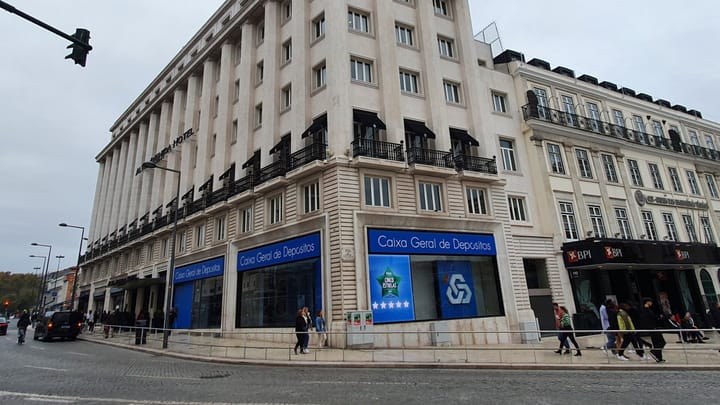
What it costs. The bank cannot charge more than 1% of the social support index (IAS) a year for these services. In 2026 that is €5.37. For example, Caixa Geral de Depósitos and Santander each charge €4.08 a year, plus 4% stamp duty, in their October 2026 fee schedules. The bank cannot make you deposit a minimum amount or buy other products.
How fast. Once your request is complete, the bank has 10 days to open or convert the account, or to refuse. If it refuses, it must tell you at once, for free, in writing. It must give its reasons and tell you how to complain, including to the Banco de Portugal.
When it can refuse. Only if you will not sign the statement, or if the bank knows you hold another current account (outside the exceptions above). EU rules also let banks refuse an account that would breach money laundering rules.
When it can close the account. At once, if you used the account for illegal purposes or gave false information. With 60 days' notice if there have been no transactions for 24 months, if you no longer live in the EU, or if you have opened another current account.
If a branch does not seem to know about it, ask for the "conta de serviços mínimos bancários" by name.
The standard account and what it costs
Most banks also sell a standard account (conta base). The Banco de Portugal says it is open to adults, resident or not, for personal use. It includes a debit card, ATM, online, and branch access, deposits, withdrawals, payments, direct debits, and transfers within Portugal. Each bank sets its own monthly fee. The fee cannot depend on your balance.
Monthly maintenance fees for the standard account in the banks' fee schedules (preçários), before 4% stamp duty:
| Bank | Account | Monthly fee | Yearly | Fee schedule in force from |
|---|---|---|---|---|
| Caixa Geral de Depósitos | Conta Base | €5.00 | €60.00 | 1 October 2026 |
| Santander | Conta Base | €5.30 | €63.60 | 1 October 2026 |
| Novobanco | Conta Base | €6.00 | €72.00 | 1 October 2026 |
| BPI | Conta Base BPI | €6.25 | €75.00 | 1 October 2026 |
| ActivoBank | Conta Simples | €0.00 | €0.00 | 1 June 2026 |
Many banks also sell account packages with extra services. They often cost less if you pay in a salary or meet other conditions, and the conditions change often. Compare current fees on the Banco de Portugal's fee comparator before you choose.
Other costs to know
- Stamp duty. A 4% stamp duty (imposto do selo) is added to most bank fees. Fee schedules show it separately.
- Cash withdrawals. The Banco de Portugal says banks may not charge for cash withdrawals with a debit card at ATMs.
- MB WAY and other payment apps. Every customer can make 25 free transfers a month through apps such as MB WAY. Each can be up to €30, and up to €150 in total that month.
- Everything else (transfers at the counter, transfers outside the EU, credit cards, replacement cards) is priced in each bank's fee schedule. Ask for it before you sign.
App banks and accounts from other EU countries
Several app-based banks operate in Portugal under licences from other EU countries. Some give you an IBAN from their home country. Under the EU rule above, it must be accepted wherever a Portuguese account would be.
Revolut now offers customers living in Portugal a Portuguese IBAN through its Portuguese branch (Revolut Bank UAB, Sucursal em Portugal).
Know who protects your money. Deposits at a bank licensed in Portugal are covered by Portugal's Deposit Guarantee Fund. Deposits at a Portuguese branch of a bank based in another EU country are covered by that country's scheme. The limit is the same: €100,000.
Deposit protection
The Deposit Guarantee Fund (Fundo de Garantia de Depósitos) covers your deposits at each bank up to €100,000. For a joint account, the balance is treated as shared equally between the holders. Each holder is covered for their share, up to €100,000.
Common problems
"You need a residence permit." The standard account is open to non-residents, and the basic account depends on not having another current account, not on a residence permit. Ask for the basic account by name, try another branch, or complain (see below).
No proof of address yet. Ask your parish council for a residence certificate, or bring your lease. Some banks accept your address abroad for now.
Your name does not match. Your NIF record and your passport must match exactly, including second surnames. Fix your NIF record at Finanças first.
No payslips. If you are retired or live on savings, bring pension letters or several months of bank statements, and a short note on where the money comes from.
Everything is in Portuguese. Contracts and letters usually are. Read the standard information sheet and fee schedule with someone you trust before you sign.
You spend months abroad. Ask whether the bank charges for inactive accounts. A basic account can be closed after 24 months with no transactions.
If a bank refuses you or gets something wrong
- Complain to the bank first, in writing, through its complaints service.
- Use the complaints book (Livro de Reclamações). Every branch has a paper book. You can also complain online at livroreclamacoes.pt or in its app. An online complaint goes automatically to the bank and to the Banco de Portugal. The bank should reply by email within 15 working days.
- Write to the Banco de Portugal directly if the problem continues.
The Banco de Portugal supervises the basic bank account rules. If a bank refuses a basic account without a lawful reason, say so in your complaint.
After you open the account
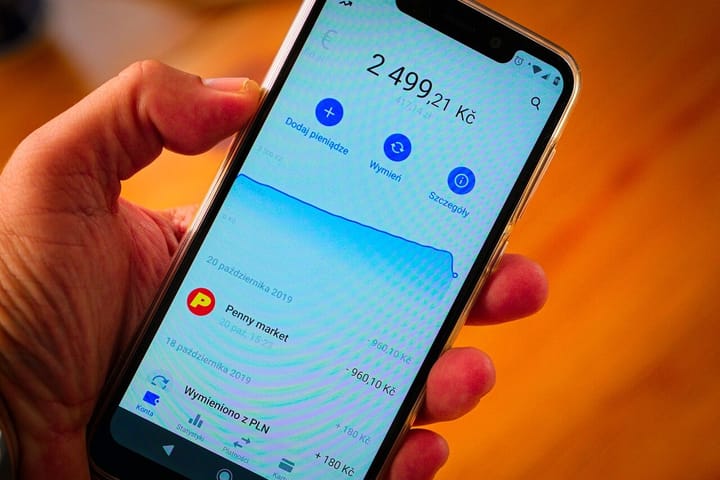
- Set up MB WAY in your bank's app to pay and send money with your phone number.
- Give your IBAN to your employer, landlord, and utility companies, and set up direct debits in the app.
- Keep your details up to date. Tell the bank when you get a residence permit or change address.
This guide is general information, not financial or legal advice. Rules and fees change; check the official source before you act.
Sources
This guide is written from official sources and, where relevant, organisations' own websites.
- Banco de Portugal, Portal do Cliente Bancário, basic bank account: https://clientebancario.bportugal.pt/en/what-it-1 (who can open one, exceptions, conversion, 10-day deadline, services, €5.37 cap for 2026, refusal and closure grounds), checked 1 October 2026
- Banco de Portugal, brochure on the basic bank account (15th edition, January 2025): https://clientebancario.bportugal.pt/sites/default/files/2025-01/BrochuraSMB.pdf (legal basis, refusal in writing with reasons, no minimum deposit, 48 transfers, five app transfers of €30 on top of 25 free transfers up to €30 and €150), checked 1 October 2026
- Banco de Portugal, Portal do Cliente Bancário, standard account: https://clientebancario.bportugal.pt/en/what-it-2 (residents and non-residents, services, fee set by each bank, not linked to balance), checked 1 October 2026
- Banco de Portugal, Todos Contam, opening an account: https://www.todoscontam.pt/pt-pt/abertura (details a bank collects, originals or certified copies, remote opening, banks not obliged to open an ordinary account), checked 1 October 2026
- Banco de Portugal, Portal do Cliente Bancário, complaining through the electronic complaints book: https://clientebancario.bportugal.pt/en/node/66033 (livroreclamacoes.pt, sent to the bank and the Banco de Portugal, reply within 15 working days), checked 1 October 2026
- Banco de Portugal, "Charging fees for debit card cash withdrawals at ATMs is prohibited": https://www.bportugal.pt/multimedia/cobrar-comissoes-no-levantamento-de-dinheiro-debito-nos-caixas-automaticos-e-proibido (no fees on debit withdrawals; Decreto-Lei n.º 3/2010), checked 1 October 2026
- Caixa Geral de Depósitos, fee schedule in force 1 October 2026, on the Portal do Cliente Bancário: https://clientebancario.bportugal.pt/sites/default/files/precario/0035_/0035_PRE.pdf (Conta Base €5.00 a month; basic account €4.08 a year; stamp duty 4%), checked 1 October 2026
- Banco Santander Totta, fee schedule in force 1 October 2026, on the Portal do Cliente Bancário: https://clientebancario.bportugal.pt/sites/default/files/precario/0018_/0018_PRE.pdf (Conta Base €5.30 a month; basic account €4.08 a year), checked 1 October 2026
- Novo Banco, fee schedule in force 1 October 2026, on the Portal do Cliente Bancário: https://clientebancario.bportugal.pt/sites/default/files/precario/0007_/0007_PRE.pdf (Conta Base €6.00 a month, residents and non-residents), checked 1 October 2026
- Banco BPI, fee schedule in force 1 October 2026, on the Portal do Cliente Bancário: https://clientebancario.bportugal.pt/sites/default/files/precario/0010_/0010_PRE.pdf (Conta Base BPI €6.25 a month), checked 1 October 2026
- Banco ActivoBank, fee schedule in force 1 June 2026, on the Portal do Cliente Bancário: https://clientebancario.bportugal.pt/sites/default/files/precario/0023_/0023_PRE.pdf (Conta Simples, no maintenance fee), checked 1 October 2026
- Banco de Portugal, fee comparator: https://clientebancario.bportugal.pt/en/aplicacao/comparador-de-comissoes (comparing bank fees)
- Portal das Finanças, Stamp Duty Code and General Table, item 17.3.4: https://info.portaldasfinancas.gov.pt/pt/informacao_fiscal/codigos_tributarios/Cod_download/Documents/CIS.pdf (4% on bank fees and commissions), checked 1 October 2026
- European Commission, Your Europe, payments and transfers: https://europa.eu/youreurope/citizens/consumers/financial-products-and-services/payments-transfers-cheques/index_en.htm (IBAN discrimination rule; Regulation (EU) No 260/2012), checked 1 October 2026
- European Commission, Your Europe, bank accounts in the EU: https://europa.eu/youreurope/citizens/consumers/financial-products-and-services/bank-accounts-eu/index_en.htm (right to a basic payment account for legal EU residents, refusal for money laundering reasons), checked 1 October 2026
- gov.pt, how foreign citizens request a NIF: https://www.gov.pt/guias/como-pedir-o-nif-e-o-niss-para-pessoas-estrangeiras-em-portugal (free, 217 206 707, e-balcão), checked 1 October 2026
- Fundo de Garantia de Depósitos, FAQs: https://www.fgd.pt/en/faqs (€100,000 per depositor per bank, joint accounts, branches of other EU banks), checked 1 October 2026
- Revolut, help centre, Portuguese IBAN: https://help.revolut.com/en-PT/help/transfers/inbound-transfers/how-to-receive-money-from-another-bank/what-account-details-should-i-use-to-transfer-money-to-my-revolut-account/question-switching-to-a-portuguese-iban/ (PT IBANs through Revolut Bank UAB, Sucursal em Portugal), checked 1 October 2026
- Banco de Portugal, legislation, Decreto-Lei n.º 27-C/2000 (basic bank account), as amended most recently by Lei n.º 24/2023: https://www.bportugal.pt/legislacao/decreto-lei-no-27-c2000-de-10-de-marco
- Diário da República, Portaria n.º 480-A/2025/1 (IAS for 2026, €537.13): https://diariodarepublica.pt/dr/detalhe/portaria/480-a-2025-993056222
- Tax and Customs Authority, FAQs on fiscal representation: https://info.portaldasfinancas.gov.pt/pt/apoio_contribuinte/questoes_frequentes/pages/faqs-00307.aspx (no representative needed to get a NIF; third-country residents with a tax relationship appoint one or join electronic notifications), checked 1 October 2026
Last verified October 2026. Rules and fees change; check the official source before acting.