Bison Bank Launches Portugal's First Bank-Issued Stablecoin on 5 May 2026 — Closed Banks-Only Ecosystem, Pegged to the Euro and Dollar, MiCA-Aligned Under Law 69/2025
Bison Bank's António Henriques launched on Tuesday Portugal's first bank-issued stablecoin — pegged to the euro and dollar, restricted to a closed ecosystem of regulated banks, and aligned with the MiCA framework transposed into Portuguese law as Lei 69/2025 of 22 December.
The Hong Kong-owned Lisbon private-banking and custody house Bison Bank launched on Tuesday afternoon Portugal's first bank-issued stablecoin — a euro-and-dollar-referenced digital asset designed to move money between regulated financial institutions and not, for now, between retail customers. The launch was first reported by Público's Diogo Cavaleiro and confirmed by the bank in its own corporate statement, which framed the new asset as the first of three strategic pillars alongside the merger by incorporation of its Bison Digital Assets (BDA) crypto-asset subsidiary and the build-out of real-world asset (RWA) tokenisation capabilities for Portuguese real estate and investment funds.
The 5 May 2026 launch lands four months into Portugal's full MiCA window. The European Markets in Crypto-Assets framework was transposed into Portuguese domestic law on 22 December 2025 by Lei n.º 69/2025, which CEO António Henriques cited explicitly in the Bison statement: the new MiCA architecture, he said, "prevê a possibilidade de os bancos exercerem atividades sobre criptoativos" — provides the regulatory channel for a Portuguese bank to operate a stablecoin. Without that channel the launch would not have been possible at all.
The closed-ecosystem design
The single design choice that distinguishes Tuesday's launch from a retail crypto-asset issuance is the closed-ecosystem architecture. Bison Bank's stablecoin is, by design, not available to retail customers, individual investors or non-financial corporate clients. It moves only between banks and other regulated financial institutions, in what the bank itself called "a closed ecosystem of the banking sector" and what Público reported is at present "in a very embryonic phase" — meaning the network of participating institutions is still being built out, with the launch acting as a proof-of-concept rather than a steady-state distribution.
The banks-only design has three immediate consequences. First, the use case is wholesale: cross-border interbank transfers, correspondent-banking settlement and treasury operations between regulated counterparties. Second, the on-ramps and off-ramps are bank-controlled, which keeps the asset inside the supervised perimeter of the Bank of Portugal and the European Securities and Markets Authority. Third, there is no consumer-protection layer to build out, because there are no retail consumers at this stage — the counterparty is by definition another regulated bank.
The euro-and-dollar peg
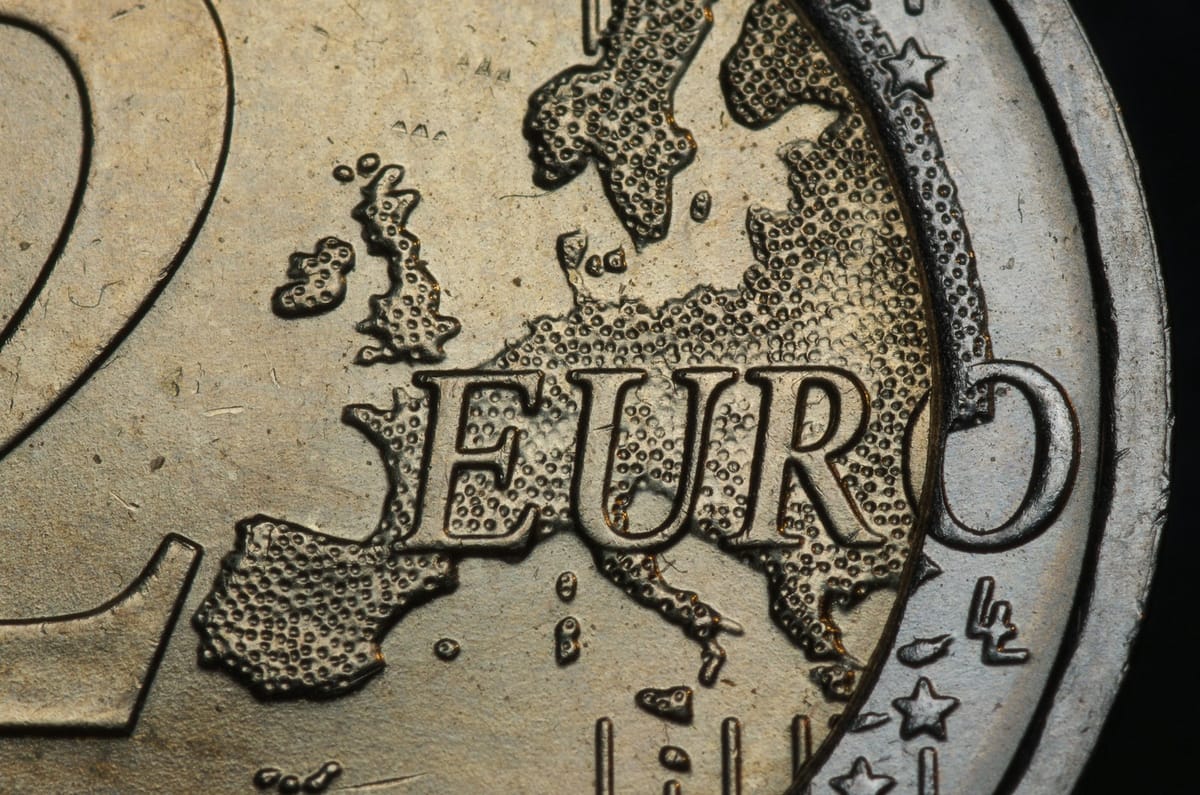
The stablecoin is referenced to the euro and the US dollar, the two currencies that dominate Portuguese cross-border payment flows. The peg structure (1:1 backing held in segregated accounts, audited periodically) follows the canonical fiat-backed e-money architecture that MiCA codifies as Electronic Money Token issuance. Bison Bank has not disclosed the exact custody arrangement for the segregated accounts on launch day, but the MiCA framework imposes a reserve-asset isolation requirement and a periodic-audit obligation on any EMT issuer authorised to operate in the EU.
The dual-currency reference is the subtle commercial bet. Most Portuguese cross-border flows that would be candidates for stablecoin settlement — Brazilian real conversion via dollar, Asian-trade dollar leg, North-American correspondent banking — pass through the dollar before they touch the euro. A euro-only stablecoin would have to round-trip through a separate dollar leg. Bison Bank's design embeds both currencies in the same instrument.
The strategic pillars: BDA merger, RWA tokenisation, stablecoin
The stablecoin is the third pillar of a three-part strategic package the bank announced in January 2026 and operationalised across the first half of the year. The first pillar — the merger by incorporation of Bison Digital Assets (BDA), Bison Bank's crypto-asset subsidiary — pulls BDA's services (crypto-asset deposit, transfer and exchange) directly inside the bank, ending the affiliate-services architecture that BDA had operated under for its first three years. BDA is celebrating its third anniversary in 2026; the merger formalises a structure that had until now sat outside the bank balance sheet.
The second pillar — RWA tokenisation — covers the digital representation of real-world assets, specifically Portuguese real estate and investment-fund units. Bison's framing positions tokenisation as a corporate-services product for the bank's existing private-banking and wealth-management clients, not as a retail listing venue. The combination of the three pillars — BDA crypto-services merger, RWA tokenisation, banks-only stablecoin — gives the bank a single regulated channel to handle the spectrum of digital-asset activity that MiCA opens to traditional banks.
Bison Bank's 2025 financials
The launch sits on the balance sheet of a bank whose 2025 results were strong. Bison Bank doubled its 2025 net profit to roughly €5 million on Tuesday's accompanying disclosure schedule. The bank operates as part of a Hong Kong-headquartered group, with a private-banking, wealth-management, custody and investment-banking remit centred on the Lisbon market and a multi-jurisdiction client base spanning over 140 countries.
What the stablecoin doesn't do — yet
The Tuesday launch is deliberately narrow. It does not — at this stage — handle retail customer payments, retail e-money issuance, public-pricing trading-venue listing, or in-app consumer wallets. Bison Bank's framing makes clear that the asset's expansion into wider use cases is conditional on (a) the build-out of the participating-banks network and (b) any further regulatory clarifications that the European Banking Authority and the Bank of Portugal issue on bank-issued stablecoin retail-distribution channels.
What this means for foreign residents in Portugal
For foreign residents and entrepreneurs in Portugal — and particularly for the digital-nomad, fintech-entrepreneur and crypto-native demographics that have built up since the 2022 NHR / IFICI settlement — the immediate practical impact is limited, because the stablecoin is not available to non-financial customers. The signal value, however, is real. Portugal now has a domestic, MiCA-compliant, bank-issued stablecoin in production, which gives the Lisbon banking system a direct rail to participate in the cross-border digital-money flows that have been routed through US-issued and EU-issued stablecoins until now (USDT, USDC, EURC, EURI).
For Portuguese fintechs and crypto-asset service providers planning EMT-style products under MiCA, Tuesday's launch sets a domestic precedent: the first bank-issued stablecoin under Portuguese law, the first one with a Bank-of-Portugal-supervised issuer, and the first one with Lei 69/2025 explicitly cited as its regulatory foundation. The question now is how quickly the closed banks-only network grows beyond Bison's own counterparties — and how soon a retail-facing channel opens, if it opens at all.
The answer to those questions will define whether Portugal's stablecoin debut remains a niche corporate-banking product or evolves into a building block of the broader Portuguese payments stack. On the banking, foreign-investment and Lisbon-jobs side of the file, our read on BNP Paribas opening a new European hub in Lisbon and heading past 10,000 staff sets the latest reference.