Alentejo Earmarks €5.3 Million to Restore the Region's Historic Buildings and Museums
Alentejo 2030 is opening a €5.3 million call, up to 85% EU-funded, to restore classified buildings and museums across the region, with Central Alentejo and Évora taking the largest share.
The Alentejo is putting €5.3 million on the table to restore its historic buildings and museums, opening a fresh round of European funding aimed at the churches, forts, palaces and civic monuments that give the region much of its tourist appeal — and much of its identity.
The money, precisely €5,343,436, comes from the European Regional Development Fund (Fundo Europeu de Desenvolvimento Regional, FEDER) and is being channelled through Alentejo 2030, the region's current EU programming framework. It is administered by the Regional Coordination and Development Commission of the Alentejo (Comissão de Coordenação e Desenvolvimento Regional do Alentejo, CCDR Alentejo).
What qualifies
The call targets the recovery and enhancement of cultural heritage, from interventions on classified immovable property — buildings formally listed as being of municipal interest — to work on museums. The aim, in the CCDR's words, is to "strengthen culture's role in affirming the Alentejo's identity" while boosting the region's appeal to visitors and supporting local economic activity built around heritage.
Eligible applicants are municipal councils and private non-profit organisations, the latter only where they work in cooperation with a municipality. Projects must sit within the Integrated Territorial Development Strategy areas of the region's five intermunicipal communities, and Brussels will cover up to 85% of eligible costs — a high co-financing rate that leaves local promoters to find only a modest share of the budget themselves.
How the funds are split
The €5.3 million is divided across the five sub-regions. Central Alentejo (CIMAC), which includes the UNESCO-listed city of Évora, takes the largest slice at €3.331 million. Alto Alentejo (CIMAA) receives €921,000, Alentejo Litoral (CIMAL) €500,000, Baixo Alentejo (CIMBAL) €341,436 and Lezíria do Tejo (CIMLT) €250,000.
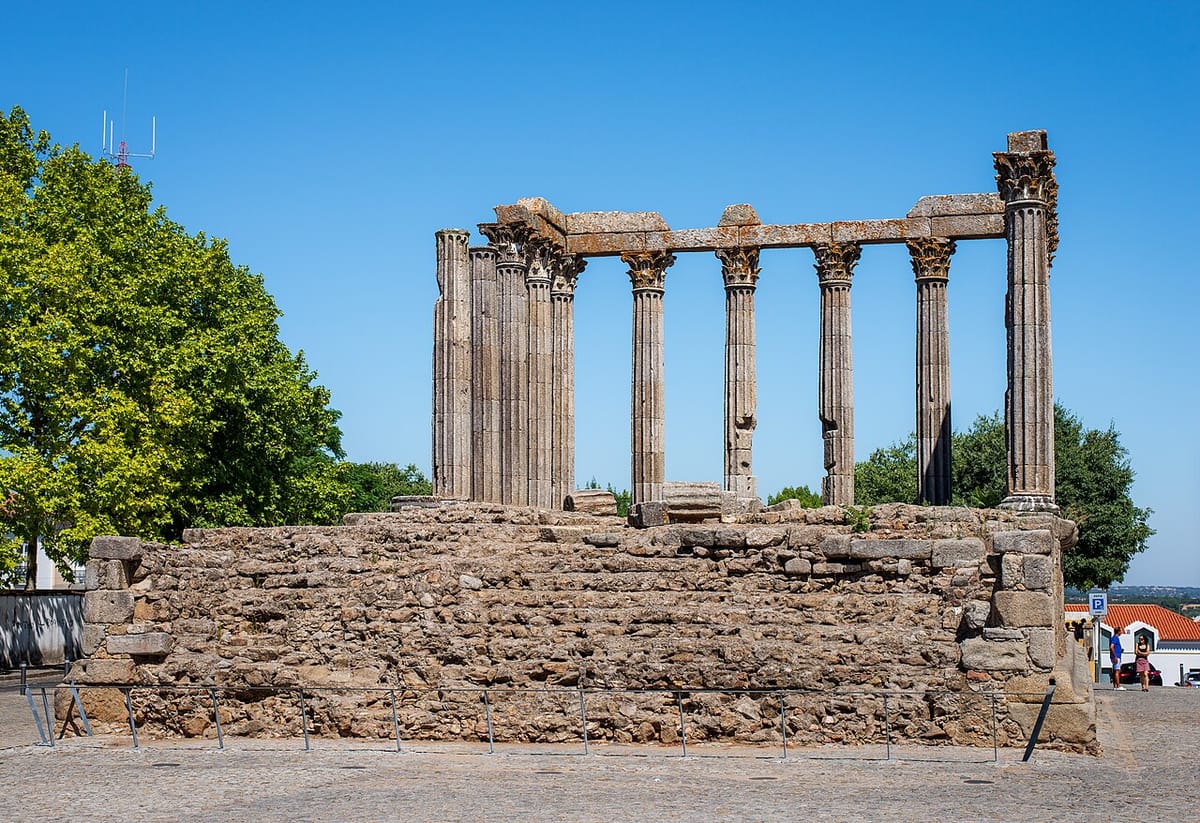
The heavy weighting towards Central Alentejo reflects the density of classified monuments around Évora, a walled city whose Roman temple, cathedral and medieval streets already draw a steady stream of visitors and which stands to benefit most from restoration cash.
The timetable
Applications can be submitted from now, with a first assessment deadline of 31 August 2026. The call then stays open on a rolling basis until 30 June 2027, giving municipalities and heritage bodies almost a year to prepare and lodge more ambitious projects.
For a region that leans heavily on cultural tourism but often struggles to fund the upkeep of its older buildings, the injection is significant. Restored monuments do more than look good in photographs: they anchor local economies in towns where a single well-kept church or fort can be the difference between a coach tour stopping for lunch and driving straight through. For residents and visitors across the Alentejo, the payoff should become visible on the ground over the next couple of years, as scaffolding goes up on landmarks that have waited years for attention. On what it now costs to keep a national museum open on a feriado, our report on the 60 euro availability supplement created for the front-of-house staff of Museus e Monumentos de Portugal who work a public holiday, indexed to the public pay table and backdated to April 2026 sets the latest reference.