A Two-Year Building Ban Lands on Amparo in Funchal, and Madeira Says the Plots Are for Affordable Housing
Decreto Regulamentar Regional 16/2026/M froze ten categories of act inside a marked area of São Martinho from Saturday, down to repainting a wall. Article 52 of Lei 31/2014 gives owners a right to compensation, and the freeze runs to 29 August 2028.
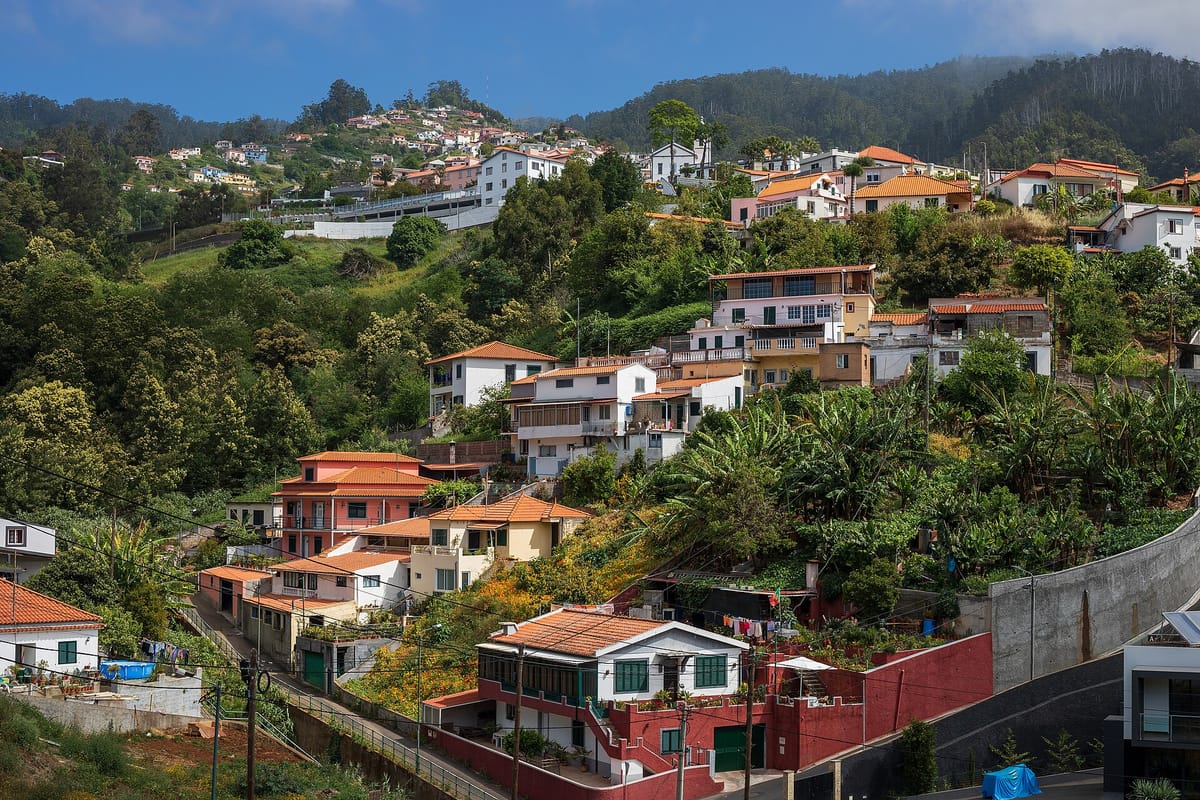
A two-year building freeze came into force on Saturday over a slice of the Funchal parish of São Martinho. Until at least 29 August 2028, nobody may build, rebuild, extend, demolish, dig, fell trees, sink a well or even repaint a garden wall inside the marked area without written permission from Madeira's regional infrastructure department, which must first hear the Câmara Municipal do Funchal (Funchal City Council). The reason given in the decree is blunt: the regional government wants the land for flats that ordinary Madeiran households can afford.
The instrument is Decreto Regulamentar Regional (Regional Regulatory Decree) n.º 16/2026/M, published in Diário da República n.º 167, 1st series, on 28 August 2026 and in force the following day. It was approved by the Madeira regional cabinet on 6 August, signed by the regional president Miguel Albuquerque on 24 August, and cleared for publication by Paulo Duarte Barreto Ferreira, the Representative of the Republic for the Autonomous Region of Madeira.
What the decree actually stops
Article 2 lists ten categories of act that now require prior authorisation inside the delimited area, and the list is unusually wide even by the standards of Portuguese planning law:
- creating new residential nuclei;
- construction, reconstruction, extension, alteration and demolition of buildings or other installations;
- setting up or expanding any commercial or agricultural operation;
- significant changes to the shape of the ground by infill or excavation;
- felling trees in a stand, of any area at all;
- destroying the living soil and the vegetation cover;
- opening pits or dumps for rubbish or rubble;
- abstracting or diverting water, and any other hydraulic works;
- painting and whitewashing existing or future buildings and walls, and any change to their ornamental elements;
- any other activity or work affecting the integrity or the characteristics of the area.
The ninth item is the one that surprises people. A freshly painted façade is not usually a planning matter, but preventive measures are designed to hold the ground exactly as it is, and repainting changes the recorded state of a building. Article 2(2) adds that this authorisation replaces nothing: every other licence, permit and approval the law already demands still applies on top.
Where the boundary runs
The decree does not describe the perimeter in words. Article 1(2) refers to a map annexed to the diploma, which is published as the final page of the decree and forms an integral part of it. That is the only authoritative statement of where the freeze bites, so anyone with a plot, a garden or a half-finished project anywhere in the Amparo area of São Martinho needs to read the annex rather than guess from the parish name. São Martinho is one of Funchal's largest and most heavily built parishes, running from the Praia Formosa seafront up the slope, and the measures cover only the plots the regional government has identified as suitable for collective housing.
The legal machinery, and the compensation question
Preventive measures sit in Article 52 of Lei n.º 31/2014, the framework law on land, spatial planning and urbanism. Paragraph 2 lets the government impose them to protect exceptional situations of recognised national or regional interest, or to guarantee that a special programme can be drawn up without the facts on the ground shifting underneath it. Paragraph 3 suspends the territorial plan in force over the affected area for as long as the measures last. Paragraph 4 is the one landowners will care about: "the adoption of preventive measures gives rise to compensation, under the terms of the law."
That is a statutory entitlement, not a discretionary gesture, and it is the counterweight to a freeze this broad. What it is worth in any individual case depends on what the owner could lawfully have done with the plot before the decree and can no longer do.
Article 5 fixes the duration at two years, extendable by a maximum of one further year and only if the continuing need is properly demonstrated. Article 4 gives enforcement jointly to the Secretaria Regional de Equipamentos e Infraestruturas (Regional Secretariat for Equipment and Infrastructure) and the Funchal council, under Article 8(2)(f) of the same 2014 law.
Why Madeira says it did this
The preamble is more candid than most. It records that Portugal now has the worst relationship between incomes and house prices since 1995, and that between 2015 and 2024 house prices across the European Union rose 53 percent on average, with the three largest increases in Hungary (209.5 percent), Lithuania (135 percent) and Portugal (124.4 percent).
It then names the regional pressures directly. Madeira, it says, attracts heavy foreign investment because of its climate and landscape; that investment is good for the regional economy but has pushed up both purchase prices and rents. Private investors legitimately chase the most profitable segments, meaning medium-high, premium and luxury. The long-term rental market functions poorly, and faces strong competition from short-term letting, which matters especially in a tourist region. Funchal is the council with the greatest housing shortfall and the strongest demand for affordable homes.
Set against that, the physical constraint: island geography, steep slopes, fragmented ownership and natural hazards leave very little land that can actually be built on. The decree says the government has identified specific plots with high building capacity, served by roads and infrastructure, that are "preferentially suited" to collective housing at accessible prices. Delivery would run through IHM, Investimentos Habitacionais da Madeira, the regional housing company, which already operates the Programa de Renda Reduzida (Reduced Rent Programme) aimed at working middle-income households rather than only the poorest.
Madeira has been tightening the same screw from the other end. Funchal approved new short-term rental rules in March in an explicit attempt to take pressure off the residential market.
How this compares with the mainland
Councils on the mainland have been reaching for different tools with mixed results. Portugal's land-reclassification law produced only 27 requests in 18 months, far short of the building land it was meant to unlock. Penafiel cut its municipal building fee to one euro. Matosinhos decided to borrow 40 million euros rather than wait for central government money.
Madeira's approach is the most interventionist of the four. It does not offer an incentive or reclassify anything. It stops the clock on a defined piece of land so that the state, not the market, decides what gets built there next.
What this means for expats
- If you own land or property in São Martinho: check the annexed map before you commission any work at all, including cosmetic work. Repainting a wall inside the perimeter is on the list of acts that now need authorisation, and the enforcement power sits with two bodies at once.
- If you are mid-project: a licence already granted does not obviously survive a suspension of the plan under Article 52(3). Take legal advice before continuing rather than after a stop notice arrives.
- If the freeze costs you money: Article 52(4) gives a statutory right to compensation. It is not automatic, so the claim has to be made and evidenced.
- If you are buying in Funchal: ask the seller directly whether the plot falls inside the perimeter of Decreto Regulamentar Regional n.º 16/2026/M. It will not show up in an ordinary land registry search, and it materially changes what you can do with the land for two to three years.
- If you rent in Madeira: nothing changes this year. The measures reserve land; they do not build anything. The homes the decree contemplates are years away, and the two-to-three-year window is the period in which the regional government has to actually produce a plan.
The clock now runs to 29 August 2028, with one possible extension to 2029. If no housing plan for the Amparo plots exists by then, the measures lapse and the land returns to whatever the ordinary plan allows. That deadline, rather than the freeze itself, is the real test of the decree.