A Swimmer's Itch Parasite Has Turned Up in Alqueva Snails, the First Time the Species Has Been Recorded in Portugal
NOVA University researchers found Trichobilharzia franki, a bird parasite whose larvae cause itchy rashes in swimmers, in snails on the Alqueva shore at Campinho. They want monitoring at the reservoir's recreational sites.
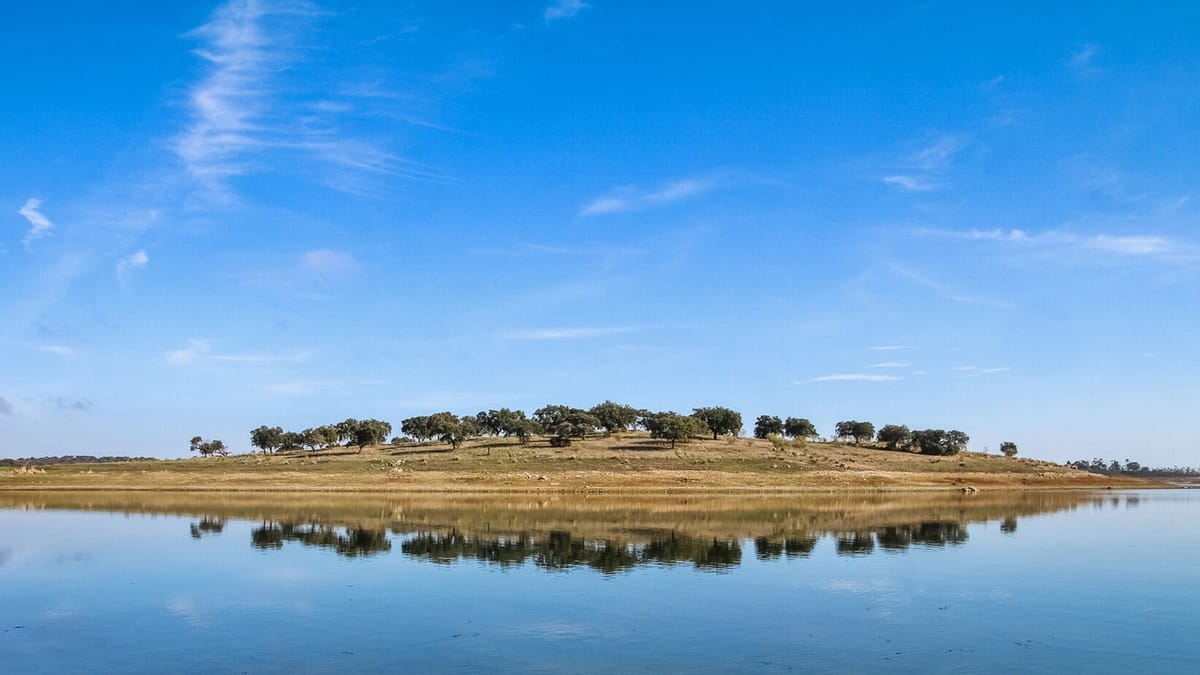
A bird parasite that causes swimmer's itch has been found in freshwater snails at the Alqueva reservoir, the first time the species has been recorded in Portugal. Researchers from the Instituto de Higiene e Medicina Tropical (Institute of Hygiene and Tropical Medicine) of NOVA University Lisbon identified Trichobilharzia franki in snails collected on the shore at Campinho, in the municipality of Reguengos de Monsaraz.
The five-author study, led by Maria Teresa Bispo, is published open access in the journal Science in One Health and was reported by Público on Sunday. It describes Alqueva as the largest artificial reservoir in Western Europe.
What the team found
Over eight field trips between May 2023 and October 2024, the researchers searched 25 shore sites around the reservoir and collected 7,125 snails. Most (6,414) were Physella acuta; 660 belonged to the genus Radix, the usual host of this parasite, and 51 were Gyraulus. Of the 660 Radix snails, 325 survived in good enough condition for DNA analysis.
Four of them, all Radix auricularia collected at Campinho in September 2024, released the parasite's free-swimming larvae under laboratory light. Genetic sequencing confirmed the species. The infection rate across all Radix snails was 0.6 percent, but on the trip and in the habitat where the infected snails turned up it reached 13.8 percent. The Portuguese samples are closely related to T. franki previously recorded in Austria.
What it does to people
The parasite's adult form lives in waterfowl. Its larvae, called cercariae, leave infected snails and swim in search of a bird, and they can burrow into human skin by mistake. The result is cercarial dermatitis, better known as swimmer's itch: intense itching, red bumps and sometimes blisters that usually appear within hours of leaving the water. The paper says the condition is not life-threatening, but that symptoms can become more severe and last longer in people who have been exposed before. Experiments in mice have shown that T. franki can reach the lungs and cause inflammation there.
The authors also cite preliminary answers from questionnaires sent to doctors and pharmacists, which point to human cases compatible with cercarial dermatitis, all reportedly caught at Alqueva. Some Portuguese coverage on Sunday read the paper's abbreviation "CD" as Chagas disease; in the study it stands for cercarial dermatitis.
Birds, heat and water levels
During the surveys the team saw domestic ducks, other ducks and geese, and invasive Egyptian geese around the reservoir, especially in summer. Because Portuguese and Central European samples are so alike genetically, the researchers think migratory birds carry the parasite across the continent.
They note that the species is well documented in Central and Northern Europe, where outbreaks are linked to nutrient-rich water, while the warmer climate and shifting water levels of the south create a different setting "with new implications for public health in Portugal". According to Público, the paper warns that the risk of exposure rises in the warmer months, when there are more snails and more people in the water, and that in serious cases public health concerns can lead to beaches being closed or hold back plans for tourism.
The study does not call for any restriction on bathing. It asks for continued monitoring of snails and birds, particularly at freshwater sites used for recreation, and suggests testing the water itself for parasite DNA. The authors also flag the abundant Physella acuta as a possible host for a related species already found in Austria.
Alqueva is a busy destination for boating, fishing and birdwatching, and it features in the region's energy plans too: EDP dropped its giant floating solar project there in August.