Iberian Orcas Were Already Pushing Boats off the Algarve in 2018, Two Years Before the First Reports, Researchers Say
An AIMM study of seven encounters with its own research boat found eight orcas, mostly juveniles, making contact, one of them new to the behaviour. The authors say it is still spreading and that better mitigation is needed.
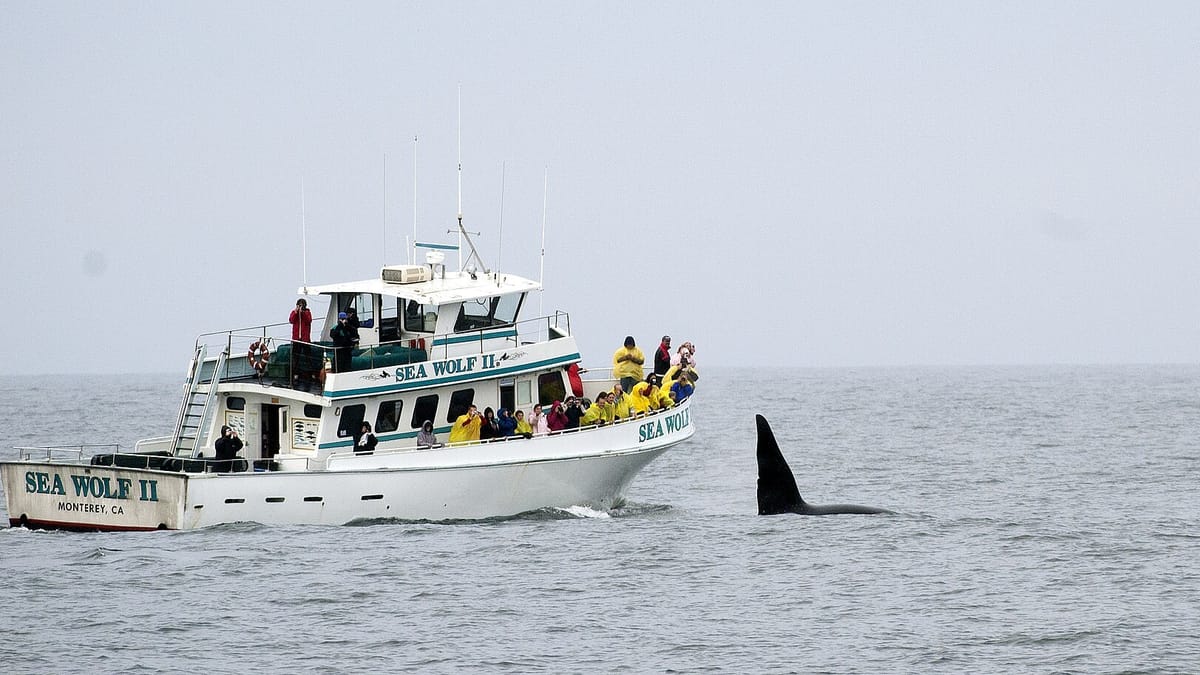
The Iberian orcas that have damaged hundreds of sailing boats off Portugal and Spain were already pushing vessels in 2018, two years before the behaviour was first widely reported. That is the finding of a team from AIMM (Associação para a Investigação do Meio Marinho, the Association for Marine Environment Research), a Lisbon-based research group, whose study appeared in the journal Marine Mammal Science and was reported by Público on Monday.
The paper, "Insights Into a Disruptive Behavior of Iberian Killer Whales (Orcinus orca) With Boats: Perspective From Multiple Interactions With a Research Vessel", was published online on 12 August and is due in the journal's October issue. Its lead author is Joana Castro, of AIMM and of the MARE marine sciences centre at the Faculdade de Ciências da Universidade de Lisboa (University of Lisbon Faculty of Sciences).
Seven encounters, one research boat
The team describes seven occasions between 2018 and 2025 when orcas made physical contact with its own rigid-hulled inflatable boat while it was working off the Algarve. Of the 26 individual orcas the researchers identified during those encounters, eight touched or pushed the boat: two adult females and six juveniles of both sexes, drawn from five recognised family groups (matrilines). One juvenile took part on two separate occasions.
Underwater footage showed that the contacts varied a great deal. According to AIMM's summary, they ranged "from curiosity to much more forceful interactions", from gentle touches to pushes strong enough to tilt the boat. In every encounter the orcas were also seen feeding or foraging, and on some occasions they approached carrying prey.
Two findings stand out. The 2018 encounter is the earliest documented case of this behaviour, predating the official reports by two years. And the team recorded an orca that had not previously been seen taking part, which the authors say shows the behaviour is still spreading from animal to animal through social learning.
No single explanation
Why the orcas do it remains an open question. Scientists have suggested play, exploration, a response to disturbance, or a habit passed on culturally within the group. The AIMM team says curiosity, play and responses to disturbance are all possible explanations, but that its data cannot pin the behaviour to one cause, and it cautions against generalising from a single vessel.
The study also carries an observation that sailors will read closely. On the research boat, keeping the vessel stationary did not reliably lower the intensity of an interaction, while accelerating appeared to make the orcas lose interest. The authors do not present this as advice. They conclude instead that better mitigation measures are needed to prevent harm to both people and orcas, and to secure what they call long-term coexistence. Skippers should keep following the official guidance from the maritime authorities.
A small, endangered population
The Iberian orcas are a distinct subpopulation, and AIMM describes it as critically endangered. That status is one reason researchers want to understand what drives the encounters rather than simply deter the animals.
For the Algarve's sailing and boat-tour trade, the study's message is that the behaviour is older and more widespread among the orcas than the public record suggested, and that it has not faded. The new participant the team recorded suggests the encounters will continue.