A Six-Country Survey Finds One in Five in Portugal Cannot Pay for the Energy They Need, and Its League Table Looks Nothing Like the Official One
Researchers at the Friedrich-Ebert-Stiftung and Fraunhofer IAO put Portugal at 19 percent, second worst of six countries. On Eurostat's official measure, refreshed on Thursday, Portugal is the worst of the six but Poland is the best.
A study presented in Lisbon on Friday morning puts 19 percent of people in Portugal in the group that cannot, or can only with difficulty, pay for the quantity of energy their household needs. The work comes from the Friedrich-Ebert-Stiftung and the Fraunhofer IAO institute in Berlin, and it rests on 17,889 weighted survey responses gathered across Portugal, France, Germany, Italy, Poland and Sweden inside the EU-funded gEneSys project.
Among those six countries only France scored worse, at 25 percent. Italy and Poland came in at 18, Germany at 13 and Sweden at 10.
The league table that does not match the official one
Eurostat refreshed its own energy poverty series on Thursday, and it tells a different story about who the losers are. On the official European indicator, the share of people who cannot keep their home adequately warm, Portugal stood at 15.6 percent in 2025, sixth highest of any country Eurostat covers and close to double the European Union average of 8.8 percent.
But within the six countries the German researchers surveyed, Portugal is the worst on that official measure rather than the second worst. France was at 11.5 percent last year, Italy at 8.6, Germany at 5.7, Sweden at 4.7 and Poland at 3.2.
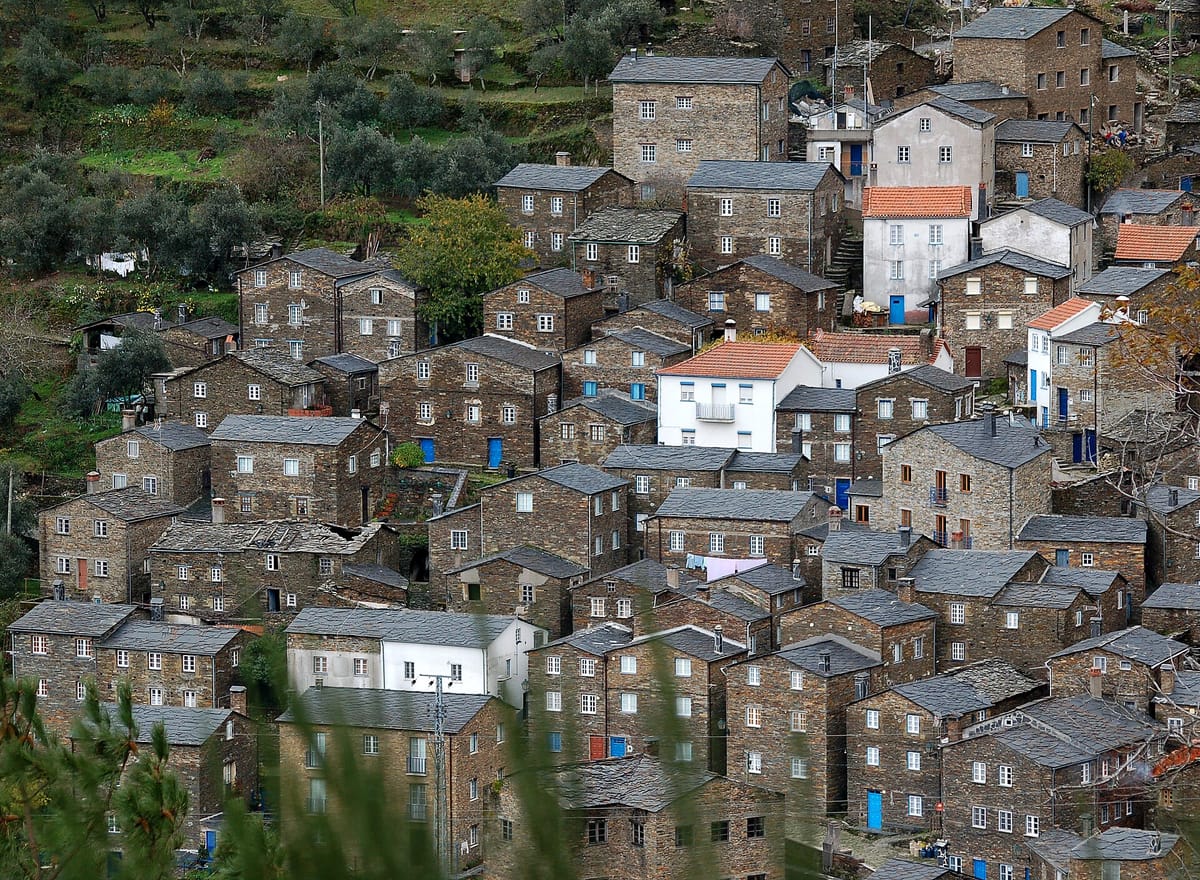
Poland is the case that exposes the gap. Officially 3.2 percent; in the survey, 18. The two instruments are not asking the same thing. Eurostat asks about warmth and nothing else. The survey asks whether the household can pay for the energy and the energy resources it needs to meet all its needs, a question that reaches the petrol tank as well as the radiator. The researchers' explanation for why rural respondents fared worse (22 percent across the six countries, against 14 percent in towns and cities) leans on exactly that: less efficient detached housing, and dependence on a car.
Who carries it in Portugal
The sharpest finding is an intersection rather than a single category. Among women in Portugal with mental health problems living in rural areas or medium-sized towns, 33 percent said they could not pay for the energy they need. Among people with no mental health problems, high educational attainment and a big-city address, the figure falls to 7 percent. The gender split is wide on its own: 22 percent of Portuguese women against 15 percent of men.
In Portugal, Italy and France the study links health limitations to greater exposure, which the authors put down partly to higher energy needs for medical equipment or heating, and partly to worse housing.
The official statistics carry the same signal. In Eurostat's 2025 figures, 27.5 percent of single women in Portugal could not keep the home adequately warm, against 20.3 percent of single men. Among people below the at-risk-of-poverty line, the share was 30.6 percent.
What is already in place
The seminar was organised by the foundation's Lisbon office with the Direção-Geral de Energia e Geologia (Directorate-General for Energy and Geology) and the Observatório Nacional da Pobreza Energética (National Energy Poverty Observatory). The authors' recommendations map closely onto instruments Portugal already runs: cost support adjusted to income and housing, retrofits for rented homes, wider social tariffs, targeted measures for chronic illness or disability. Portugal has the tarifa social de energia, the E-Lar appliance scheme and the Vale Eficiência voucher, the last two of which have had trouble reaching the households they were written for.
The researchers call their analyses exploratory rather than conclusive, and the survey measures what people say about their own situation. On the official series, at least, the direction is downward: Portugal was at 22.5 percent in 2016 and 20.8 percent as recently as 2023. The country is still near the top of the European table, but it is getting there from further away than it was.