A New Barometer Finds Greater Lisbon Residents Praising Their Transport but Marking Down Cleanliness, Parking and Safety
A new Quality Barometer for the Lisbon Region from Nova IMS and the IPQ finds residents who are richer and better-educated than the national average yet mark their region down on cleanliness, parking, noise, security and tourism — while rating its public transport highly.
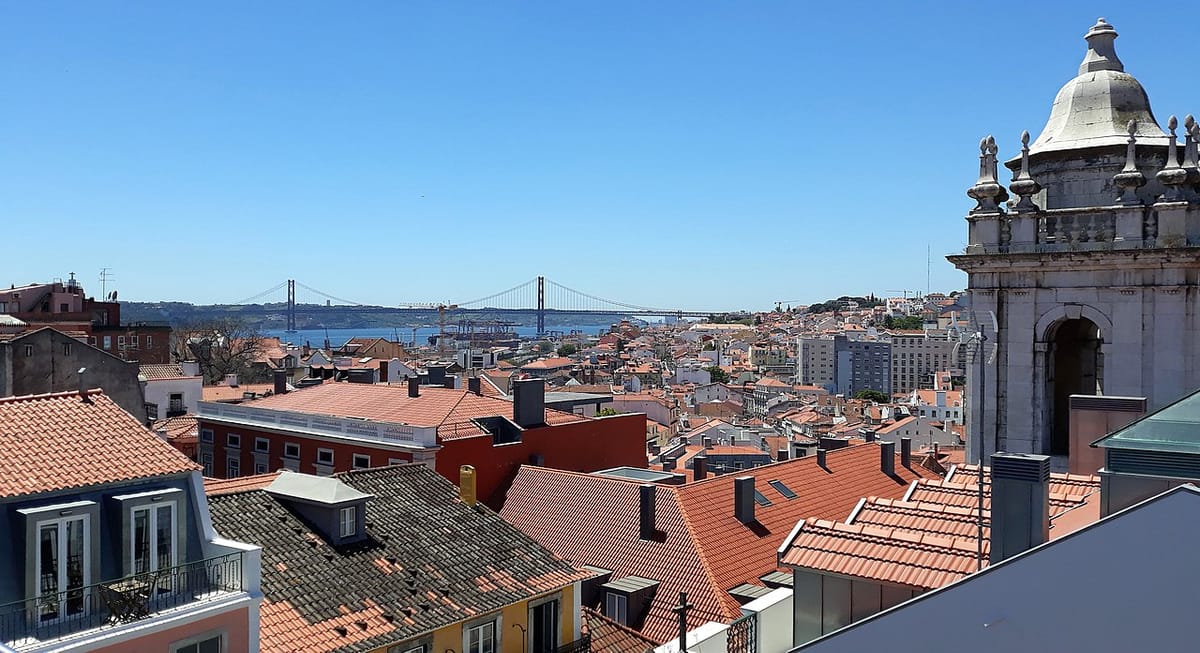
People who live in and around Lisbon are, by most numbers, better off than the Portuguese average — and they are also more irritated by the daily texture of their city. That is the split running through the first Barómetro da Qualidade na Região de Lisboa (Quality Barometer for the Lisbon Region), published on Friday by Nova IMS (the NOVA Information Management School) together with the Instituto Português da Qualidade (Portuguese Institute for Quality, IPQ). Built from 1,613 interviews with residents alongside a battery of statistical indicators, it is billed as the first tool in Portugal to measure quality of life across the metropolitan region on a single integrated model and to trace how one dimension feeds another.
What residents complain about — and what they value
Asked to grade their own region, residents handed out negative marks on a familiar list of urban grievances: street cleanliness and hygiene, parking, noise, personal security, work-life balance, and the pressure of tourism. The positives were just as telling. Public transport — its quality and its reach — scored well, as did the availability of teleworking, participation in volunteering, and conditions for families. In short, residents rate the big systems that move them and support their households, while marking down the everyday friction of a crowded, popular capital.
That tension with tourism echoes a shift the government itself has acknowledged. After a record 30 million visitors, the country has begun pivoting its tourism strategy from volume to value, a change the barometer’s findings on crowding and cleanliness help explain from the resident’s side of the equation.
Richer on paper, squeezed in practice
The economic indicators underline why the region is a magnet. GDP per head in the Lisbon region runs about 30 percent above the national figure — €30,439.70 against €23,430.30 — and unemployment among the university-educated sits at 4.3 percent, below the 5.9 percent national rate. New businesses are created at 4.4 percent a year versus 3.3 percent nationally, and 62.2 percent of the relevant age group is enrolled in higher education, far above the national 43.1 percent.
The strains show up in the same dataset. Long-term unemployment, at 3.5 percent, is worse than the 2.4 percent national average, and the share of households weighed down by housing costs reaches 9.6 percent against 6.9 percent nationally — a reminder that the region’s prosperity is unevenly shared. Housing pressure is the backdrop to measures such as the new emergency fund that will pay tenants facing eviction €537 a month while older frozen rents are unwound. Only 15.7 percent of the region’s housing stock was built after 2000, below the 19.4 percent national share, and green space works out at 40.2 square metres per resident.
Why a barometer, and why now
The point of the exercise, its authors say, is not to rank neighbourhoods but to give the region’s municipalities a shared, quantified picture to build policy on — identifying, in the words of coordinator Pedro Simões Coelho of Nova IMS, where investment in one area (transport, say, or housing) ripples into others such as employment or well-being. For the roughly three million people of the Lisbon metropolitan area, the first reading is a portrait many will recognise: a region that pays well and educates widely, and that still cannot keep its streets clean, its cars parked or its nights quiet to the standard its residents expect.