A Flax-Hulled Solar Boat From Porto Sets Off to Trace 800 Kilometres of Coastline on Sunlight Alone
Students at Porto's engineering faculty have launched Atlântico — a solar boat with hydrofoils and a flax-fibre hull — on an 800km voyage down the Portuguese coast from Matosinhos to Vila Real de Santo António. It is billed as the first such descent, and a showcase for renewable maritime tech.
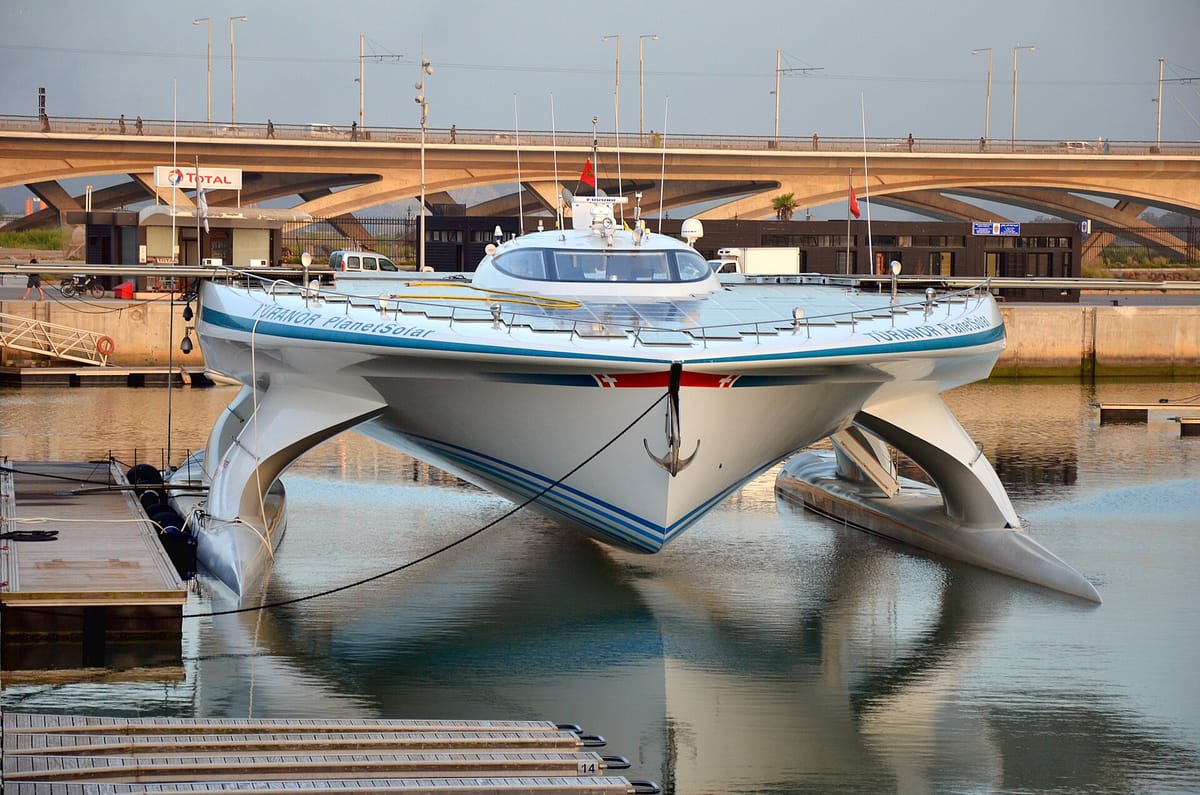
A student-built boat that runs entirely on sunlight has set out from the Porto coast on one of the most ambitious expeditions ever attempted by a Portuguese university team: an 800-kilometre descent of the country's Atlantic seaboard powered by nothing but solar energy.
The vessel, named Atlântico, was designed and built by the FEUP Academic Solar Team (FAST), a student group at the Faculdade de Engenharia da Universidade do Porto (Faculty of Engineering of the University of Porto). Its voyage — billed as the first descent of the Portuguese coast by a solar boat — began in Matosinhos, tied to the opening leg of the Volta a Portugal à Vela 2026 (the Sailing Tour of Portugal).
The route and the technology
From Matosinhos, the boat is following the coastline south with stops at a string of ports and marinas — Figueira da Foz, Cascais, Lisbon and Sines — before finishing at Vila Real de Santo António, on the border with Spain. In total the team will cover roughly 800 kilometres of open sea, a distance the group describes as one of the toughest challenges a FEUP student project has ever taken on.
Two features set Atlântico apart. The first is its use of hydrofoils — wing-like structures that, once submerged, lift the hull clear of the water. By reducing drag, the team says the foils roughly triple the craft's efficiency compared with a conventional hull. The second is the hull material itself: rather than carbon fibre or fibreglass, the builders used flax fibre — a fully natural, plant-based composite that lowers the boat's environmental footprint.
The expedition's stated goals are as much about advocacy as engineering: to demonstrate the potential of renewable energy in the maritime sector, to prove that sustainable materials can withstand demanding real-world conditions, and to inspire the next generation of engineers toward solutions for a warming planet.
It is a fitting showcase for a country that has pushed hard on clean power. Portugal has repeatedly set records in which renewables supplied more than 70% of its electricity, and its largest utilities continue to expand output, with EDP Renewables lifting first-half generation on the back of a solar surge.
What This Means for Expats
- A window into Portugal's engineering scene: Projects like FAST show why the country is drawing clean-tech talent and investment. If you work in energy, materials or naval engineering, Porto's university ecosystem is one to watch.
- Follow the boat down the coast: The stops — Figueira da Foz, Cascais, Lisbon, Sines, Vila Real de Santo António — double as a tour of Portugal's marina towns, and the arrivals are open, family-friendly moments to catch a genuinely novel craft up close.
- Sailing season is peaking: The voyage rides alongside the Volta a Portugal à Vela, part of a busy calendar that also sees The Ocean Race return to Cascais in 2027 — good news if you sail or want to learn.
- On the water yourself? If the expedition inspires you to get afloat, our guide to the recreational boating licence walks through the categories, the medical certificate and how to register a boat.
Whether or not Atlântico completes all 800 kilometres on schedule, the attempt itself makes a point: the Atlantic that has shaped Portugal for centuries can now be crossed, at least in part, on sunlight alone.