A EUR 20.5 Million Biomethane Plant at Mares Draws 'We Want to Live in Peace' From Alenquer Residents
Gas da Terra wants to treat 84,000 tonnes of livestock effluent a year at Abrigada e Cabanas de Torres, with 30 lorries a day. The mayor says the council approved only a preliminary information request and sets one test: guarantee no odours, or it cannot be built.
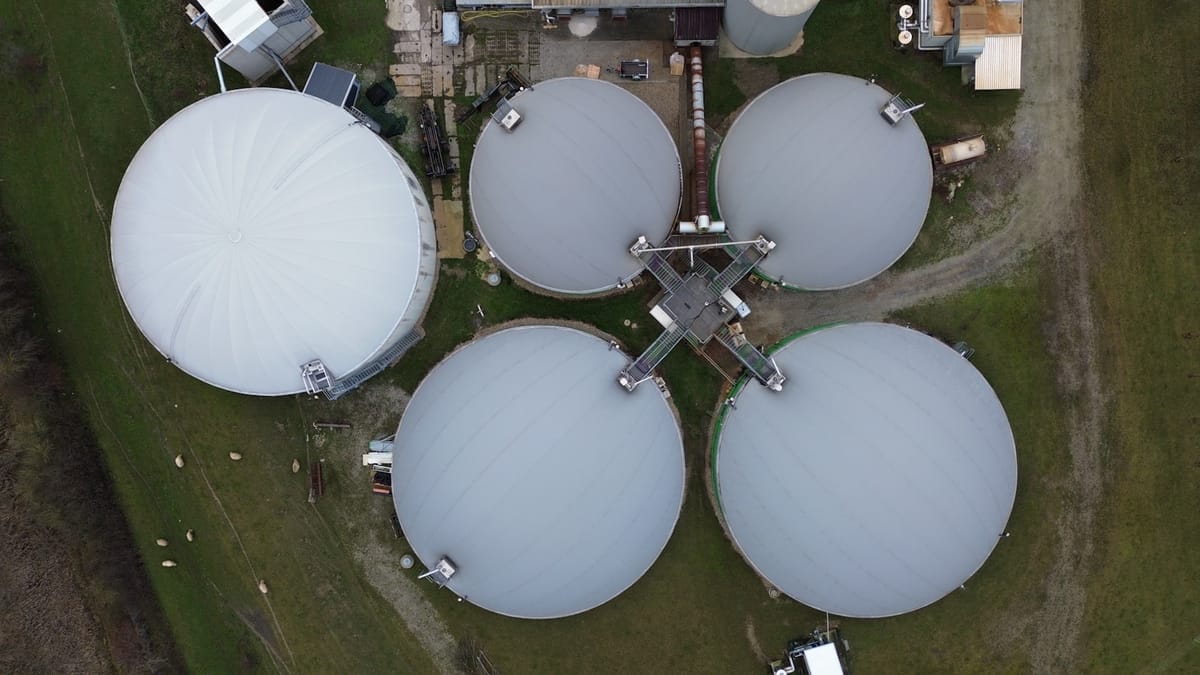
"We do not want that factory, because we want to live in peace." Maria da Conceição Lopes said it at Monday's public meeting of the Alenquer council, and it captured the mood in the room. The project under discussion is a €20.5 million plant at Marés that would turn livestock effluent into natural gas and agricultural biofertiliser. It is in public consultation until 15 September.
Residents came to object. Henrique Martinho called it "a manure factory" that would harm the population of Marés. Horácio Lopes said the settlement would lose its quality of life and that the water lines were not safeguarded. José Manuel Catarino did the arithmetic out loud: "They are going to treat 84,000 tonnes a year. It is manure that will pass through Ota, Abrigada and Cabanas de Torres and end up inside Marés."
Where the decision actually sits
Mayor João Nicolau's answer was partly procedural and partly a warning to the developer. In August 2025, he said, the municipal executive approved only the pedido de informação prévia, the preliminary information request; it has not authorised construction. At this stage the file is not with the council at all but with the Agência Portuguesa do Ambiente.
He shared the residents' concerns and set a condition. "Either the company guarantees there are no odours or, if that cannot be guaranteed, the unit cannot be built," he said. The municipality will file its own submission in the public consultation, flagging the odours the plant could push onto neighbouring settlements, and he urged residents to file theirs.
What the developer proposes
The plant is planned for Marés, in the freguesia of Abrigada e Cabanas de Torres, a site chosen for its direct connection to the EN1 and to the national gas network. It would treat 230 tonnes of waste a day, or 84,000 tonnes a year, drawn from 18 poultry, pig and cattle farms within 30 kilometres.
According to the non-technical summary, it would produce 1,357 normal cubic metres of biogas an hour, yielding 700 cubic metres of biomethane, and the promoters put the avoided emissions at 437,000 tonnes of carbon dioxide. The unit would create about seven direct jobs and 20 indirect ones, and turn over roughly €6 million a year.
On the objections residents raised, the developer's case is mitigation. Thirty lorries a day, on working days only and in daylight hours. Five hectares of site with trees around the perimeter. Storage and treatment entirely inside closed, technology-monitored buildings to stop odour and dust escaping and to prevent contaminated water leaking into the soil. The promoters say they will comply with the most restrictive odour legislation in Europe, and that siting the plant close to the farms cuts road distances for both the effluent coming in and the biofertiliser going out.
Bernardo dos Santos, director-general of Gás da Terra, told Lusa the company would like to start building in a year. The environmental licence has to come first: the Declaração de Impacte Ambiental is expected by the middle of 2027, and the construction licence from the council after that.
The national picture
Portugal has been pushing hard on this fuel. The government locked in a 9.1 percent biomethane quota for 2030 in April, with dozens of projects queued at the energy directorate, and in May a decree-law let the national gas system absorb part of producers' connection costs. Alenquer is where that national ambition meets a specific village and a specific smell.
What This Means for Expats
- The consultation closes on 15 September. Anyone can file a submission on a project in avaliação de impacte ambiental through the APA's Participa portal. Residency is not a requirement.
- A pedido de informação prévia is not a permit. If you are buying property near a proposed industrial site, that distinction matters: the council saying yes to a preliminary enquiry commits it to nothing.
- Odour is a legal category, not just a complaint. The mayor made it the explicit test for the licence. If you object to a plant of this kind, odour modelling is the ground to argue on.
- Expect more of these. Portugal's 2030 biomethane target means dozens of similar plants are working through licensing, most of them sited next to livestock farms in rural councils.