Decreto-Lei 94/2026 Enters Into Force on 2 May Letting the National Gas System Cover Part of Biomethane Connection Costs — ERSE Has 180 Days to Set Cost-Sharing Criteria
DL 94/2026 enters into force 2 May, letting the National Gas System cover part of biomethane connection costs. ERSE has 180 days to set the criteria. Plano de Ação targets 9.1% of gas demand from biomethane by 2030, 18.6% by 2040; €20M PRR top-up announced.
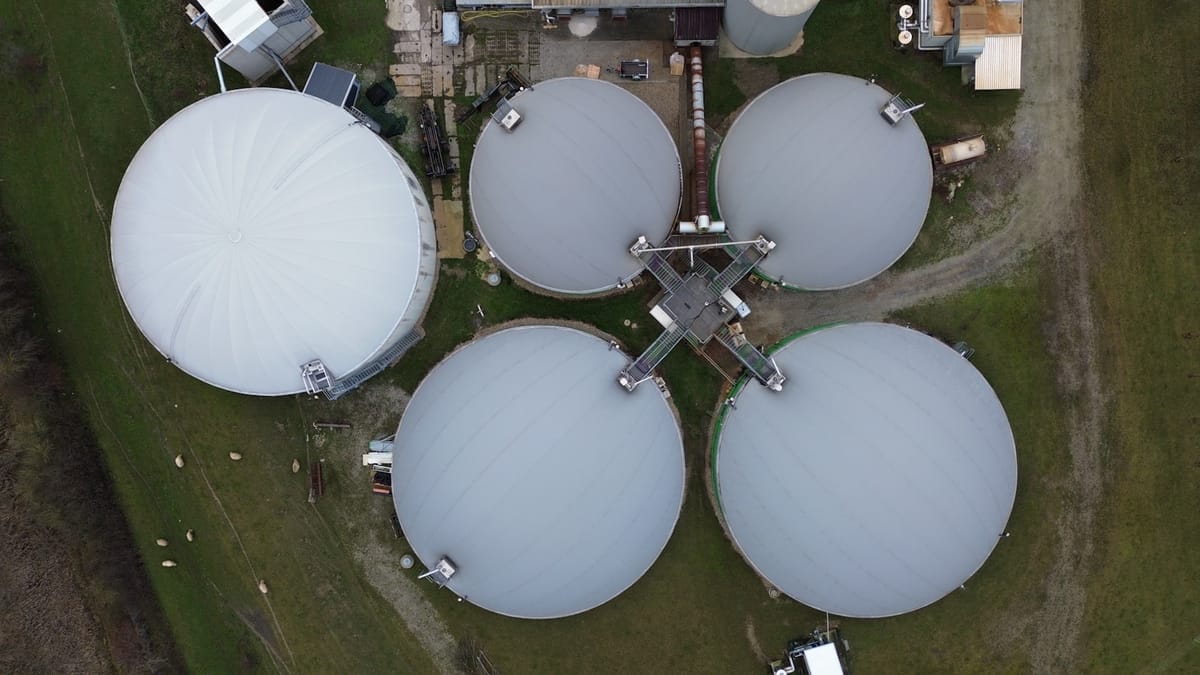
Decreto-Lei n.º 94/2026, de 30 de abril, enters into force on Saturday, 2 May 2026, rewriting the rules under which biomethane and other renewable-gas producers connect to the public gas grid. The diploma — promulgated by President António José Seguro on 22 April and signed off by the Council of Ministers earlier in the month — lets the National Gas System absorb part of the connection costs that until now sat entirely with the producer, and gives the Energy Services Regulatory Entity (ERSE) 180 days to publish the criteria and methodology for the new cost-sharing mechanism.
The change targets one of the central bottlenecks identified by the Plano de Ação para o Biometano 2024-2040: small biogas plants in the interior, often built on dairy farms, slaughterhouse waste streams or municipal organic-waste digesters, were stalling at the financial close because the bill for laying a connection pipeline to the nearest REN distribution node could rival the cost of the digester itself.
Under the new framework, those connection costs — covering the infrastructure from the production establishment up to and including the injection point into the Public Gas Network — can now be shared with the regulated gas system, with ERSE setting the eligibility cut-offs and the percentage split. The decree also clears the path for hydrogen producers to plug into the same regime.
The targets
Portugal's stated ambition under the Biomethane Action Plan is 2.7 TWh of biomethane production by 2030 — equivalent to 9.1 percent of national natural-gas consumption — and 5.8 TWh by 2040, which would cover 18.6 percent of demand. Those numbers are formally tied to the National Energy and Climate Plan and to the country's REPowerEU obligations.
To get there, the Ministry of Environment and Energy under Maria da Graça Carvalho announced on 24 April a complementary package: a simplified licensing procedure laid out in Despacho Conjunto n.º 1/2026 (APA and DGEG), a procedural manual for project promoters, and an additional €20 million carved out of the reprogrammed Plano de Recuperação e Resiliência (PRR) on top of the more than €400 million already earmarked for renewable gases. Forty-two biomethane projects are currently in the national pipeline; sixteen have already secured public co-financing, and the operational reference case — the Aljustrel biomethane plant feeding gas to Évora — is the template the ministry is pushing.
What This Means for Expats
- Gas bills: The cost-sharing mechanism will eventually be funded through regulated tariffs, meaning a small slice of every household and SME natural-gas bill will go toward grid connection of biomethane plants. ERSE will fix the rate over the next six months.
- Rural property buyers: If you own or are eyeing land in the Alentejo, interior north or south of the Tagus, expect a wave of biomethane project applications nearby — particularly close to existing dairy operations, agroindustrial sites and municipal waste-treatment plants. Project promoters will be looking for connection-feasible sites.
- Heating-system replacement: The diploma reinforces the medium-term case for keeping or upgrading natural-gas boilers rather than ripping them out. Biomethane is fully compatible with existing gas appliances and infrastructure, and is positioned as the decarbonisation route for the gas grid through 2040.
- PRR contractors and engineering firms: The €20 million top-up is reprogrammed PRR money — meaning it must be contracted before the August 2026 PRR closure deadline. Expect a flurry of public tenders in the second half of May and June.
- Where to find the text: The full decree is published in the Diário da República, Série I, of 30 April 2026. The Despacho Conjunto sits with DGEG.
The next watch points are ERSE's consultation paper on the cost-sharing methodology, expected before the August summer break, and the second-quarter 2026 PRR reprogramming announcement that will detail how the additional €20 million is distributed across the sixteen pre-financed projects and the broader pipeline.