A 107-Year-Old Police Force Sued the Portuguese State on Friday, and Its Inspectors Say Local Commands Now Close at Five With One Officer on Duty
The association representing Maritime Police inspectors and chiefs filed at the Lisbon Administrative Circuit Court against the State and the Navy's military command, citing 182 admissions in ten years against a legal minimum of 722, and drawing the comparison with SEF.
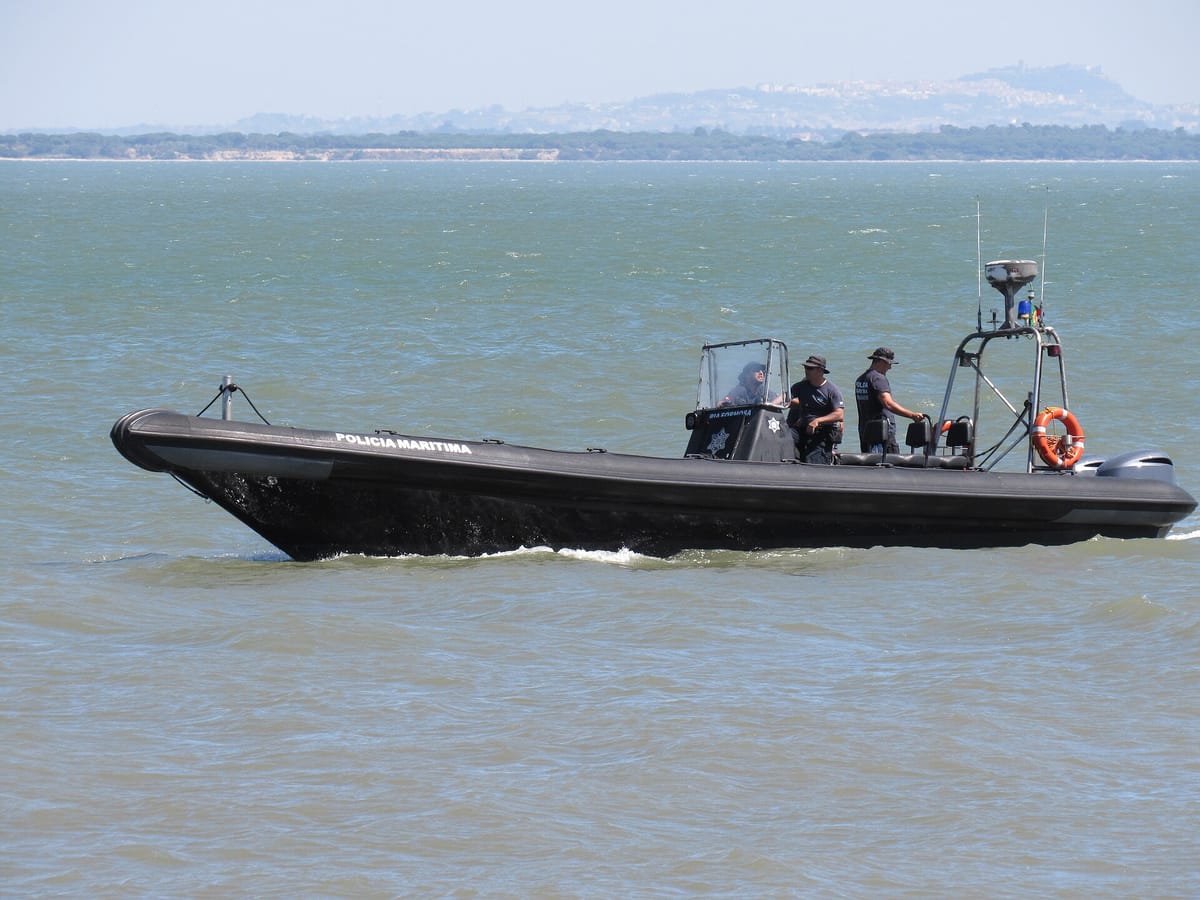
The day before the Polícia Marítima (Maritime Police) turns 107, the association representing its inspectors and chiefs took the Portuguese State to court.
The Associação de Inspetores e Chefes da Polícia Marítima (Association of Inspectors and Chiefs of the Maritime Police, AICPM) filed its action at the Tribunal Administrativo de Círculo de Lisboa (Lisbon Administrative Circuit Court) on Friday and announced it on Saturday morning. The defendants are the State and the military command of the Armada, the Portuguese Navy.
"On the verge of completing 107 years of existence, the Polícia Marítima has hit bottom," the association said. It describes a force in "total chaos" and "material collapse", and says it filed only after exhausting every avenue of dialogue.
What the association says a shift now looks like
The complaint is unusually concrete about daily operations. Local commands, the association says, are running with a single officer on duty and closing to the public from 17:00. The Grupo de Ações Táticas (Tactical Actions Group), the force's intervention unit, has been reduced to one boat. Its off-road vehicles are old enough that they "fail en masse" at their periodic roadworthiness inspections.
Behind that sits a staffing arithmetic the association puts plainly: 182 officers admitted across ten years, against a legal establishment it says should be 722. It wants that minimum restored.
The money problem, on its account, is structural rather than cyclical. The Maritime Police has no budget of its own. It lives on what the association calls "crumbs" from the Navy, and the Ministério das Finanças (Ministry of Finance) has "strangled" new entries into the career.
The command question at the centre of the case
The legal core of the action is not money but hierarchy. Under Decreto-Lei n.º 44/2002 of 2 March, the Maritime Police sits inside the operational structure of the Autoridade Marítima Nacional (National Maritime Authority), and the Chefe do Estado-Maior da Armada (Chief of Staff of the Navy) holds the office of national maritime authority by inherence of his post. The association's position is that this gives him no hierarchical command over the police force itself, and it calls his involvement "unlawful interference".
It points to a specific consequence: three commanders-general of the Maritime Police have been removed from office in two years.
The association also objects to what it calls a "scheme" of placing Navy personnel in Maritime Police roles or in the Direção-Geral da Autoridade Marítima (Directorate-General of the Maritime Authority), which it says carries "high potential to facilitate the promotion mechanisms" of the Navy's own staff.
"The association repudiates the silence of successive governments, which tolerate a military command dictating the rules and trampling the legitimate command of this security force," the statement said.
The comparison it chose to make
The AICPM ended with a deliberate parallel: it "refuses to stand by and watch the deliberate disappearance of this specialised police force", drawing the comparison with the extinction of the Serviço de Estrangeiros e Fronteiras (Foreigners and Borders Service).
That is a pointed choice of precedent. SEF was wound up and its functions split between other bodies, and the restructuring is still working itself out: the PSP border unit that inherited its policing role has concentrated officers at airports while leaving the interior thin. For a small specialised force, being folded into something larger is not a hypothetical.
Residents see the Maritime Police mostly at the coast, in beach safety, pollution response and fisheries enforcement. It was one of the bodies in the tax authority's summer coastal sweep, which put 58 maritime police alongside 63 inspectors across nine districts.
Neither the Navy nor the government had responded publicly by Saturday afternoon. Administrative actions of this kind move slowly, and nothing about the force's command or its budget changes because a case has been filed. What the filing does is put a set of operational numbers on the record that the State will now have to answer in writing rather than in a press statement.