Walnut Plantation Erases Two 5,000-Year-Old Antas and a Roman Vila at Herdade das Atafonas in Torre de Coelheiros — Câmara Opens Inquérito Interno and Tutela Refers Case to the Ministério Público
Two 5,000-year-old antas and a Roman vila at Herdade das Atafonas in Torre de Coelheiros, Évora were destroyed for a NOGAM walnut plantation — the Câmara opens an inquérito interno, the tutela refers to the Ministério Público, with a 2020 Vale da Moura precedent in the same parish.
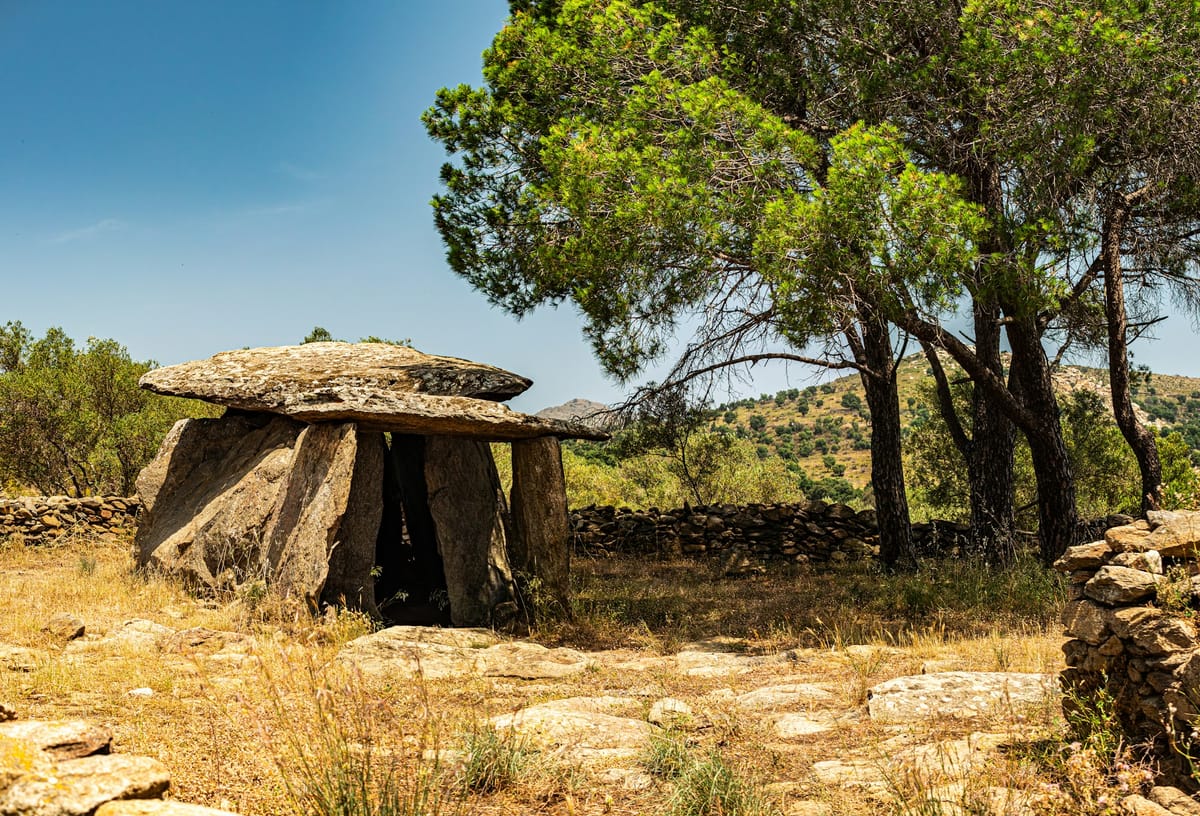
Two antas (megalithic dolmens) and what is believed to be the structural footprint of a Vila Romana (Roman villa) were destroyed at the Herdade das Atafonas — a large farm in the parish of Torre de Coelheiros, concelho de Évora, in the Alentejo Central — to clear ground for a noguueira (walnut) plantation, in a case first reported by SIC Notícias on Saturday 6 June 2026 and pulled through the press wire by Expresso the same day. The Câmara Municipal de Évora (CME, Évora City Council) has opened an internal inquérito (inquiry); the cultural-heritage tutela — the Direção Regional de Cultura do Alentejo (DRCALEN, Alentejo Regional Directorate for Culture) — will refer the case to the Ministério Público (MP, Public Prosecutor's Office).
The destroyed structures sit inside a herdade operated by NOGAM, Unipessoal Lda — the walnut-processing arm of the Ortigão Costa family group and operator of what it bills as the largest noz (walnut) processing facility in Portugal and Europe, with capacity of 6,000 tonnes a year. The factory was inaugurated on 18 June 2021 at the same Herdade das Atafonas, with the surrounding plantation expanded across the property in the years since. Of the two antas that the local archaeological community had documented on the site, the SIC Notícias field reconstruction finds "nem vestígios" (no traces at all) — "foram literalmente apagadas" (they were literally erased). The Vila Romana footprint is partially preserved as visible structural remnants but the surrounding context layer is gone.
NOGAM's first-instance defence, as carried by SIC Notícias and Expresso, is that the company "desconhece o problema" (was unaware of the problem) and that it complied with all legal requirements ahead of the plantação intensiva. The operator's specific procedural argument is that the certidão (certificate) issued by the Câmara Municipal de Évora for the agricultural intervention zone did not mention the existence of any património (heritage) on the affected area and did not flag any medidas de salvaguarda especiais (special safeguarding measures) — leaving the operator, in its reading, with no notice that the site was archaeologically significant. The CME inquérito interno will principally test that defence: whether the cartography held by the municipal services flagged the structures, whether the certidão correctly transcribed those flags, and whether the operator was on constructive notice through other means.
The reference frame for the destroyed antas is the catalogue of the Carta Arqueológica do Concelho de Évora — the municipal archaeological register that historically draws on the foundational Leisner publications of 1949 and 1959, both of which include a Anta da Herdade das Atafonas entry. The age of these megalithic structures in the Alentejo is typically pinned at 5,000 years or more, from the late Neolithic through the early Chalcolithic. The arqueóloga (archaeologist) Leonor Rocha — referenced in the SIC Notícias field piece — has excavated the comparable Anta da Murteira de Cima in the same Torre de Coelheiros parish, providing a published reference for the typology and dating of the now-destroyed structures.
The case has uncomfortable precedent in the same parish. In summer 2020, an anta at the Herdade do Vale da Moura — also in Torre de Coelheiros — was destroyed during an intensive amendoeira (almond) plantation operation. The Direção Regional de Cultura do Alentejo lodged a queixa-crime (criminal complaint) in September 2020; the Ministério Público opened the inquérito at the Departamento de Investigação e Ação Penal (DIAP, Department of Criminal Investigation and Prosecution) of Évora in October 2020. Post-event restoration measures were eventually imposed on the agricultural operator under the heritage-impact assessment regime. The fact that the Atafonas case sits less than six years later in the same parish — this time with walnut rather than almond as the receiving crop — frames the recurrence as a systemic process failure rather than a one-off, and is the part of the SIC Notícias reporting most likely to feed the MP's instrução of the new file.
The wider classification frame is moving on a parallel track. The Megalitismo do Alentejo as a thematic complex is currently in the formal classification process as Património de Interesse Público (Public Interest Heritage) — the second-highest tier of Portuguese heritage protection under the Lei de Bases do Património Cultural — with more than 2,000 monuments already inscribed in the candidate dossier. The two destroyed Atafonas antas no longer form part of that list. Whether the destruction reduces the candidate count or — more likely — accelerates the classification timetable as a corrective response is now a question for the Direção-Geral do Património Cultural (DGPC, Directorate-General for Cultural Heritage), which leads the inscription and prepares the proposta de classificação for Council of Ministers approval.
The downstream legal exposure for NOGAM is substantial. The Código do Património Cultural classifies the destruição (destruction) of inscribed or in-classification cultural property as a crime, with prison terms of up to three years and proportional fines, alongside the requirement for a impacte arqueológico (archaeological impact) assessment ahead of any ground-disturbing agricultural conversion of land flagged in the regional archaeological register. The MP's instrução will need to settle two adjacent questions: whether the operator had a duty of care to consult the Carta Arqueológica before initiating the plantação independent of the certidão received, and whether the CME services failed to transcribe the relevant cartography flags into the certidão delivered. Both lines have implications for who bears the criminal exposure — the operator, the municipal services, or both.
What This Means for Expats and Residents
- Alentejo land buyers must check the Carta Arqueológica directly: If you are negotiating the acquisition of land in the Alentejo — particularly in the high-density megalithic belt running across Évora, Reguengos de Monsaraz, Mourão, Alandroal and Estremoz — the Atafonas case underscores that relying solely on the municipal certidão is insufficient. The Carta Arqueológica do Concelho is a separate register, often more granular and earlier-updated than the certidão transcription pipeline, and it is freely consultable through the CME (and equivalents) and through the DGPC's online portal.
- Heritage flagging changes the value-at-stake on rural land: An archaeologically flagged parcel cannot be converted to a high-density plantação intensiva without an impacte arqueológico assessment, which substantially adds to the timeline and cost of the conversion. If you are pricing land for an olive, almond, walnut or vine intensification project, factor an archaeology-clearance line into your due diligence.
- For residents in the affected areas, classification accelerates protection: If you live in or near the megalithic belt of the central Alentejo, the Atafonas episode is more likely to accelerate the public-interest classification of the Megalitismo do Alentejo complex than to slow it down. The downstream consequence is tighter planning controls on land-use change in the surrounding paisagem (landscape) — which most owners experience as a positive market-value signal rather than a constraint.
- The 2020 precedent matters for the MP timeline: Because the Vale da Moura file sits at the DIAP de Évora, with a similar fact pattern less than six years old, the MP can move faster on the Atafonas case by relying on the legal architecture already constructed in the earlier instrução — implying constituição de arguido and possibly cautelar measures inside the next quarter rather than the late-2027 timeline that would be more typical of a fresh archaeological-destruction file.
- Tourism-side preservation: the Anta da Murteira de Cima is still visitable: If you want to see what the destroyed Atafonas antas would have looked like in their preserved state, the Anta da Murteira de Cima — excavated by Leonor Rocha and signposted from Torre de Coelheiros — remains the best in-parish reference, sitting alongside the better-known Cromeleque dos Almendres and Anta Grande do Zambujeiro just to the west, both an easy day-trip from Évora.
The SIC Notícias field report is the original source for the Atafonas tape and the press-wire pickup is carried through Expresso (Agência Lusa). The Câmara Municipal de Évora has not yet published the terms of reference for its inquérito interno; the Direção Regional de Cultura do Alentejo has not yet filed the queixa-crime to the DIAP. We will return to the file when the queixa is lodged and when DGPC publishes the next update on the Megalitismo do Alentejo classification timetable. On the heritage, culture and things-to-do side of the file, Almada's archaeological digs opening to the public in July sets the latest reference. On the heritage, museums and natural-science side of the file, the near-complete armoured dinosaur found at Torres Vedras sets the latest reference. On the culture-policy and arts-funding side of the file, the overhaul of Portugal's arts-funding model sets the latest reference.