The Lisboa Brief — Week of 8 August 2026: The Circular Line Fight Reopens, Funiculars Fall Under New Safety Rules, and the Algarve Overtakes Greater Lisbon on Rents
Odivelas and the PS force the Circular Line studies into the open, the government writes Lisbon's funiculars and elevadores into law after the Elevador da Gloria tragedy, the Algarve overtakes Greater Lisbon on rents, and Kalorama closes out the summer at Bela Vista.
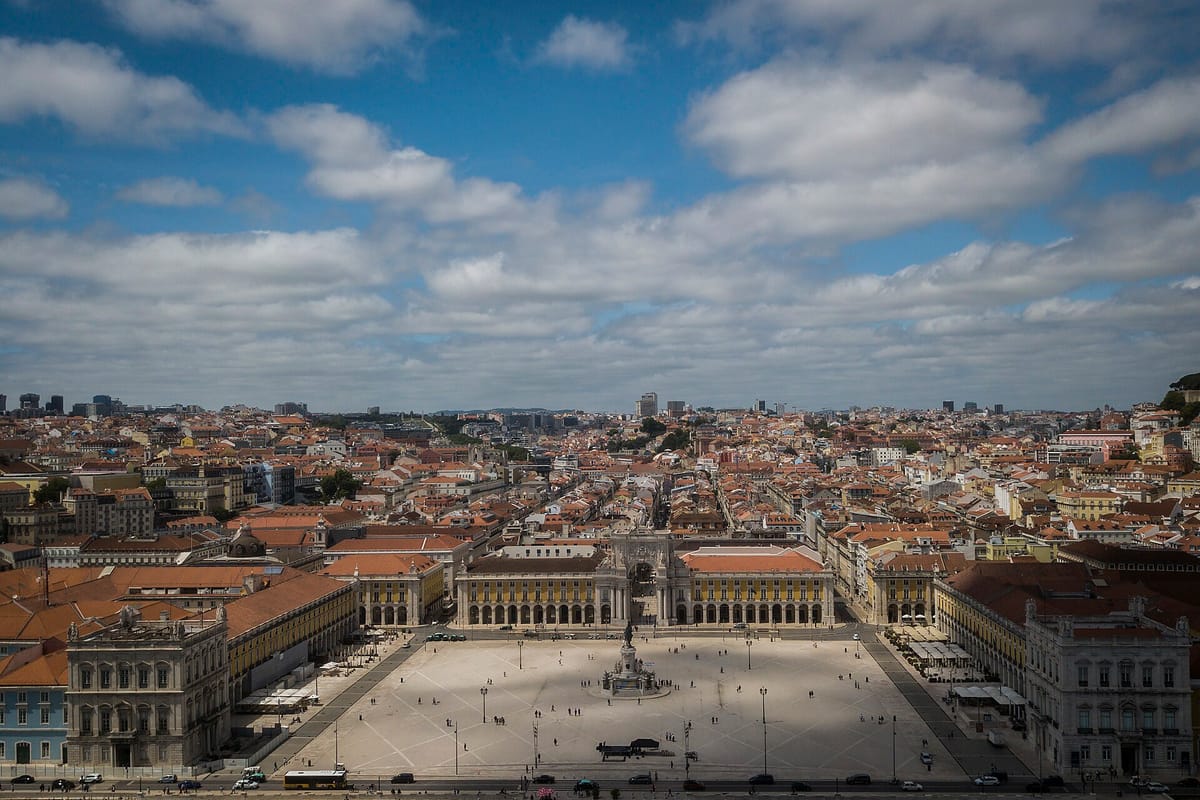
The capital spent the first full week of August arguing about how it moves. A revived fight over the Metro's Circular Line pulled in Odivelas and the opposition; the government finally wrote Lisbon's funiculars and street elevators into the law almost a year after the Glória tragedy; and a fresh rent survey confirmed the region has been overtaken by the Algarve. Add a reprieve for the Sintra hills, rationed taps on the south bank and a green light for 771 new homes in Marvila, and here is the week Lisbon actually ran.
The Circular Line Fight Reopens
The long-running row over the Metro's Linha Circular (Circular Line) flared back into the open this week, and this time it reached beyond City Hall. On 3 August the municipality of Odivelas formally contested the government's decision to run the line as a full circle, abandoning the alternative Linha em Laço — a "loop" design that would have let trains from Lumiar keep running to Cidade Universitária via Campo Grande rather than being folded into the ring. Mayor Carlos Moedas has argued the loop would have been "worth it, even if it came late."
Three days later the Socialists escalated, demanding the government publish the technical and financial studies used to justify dropping the loop and accusing it of pushing the project through without consulting the northern councils of the Lisbon metropolitan area. The stakes are not small: ECO reports that roughly €170 million has already been sunk into the circular configuration. For commuters, the design choice is abstract until the trains change — but it decides, for a generation, who gets a one-seat ride into the city and who has to change at Campo Grande.
Funiculars Fall Under New Safety Rules
Almost eleven months after the Elevador da Glória derailed on 3 September 2025, killing 16 people and injuring more than twenty, the government has moved to close the legal gap the disaster exposed. This week the Council of Ministers approved a decree-law creating, for the first time, a single licensing regime covering metros, light rail, trams, tourist trains, isolated railway lines and — crucially — cable transport such as the city's celebrated elevadores and ascensores.
The reform hands the IMT (Instituto da Mobilidade e dos Transportes) clear authority to licence, inspect and sanction these systems, with safety rules written specifically for each mode. The preliminary accident report into the Glória had found that it and the nearby Elevador do Lavra sat outside any real supervision, still governed by a 2002 decree that treated them as ordinary trams. Lisbon's three surviving funiculars and the Santa Justa lift are among the most photographed transport in Portugal; from now on they will finally have a regulator that formally answers for them.
The Algarve Overtakes Greater Lisbon on Rents
New July figures from idealista, published on 4 August, hand Lisbon a familiar and unwelcome distinction: the city remains the most expensive municipality in the country to rent, at a median €23.5 per square metre, up 2.8% on the year. But the wider Área Metropolitana de Lisboa — median €20.7/m², up 2.9% — has been dethroned as Portugal's costliest region. That title now belongs to the Algarve, where asking rents leapt an extraordinary 34.3% over twelve months to €22.5/m².
The national picture turned too: rents across Portugal rose 0.9% in July, snapping six straight months of decline. For anyone hunting a Lisbon lease this summer, the takeaway is unchanged — the capital is still the hardest market in the country, even as the south catches up fast.
A Reprieve for the Sintra Hills
The Sintra-Cascais Natural Park will not be carved up. Responding to an alarm raised by the conservation association Finis Terrae — which warned that Sintra's forthcoming revision of its municipal master plan (PDM) could strip the park's protected status to "build a city" — the Environment Minister this week ruled out any risk of the park being declassified or downgraded. The reassurance matters well beyond Sintra's granite peaks: the park is the green lung and weekend escape for much of western Greater Lisbon, and any loosening of its boundaries would have opened one of the region's last large protected landscapes to development pressure.
Almada's Taps Stay Rationed
On the south bank, Almada has prolonged its municipal water-supply "alert situation" until 31 August, citing the combined strain of a hot, dry summer and the surge of tourists on the Costa da Caparica. Average reserves stood at around 78% at the end of July — enough to keep the taps running, but tight enough that the council is asking residents and visitors to curb non-essential use through the rest of the month.
Marvila Clears 771 New Homes
Eastern Lisbon's long riverside makeover took another step as the Câmara approved the subdivision of the Matinha Execution Unit in Marvila, carving the old industrial site into 22 plots for 771 new homes. It is one of the larger housing decisions the city has taken this year, landing in a district that has swung in barely a decade from warehouses and gasworks to one of Lisbon's fastest-changing fronts on the Tagus. Whether it delivers the mix of prices the city keeps promising is the test worth watching.
On in Lisbon This Month
Festival Kalorama closes out the summer at Parque da Bela Vista on 28-30 August, with Robbie Williams, Deftones and Clipse topping a bill that also features Turnstile, Interpol, Violent Femmes and Freddie Gibbs & The Alchemist. At the Calouste Gulbenkian, the sweeping Arte & Moda ("Art & Fashion") exhibition runs through the summer, pairing painting, porcelain and tapestry with haute couture from the Givenchy archives and Guo Pei. And down on the river, the MAAT marks its tenth anniversary with its largest-ever showing of the Fundação EDP collection alongside work by Christian Marclay and Pedro Cabrita Reis — a cool, air-conditioned refuge for the hottest afternoons.
That is the capital's week. The Lisboa Brief returns next Friday.