Volta's Operator Hands the Minister 14 Measures on Litter and Supermarket Pressure, as Lisbon Declines to Meet and Blind People Demand Their Deposits
SDR Portugal met the environment minister's 16 October deadline with a plan of 14 measures to cut street litter and ease pressure on supermarket machines, as Volta passed 500 million containers. Lisbon's mayor refused to meet it, and ACAPO says blind people cannot reclaim their 10 cents.
SDR Portugal, the non-profit association that runs Volta, Portugal's deposit-return scheme for drinks bottles and cans, sent the Government its answer to the litter problem on Friday, 16 October. That was the deadline set by the Ministra do Ambiente e Energia (Minister of Environment and Energy), Maria da Graça Carvalho, who on 30 September asked the association for concrete solutions to the rubbish being spread in the streets.
The plan arrives in the week the scheme passed 500 million containers collected, according to SDR Portugal. It also comes as pressure on Volta builds from several directions at once: Lisbon's mayor, an association of blind people, and a petition asking for the scheme to end.
What the plan says
SDR Portugal has not published the document. What is known comes from the association's statement, as reported by the Lusa news agency:
- It sets out 14 measures under four strategic headings, plus a cross-cutting heading on governance and monitoring.
- It spells out what SDR Portugal is and is not legally responsible for, and proposes a cooperation plan with municipalities, parish councils and the Sistemas de Gestão de Resíduos Urbanos (SGRU, the regional urban waste management systems).
- It aims to take pressure off the return machines at supermarkets.
- It wants to improve access to the existing network, extend it to parts of the country with fewer return points, and add points in busy places such as airports and bus and train terminals.
"The document aims to help make the system more effective and to deepen coordination between the different parties responsible for waste management, street cleaning and land management," the association said. The 14 measures themselves have not been described, and the minister has not yet said what she makes of them.
Why the minister asked
Volta began in April. Shoppers pay a 10 cent deposit on each single-use plastic bottle or metal can and get it back by returning the empty container to a machine. Since then, especially in the big cities, people looking for containers to return have been going through recycling and rubbish bins and leaving the contents on the street. Mayors in Lisbon, Porto, Faro and Funchal have complained about the litter, and about the lack of return points in inland municipalities. The minister acknowledged in September that the scheme had problems, but she has rejected the idea that it causes a "social scourge". She says it makes visible the poverty that already exists in the big cities, and points out that a deposit scheme is compulsory under EU law.
Lisbon refuses to meet
Carlos Moedas, the mayor of Lisbon, has called for the scheme to be scrapped. SDR Portugal confirmed to the weekly Expresso that it had asked to meet him and was told he was not available. Among the things it wanted to discuss were six Volta kiosks to make returns easier for restaurants and hotels. Asked about the refusal, the mayor's office did not answer Expresso.
On Wednesday, in Brussels, Moedas said he had asked the European Commissioner for the Environment, Jessika Roswall, to review the rule that requires member states to run deposit-return schemes. He said he showed her videos and photographs of the situation in Lisbon, and that she agreed to arrange a meeting between the Commission, the Portuguese Government and Lisbon City Council. The day before, at the European Committee of the Regions, he called Volta's results in the capital "terrible". He also said he had reports of people in drug treatment who now use the scheme to keep funding their addiction; he has not published those reports.
Blind people say they cannot get their money back
On Thursday, 15 October, World White Cane Day, the Associação dos Cegos e Amblíopes de Portugal (ACAPO, the association of blind and partially sighted people) launched a campaign called "Quero o meu dinheiro do Volta" ("I want my Volta money"). It has complained to the Government, the Provedor de Justiça (Ombudsman) and the ASAE (the food and economic safety authority) of discrimination on the grounds of disability, and asked SDR Portugal for an urgent meeting.
Everyone pays the 10 cents, ACAPO says, but blind people cannot claim it back without help. They cannot recognise which containers carry the deposit, put them into the machines, make sense of the system or collect the refund slip. It is asking for:
- accessible manual or assisted returns at every return point;
- a national line for information and complaints;
- no new machines installed unless blind people can use them.
"A truly sustainable system also has to be truly inclusive," said Rodrigo Santos, the president of ACAPO's national board.
Getting your deposit back
Nothing in the plan changes how returns work for now. According to the scheme's own answers to common questions:
- The machines take one container at a time. Containers do not need washing, but they must be empty.
- The refund can come as a voucher you can exchange for cash, a shopping voucher, a discount, a credit on a loyalty card or a donation.
- In supermarkets and hypermarkets you can always ask for the money in cash. You do not have to spend it in the shop.
- Vouchers printed by the machines are valid for one year.
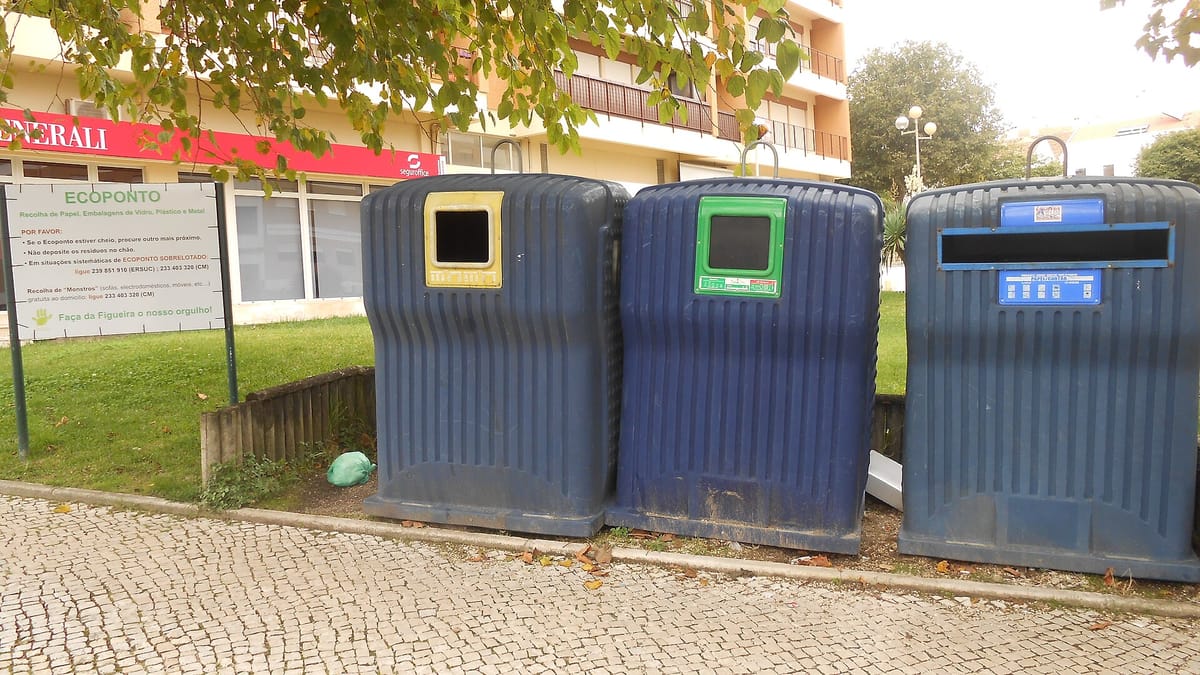
- Containers the machine does not accept go in the ordinary recycling bin (ecoponto).
Glass is not part of the scheme. The return point map is on the Volta website. Deposits that are never claimed stay inside the scheme: as we reported on 5 October, close to 20 million euros had gone unclaimed by the end of the summer.
What happens next
A petition asking for the scheme to end has gathered tens of thousands of signatures. The minister now has SDR Portugal's plan; any measures that need the municipalities will depend on them signing up, and Lisbon has so far declined even to meet.
Sources: SDR Portugal's statement of 16 October and ACAPO's statement of 15 October, both as reported by Lusa and published by Observador (ACAPO); Expresso's report on the Lisbon meeting, as carried by Observador; and the Volta website.