Three Appeal Judges Sue Over the Points Table That Fills Portugal's Supreme Court Until 2028
Gazette notices show three appeal judges challenging the Superior Council of the Judiciary's ranking for Supreme Court seats, where half a point can separate candidates and one claim seeks to void the whole list.
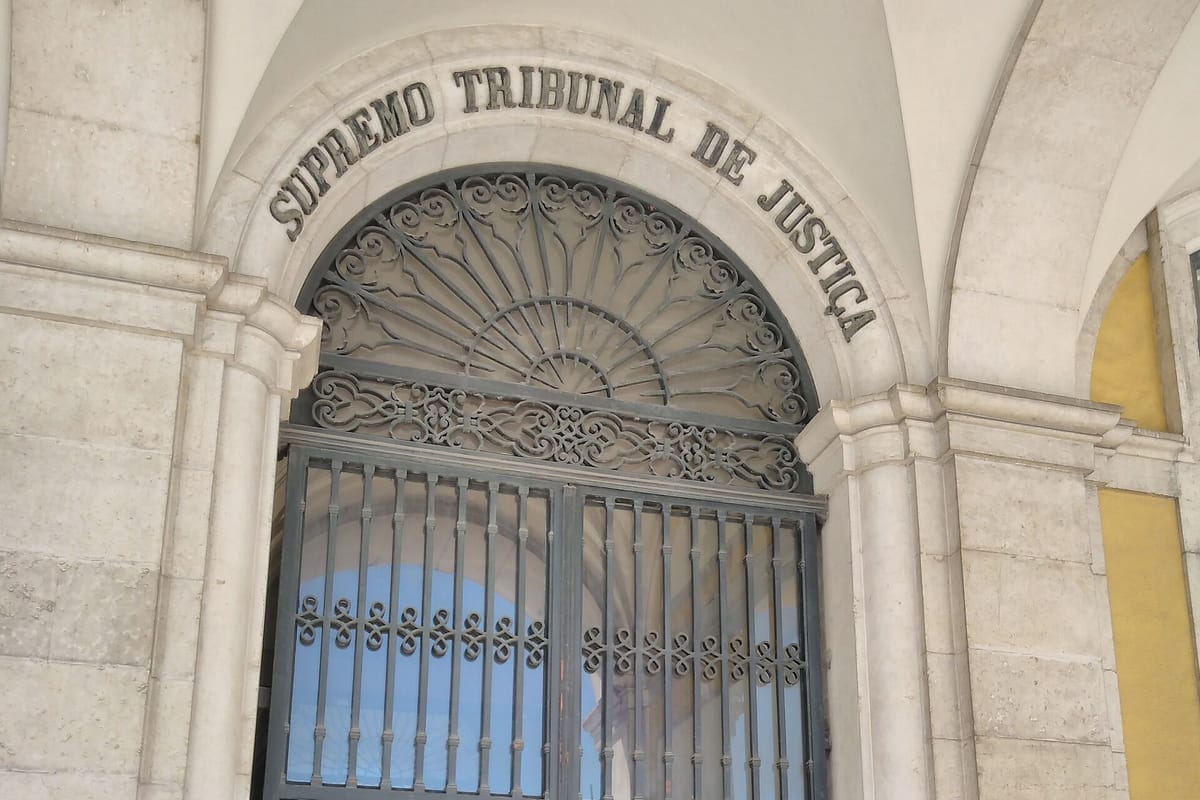
Three appeal court judges have gone to court against the body that runs Portugal's judiciary, contesting the ranking that decides who will be promoted to the Supremo Tribunal de Justiça (Supreme Court of Justice) over the next two years. The three lawsuits were made public on Wednesday 23 September, in three notices from the Supreme Court's own litigation section published in the Diário da República (the official gazette).
All three target the Conselho Superior da Magistratura (Superior Council of the Judiciary, or CSM), the body that appoints, promotes and disciplines judges. One of the three asks the court to declare the entire final ranking void.
What the ranking decides
The CSM opened the 18th competition for access to the Supreme Court in September 2025. According to its opening notice, Aviso (extrato) n.º 23686/2025/2, the competition fills the Supreme Court vacancies that arise between 12 March 2026 and 1 August 2028. Every vacancy in that window is filled from this one list.
Three kinds of candidate take part. Appeal court judges in the top third of the seniority list are compulsory candidates unless they renounce promotion. Deputy prosecutors-general and "jurists of recognised merit", such as law professors, may apply voluntarily.
Seniority is only a tie-breaker. The ranking is built on points awarded by a jury chaired by the president of the CSM, who is also the president of the Supreme Court, João Cura Mariano. Each candidate also defends their CV in a public session before the jury, lasting at most 15 minutes. The main scoring factors in the notice are:
- Service ratings from judicial inspections: 0 to 60 points, with the last two ratings counting double.
- Forensic work, judged on up to five rulings the candidate submits: 20 to 60 points.
- Productivity and timeliness over the last ten years, based mainly on court statistics: 10 to 35 points.
- Prestige among peers and in the legal community: 10 to 30 points.
- Smaller factors for the candidate's result at the judges' training college, their academic record, published legal writing and continuing training over the last ten years (0 to 5 points).
A disciplinary record can take off up to 20 points.
Half a point apart
The CSM approved a first ranking on 22 April 2026 and a revised one on 30 June, after hearing the candidates' complaints. The final list, published by the council as Divulgação n.º 109/2026, ranks 126 appeal judges, 12 deputy prosecutors-general and 3 jurists.
The scores are tightly packed. In the April ranking, the top candidate had 180 points, and 40th place was worth 162. Four judges shared 163 points in 35th to 38th place, and many places further down the list were separated by half a point. Several factors, such as prestige, span 20 points or more, so a few points' difference in how one factor is read can move a judge several places.
Seventeen new Supreme Court justices were sworn in on 7 July, according to the CSM. They were twelve appeal judges from the top fourteen places, the four best-placed deputy prosecutors-general and the top-ranked jurist. Everyone else on the list is waiting for the next vacancy.
The three lawsuits
Paulo Eduardo Cristão Correia, ranked 39th in June, wants the scores for three factors re-marked: prestige, capacity for work and continuing training. According to Anúncio n.º 265/2026, his claim is that the jury failed to weigh three things: his contribution to reducing case backlogs in other courts, a commendation for his work as an international inspector in Timor-Leste, and his place on the examining jury for trainee solicitors. He also argues that his marks for work capacity and training breach the principles of equality, non-discrimination, impartiality and good faith in Articles 13 and 266 of the Constitution. He asks the court to order the CSM to decide again and give him the extra points.
Paulo Jorge Tavares Fernandes da Silva, ranked 38th, contests five of the scoring factors: service ratings, prestige, forensic work, productivity and continuing training. Anúncio n.º 267/2026 shows he is also challenging something wider. His complaint had attacked the opening notice itself, over how service ratings and continuing training were to be scored, and on 30 June the CSM, by majority, declined to consider that part at all. He wants that refusal annulled so that the council must rule on the substance. The same June decision had already revised his prestige score on the council's own initiative, and he climbed from 40th to 38th. He wants that factor looked at again all the same.
João Manuel Araújo Ramos Lopes, ranked 87th, goes furthest. According to Anúncio n.º 266/2026, he asks the court to declare both the April and June decisions null, or failing that to annul them. Both decisions approved the ranking. The notice does not set out his grounds.
Who else is now involved
The notices exist because anyone whose position could be affected by a ruling has to be told. Each plaintiff has had every appeal judge ranked above him formally summoned as a counter-interested party. That means 37 judges in Silva's case, 38 in Correia's, and 86 in Lopes's. The 86 include the twelve appeal judges who are already Supreme Court justices.
These judges have 15 days from publication to join the proceedings. Those who do then have 30 days to file a defence. The deadlines run continuously but stop during the judicial holidays. Each case has a different reporting judge in the Supreme Court's litigation section, which hears challenges to the CSM's decisions. The competition notice itself names that route as the way to contest the final ranking.
None of the notices says whether the appointments already made could be touched. Correia and Silva ask only for their own scores to be redone and for each to be placed wherever the new score puts him. That would change the order of the judges still waiting. Lopes's claim, if upheld, would remove the legal basis of the whole list. The CSM's website carries no comment on the cases.
A system under strain
When the new justices were sworn in in July, Cura Mariano said the intake was an important step towards overcoming the "high turnover" in the Supreme Court's membership over the past decade. He said this had been made possible by the change to the rules for access to the higher courts approved in 2025. He added that a structural reform of the court's role was still to come: he wants a Supreme Court that concentrates on settling and harmonising case law, rather than one whose caseload keeps its judges from doing so.
The lawsuits show how much is at stake in a list that will fill the country's highest civil and criminal court until the summer of 2028. On the evidence of April's scores, half a point can decide who gets a seat.