Portugal Throws Away 161 Kilos of Food per Person a Year, and Its Households Waste More Than Any Others in the EU
Eurostat's 2024 figures put Portugal fourth in the EU for food waste, with 105 kg per person thrown away at home. An EU target for 2030 would mean cutting the retail, restaurant and household total by about 45 kg per person.
Portugal generated an estimated 161 kilograms of food waste per person in 2024, about a quarter more than the EU average of 129 kg, according to figures published on Tuesday by Eurostat, the EU statistics office. Of the 24 member states with 2024 data, only Cyprus (295 kg), Denmark (261 kg) and Greece (208 kg) recorded more.
Most of the gap opens at home. Portuguese households threw away an estimated 105 kg of food per person, against 69 kg across the EU. That is the highest household figure in the Union, just ahead of Italy at 103 kg. Food waste in Eurostat's count covers both edible food and the inedible parts, such as peel and bones.
Where the waste happens
| Stage of the food chain | Portugal (kg per person) | EU (kg per person) |
|---|---|---|
| Farming and fishing | 11 | 10 |
| Food and drink manufacturing | 6 | 25 |
| Retail and distribution | 21 | 10 |
| Restaurants and food services | 18 | 15 |
| Households | 105 | 69 |
| Total | 161 | 129 |
Portugal records far less waste than the EU average in food manufacturing, but twice the EU level in shops and distribution and more in restaurants. Eurostat does not explain the national differences.
The Portuguese total has barely moved since EU-wide measurement began: 156 kg in 2020, 161 kg in 2021, 160 kg in 2022, 156 kg in 2023 and 161 kg in 2024. Household waste edged down from 107 kg to 105 kg over the same period. Across the EU, the total rose 0.7 percent in 2024 to 57.9 million tonnes.
Two cautions apply. Every Portuguese figure carries Eurostat's "estimated" flag, and some countries measure differently: Spain's unusually low household figure of 24 kg is flagged as using a different definition. Bulgaria, Germany and Romania sent no 2024 data.
A binding target for 2030
The figures now carry legal weight. The 2025 amendment to the EU Waste Framework Directive, Directive (EU) 2025/1892, obliges member states to take measures to cut food waste by 2030, measured against their annual average for 2021 to 2023. Waste in processing and manufacturing must fall by 10 percent. Waste in retail, restaurants and food services, and households taken together must fall by 30 percent per person.
On Eurostat's figures, that combined total for Portugal averaged about 141 kg per person in 2021 to 2023, which puts the 2030 target at roughly 99 kg. In 2024 it stood at 144 kg. That is our calculation from estimated data, and a member state can ask to use a different reference year, so the final target may differ.
The European Commission must also set a correction factor by 17 October 2027 for changes in tourism, because visitors eat and throw food away but are not counted in the population used for the per-person figures. That could matter for a country that receives as many visitors as Portugal. By the end of 2027 the Commission must review the targets and consider binding goals for 2035.
For the wider picture on rubbish, see the national waste plan approved this month, whose diagnosis found 13 of Portugal's 32 landfills nearly full.
Sources: Eurostat, "Food waste in the EU: 129 kg per person in 2024" (29 September 2026); Eurostat dataset env_wasfw, food waste by stage of the food chain, 2020 to 2024; European Commission, food waste reduction targets.
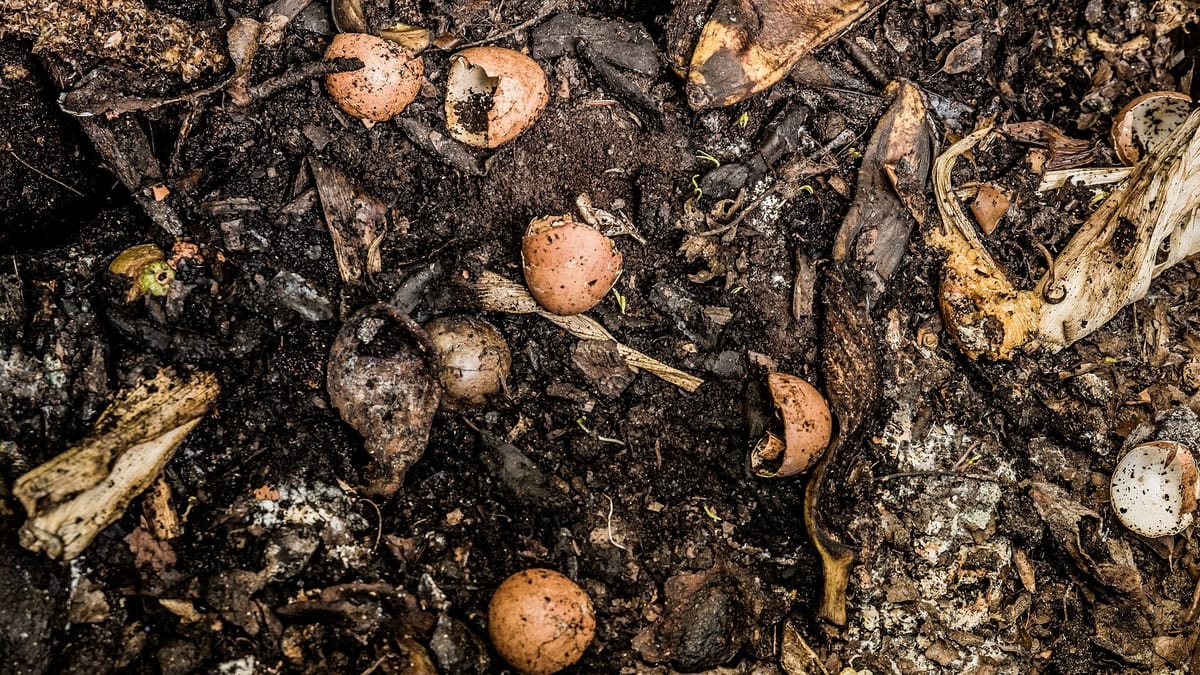
Feature image: food scraps in a compost heap. Photo by Philip Cohen (CC BY 2.0), via Wikimedia Commons.