The University of Lisbon Bets €20 Million on Two Data Centres for Science and Sovereign Health Data
The University of Lisbon will build two data centres — at Oeiras and the Cidade Universitária — for €20 million, due in October 2028, to give researchers high-performance computing and a 'sovereign cloud' for sensitive health, biotech and precision-medicine data. Funded by the Lisbon 2030 programme.

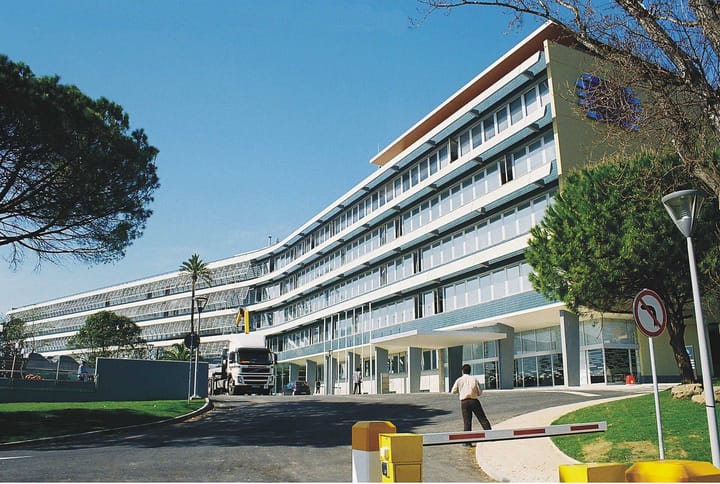
Portugal’s largest university is putting €20 million into building its own computing muscle, in a bet that the country can keep its most sensitive scientific data — from clinical trials to precision medicine — on infrastructure it controls rather than renting from foreign cloud giants. The Universidade de Lisboa (University of Lisbon) will build two data centres, one at its Campus de Oeiras, home to the Instituto Superior Técnico (Higher Technical Institute) at Taguspark, and one in the Cidade Universitária, alongside the Faculdade de Ciências (Faculty of Sciences).
The two facilities, due for completion in October 2028, are meant to give researchers high-performance computing power and secure storage for scientific data on Portuguese soil. The university frames the second data centre in particular as a “sovereign cloud” — a place to hold sensitive health, biotechnology and precision-medicine records under national jurisdiction, at a moment when the location and legal control of research data has become a strategic concern across Europe.
The project brings together three of the country’s research heavyweights: the Instituto Superior Técnico, the Faculdade de Ciências and the Gulbenkian Institute for Molecular Medicine (GIMM). Their intended uses read like a map of where modern science meets raw computing — artificial intelligence and advanced computing, secure storage of research data, drug discovery, clinical research and epidemiological surveillance, the kind of work that generates enormous datasets and cannot easily be run on a laptop.
Crucially, the capacity is not meant to stay locked inside the lecture halls. The university says the data centres will serve not only its own schools and research centres but also outside companies, small and medium-sized enterprises, startups, university spin-offs and industrial partners — positioning ULisboa as a shared computing utility for a wider innovation ecosystem that has struggled to access affordable high-performance infrastructure.
The €20 million comes from the Programa Regional Lisboa 2030 (Lisbon 2030 Regional Programme), the EU-backed regional funding instrument, through two approved applications the university has named “ULisboa Core” and “ULisboa Core+.” That funding route ties the investment to the broader European push to build up domestic computing and data-handling capacity rather than leaning entirely on a handful of American hyperscalers.
“This investment positions ULisboa to respond to the major challenges in science, health, security and the digital economy,” said the rector, Luís Ferreira, casting the data centres as infrastructure for a decade of research rather than a one-off equipment purchase.
The announcement lands in the same week as a €51 million German investment in a Figueira da Foz plant that will build power-protection systems for data centres — a reminder that Portugal is trying to grow both the physical hardware and the research demand for computing at once. Whether the university’s bet pays off will depend on execution between now and 2028, and on whether the promised access for startups and companies materialises in practice. But the intent is clear: Portuguese science wants to own the machines its most valuable data runs on. On the state programme now trying to close that gap, our report on the first Tech Foundry Portugal cohort, which filled 31 of the 40 places the state created for teams trying to get a validated laboratory result out of the laboratory sets the latest reference.