The North, Not the South, Is Where Portugal's Water Is Short This Year, and Three Basins Sit Below Their September Average
The Environment Agency's bulletin for 21 September puts national storage at 74 percent, but every basin is above its September average except the Lima, the Vouga and the Mondego. Less hydro means more gas, the minister said, and gas is very expensive.
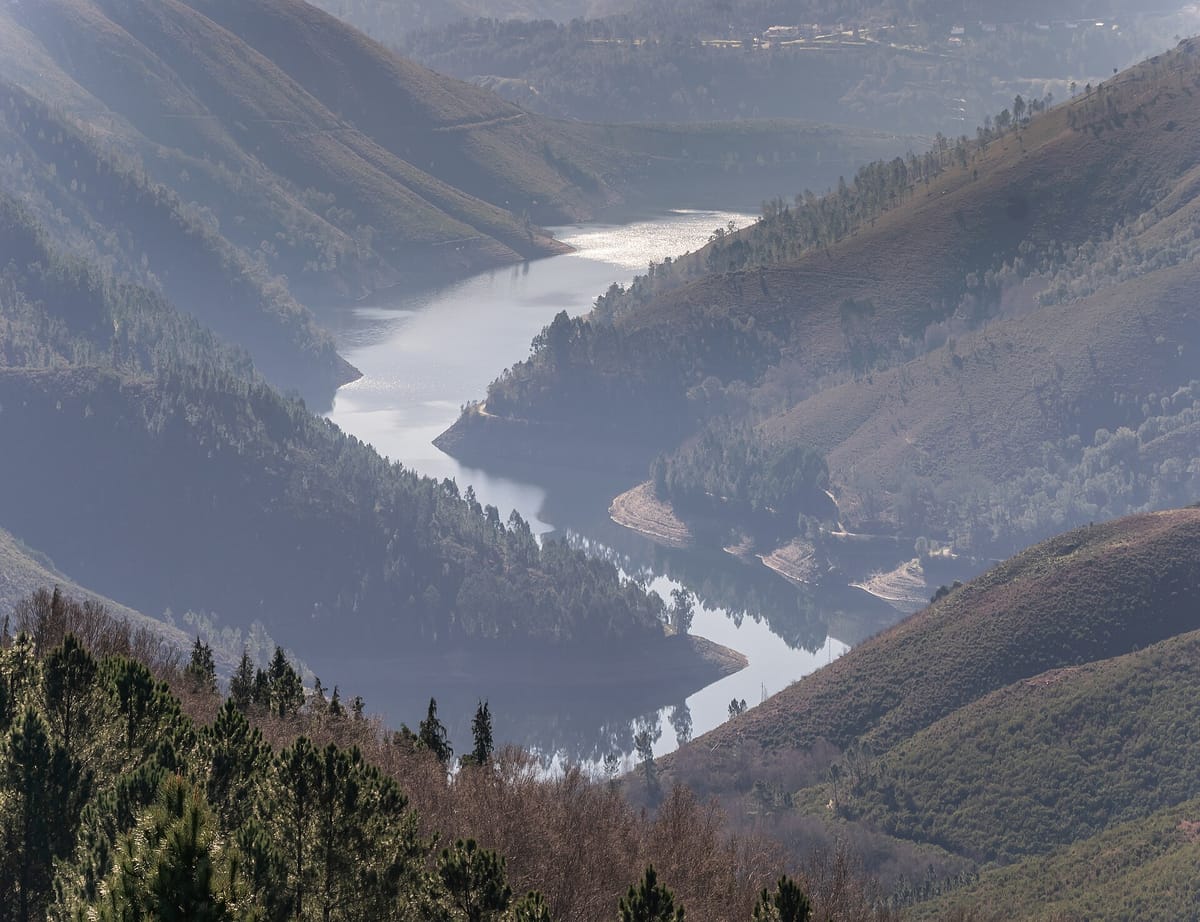
For most of the last decade, a story about water shortages in Portugal has been a story about the Algarve and the Alentejo. This year it is not. The weekly reservoir bulletin published by the Agência Portuguesa do Ambiente (Portuguese Environment Agency) on 21 September puts every monitored river basin above its September average except three, and all three are in the north and centre: the Lima, the Vouga and the Mondego.
The national picture is comfortable enough. Total stored volume stood at 9,793 cubic hectometres on Monday against a combined capacity of 13,218, which is 74 percent. Speaking in Soure, in the Coimbra district, the Minister for the Environment and Energy, Maria da Graça Carvalho, put reserves at about 75 percent against a national average of 72 percent a year earlier. What concerned her, she said, was something different from previous years: greater scarcity in the north and the centre than in the south.
What the bulletin shows
The reference point matters. The agency compares each basin against its own average storage for the month of September across the years 1990/91 to 2023/24, so a basin below that line is below its own normal for the time of year, not below some national target. Lima, Vouga and Mondego are the three that sit under it.
Storage fell by 121 cubic hectometres over the week, down from 9,914 on 14 September, a drop of 0.92 percent. Volume rose in one basin and fell in thirteen. Of the reservoirs monitored, 31 percent hold more than 80 percent of their total volume and 8 percent hold less than 40 percent.
The individual dams make the regional split concrete. Serra Serrada, on the Douro, stood at 26 percent of capacity, Varosa at 28 percent, and Alto Lindoso, the largest reservoir in the Lima basin, at 39 percent. Fronhas, on the Mondego, was at 32 percent. Set against that, Alqueva held 80 percent of its 4,150 cubic hectometres and Santa Clara, on the Mira, was at 92 percent. The pattern is not uniform even so: Vigia, in the Guadiana basin, was at 31 percent, a reminder that a healthy basin average can hide a stressed individual dam used for supply and irrigation.
Why this reaches your electricity bill
The minister drew the line from water to energy herself, and it is the part of Monday's remarks most likely to show up in household costs. Portugal has been sheltered from rising gas prices by the size of its renewable fleet, and hydroelectricity in particular gives the system stability. Less water means using that hydro capacity more cautiously, she said, which obliges the country to use more gas, and gas is very expensive. She described daily and hourly monitoring of every basin, and a deliberately careful use of hydro to keep the balance.
Five of the reservoirs in the Vouga and Mondego basins are listed as serving energy generation alone, and several of the biggest northern dams combine public supply with power. That is the mechanism by which a dry autumn in Minho and Beira turns into a line item in the national electricity cost, without any restriction ever being announced to consumers.
No water-use limits have been imposed, and nothing in Monday's figures suggests any are imminent. With no rain forecast before the end of September, though, the numbers to watch are the three below-average basins rather than the national percentage, which is flattered by the volume sitting behind Alqueva. The bulletin is republished weekly and is the cheapest way to follow it: the useful comparison is not this week against last week, but each basin against its own September norm.