The Ministry Investigates Schools Over the National-Exam Marking Meltdown, and FENPROF Rounds on the Minister
The Education Ministry has opened an inquiry into schools that sent national-exam papers for grading after the deadline, disrupting the first year of digital marking. Teachers' union FENPROF accuses Minister Fernando Alexandre of shifting blame and vows to block any sanctions.
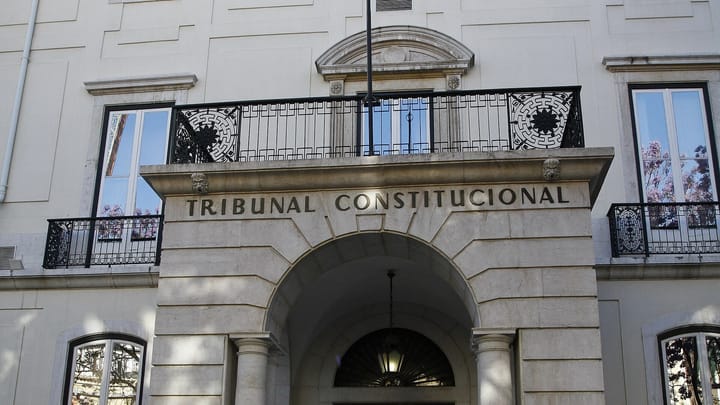
Portugal's first attempt at marking national school exams digitally has ended in recrimination. The Ministry of Education, Science and Innovation (MECI) has opened an inquiry into schools it says broke the rules by sending exam papers off for grading after the collection deadline had passed — and the country's largest teachers' union has responded by turning the accusation back on the minister himself.
The dispute centres on this summer's exames nacionais, the high-stakes secondary-school exams that shape university admission, and the new online system used to mark them for the first time in the 2025/2026 school year. That system did not go smoothly: there were failures exporting files, items left unmarked and grading errors, problems serious enough that the minister, Fernando Alexandre, has now asked the Conselho Nacional de Educação (the national education council) to evaluate the whole first-year model and deliver structural recommendations by the end of the year. The stated aim is not merely to catalogue what went wrong in 2025/2026 but to prepare future cycles of external assessment so an episode of this scale does not recur.
Alongside that review, MECI announced an inquiry into "irregularities by public and private schools" over the late dispatch of papers for classification. That is what lit the fuse. The Federação Nacional dos Professores (FENPROF) called the announcement an attempt to "transfer to schools the consequences of problems resulting from decisions and choices of the ministry," and accused Alexandre of dodging his political responsibilities. "Ducking responsibility has become the education minister's trademark," the federation said.
FENPROF's core argument is that schools and teachers were the ones who scrambled to keep the failing system afloat — working, in its telling, precisely to ensure "that students were not harmed" — and that it is "profoundly unjust" for them now to be "treated and exposed as part of the problem." The union has pledged full legal and political backing to any school or teacher facing sanction, and warned it will escalate as far as necessary, including to the President of the Republic and the Assembleia da República. It wants Alexandre to shoulder the political blame and to guarantee, in its words, that "an episode of this dimension does not happen again."
Beneath the political theatre lies a genuine administrative failure with real consequences for families. National-exam grades are not an abstraction: they determine access to Portugal's public universities through a fiercely competitive numerus clausus, and any doubt over the accuracy or timing of marking feeds directly into appeals, re-grading requests and anxious households waiting on a placement. Digitising the process was meant to make it faster and more consistent; instead its debut has produced an inquiry, a union in open conflict with the ministry and an independent review still to report.
For foreign families raising children in the Portuguese state system, the row is a useful, if uncomfortable, window into how the machinery works — and how contested it can be. Secondary-school leavers here sit the same national exams as everyone else, and the transition to digital marking will affect the cohort now moving through secundário. The immediate takeaway for parents is procedural: keep a close eye on grade-publication and appeal deadlines this cycle, since a system that stumbled on its first outing is one where errors, and the right to challenge them, deserve extra attention. Whether the fault lay with the schools, the ministry or the software is now, quite literally, a matter under investigation. On the Portuguese children-and-digital-life tape, our read on the EU Kids Online 2025 report for Portugal, where 52 percent of nine to seventeen year olds met online hate speech last year and 85 percent have already used generative AI sets the latest reference.