The Iberian Lynx in Portugal in 2026 — A Practical Guide to the New Serra da Malcata Reintroduction Site, the Vale do Guadiana Wild Population, the Silves Captive-Breeding Centre, the PACLIP 2026-2030 Plan, and Where to See One
On 2 May 2026 the environment minister announced the Iberian Lynx will be reintroduced to the Serra da Malcata. Here is the practical guide for nature-travelling expats — the wild Vale do Guadiana population, Silves CNRLI, PACLIP 2026-2030 and where to actually see one.
The lince ibérico — Latin name Lynx pardinus, Portuguese name lince-ibérico — was, less than two decades ago, the most endangered cat species on Earth. In 2002 fewer than 100 adults survived in the wild, almost all on the Andalusian side of the border. Today, after a Portugal-Spain captive-breeding programme that began in 2011 and a steady release campaign through the 2010s, the population is climbing past 2,400 across the Iberian Peninsula. On 2 May 2026, at the 42.ª Ovibeja agricultural fair in Beja, environment minister Maria da Graça Carvalho announced the next chapter: a new reintroduction site at the Reserva Natural da Serra da Malcata in Penamacor (Castelo Branco district), the original home from which the species was lost, plus the formal launch of the PACLIP 2026-2030 conservation plan.
This guide is for the expat reader who wants to understand what the lynx programme is, where the animals live now, why the Malcata move matters, and — practically — where you can responsibly travel in Portugal to see one in 2026.
What the Iberian Lynx is, and how to tell it apart from a European lynx
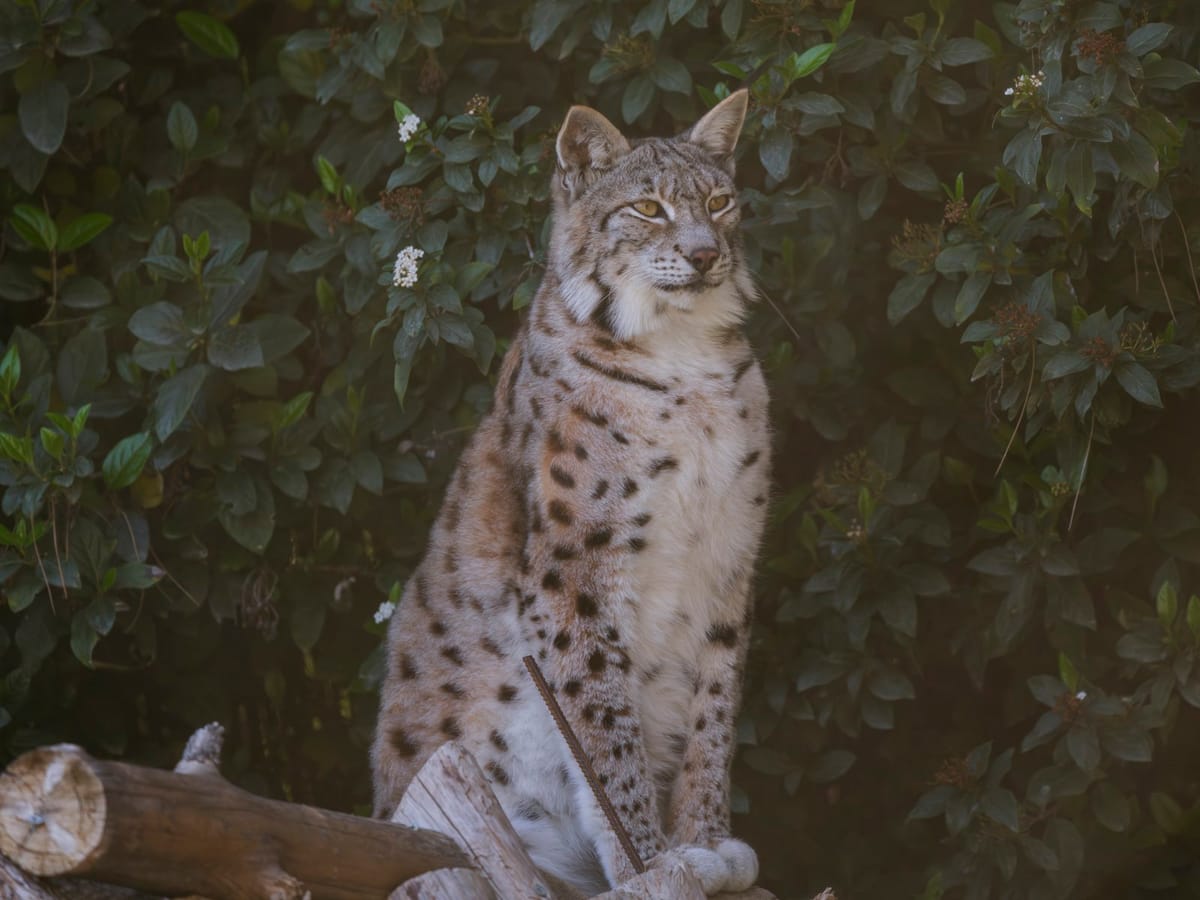
The Iberian Lynx is a medium-sized cat — adults weigh 9–13 kg, about half the size of a Eurasian lynx. The coat is a tawny ochre with bold black spots (a leopard-style rosette pattern, not the diffuse Eurasian-lynx blotching), the ears carry tall black tufts, and the face frames a pronounced ruff or "beard" of longer fur. The tail is short and ends in a black tip. Diet is more than 80% rabbit (Oryctolagus cuniculus), which is why every conservation argument about the lynx eventually becomes an argument about whether there are enough wild rabbits in the Mediterranean scrubland (the matos, the montado).
The PACLIP 2026-2030 plan, in plain English
The Plano de Ação para a Conservação do Lince Ibérico (PACLIP) 2026-2030 replaces the 2015-2020 plan and is built around 10 axes:
- Legal and administrative protection of the species
- Common monitoring (Portugal-Spain joint protocols)
- Conservation, improvement and recovery of habitat
- Common genetic management and connectivity
- Reintroductions of animals
- Captive breeding
- Conflict prevention (livestock, hen-houses, traffic)
- Social participation, rural development and environmental communication
- Research and knowledge
- Administrative and technical articulation between Portugal and Spain
The headline target is the creation of eight new population nuclei across the Iberian Peninsula by 2030, with at least one new release site identified inside Portuguese territory. Coordination on the Portuguese side is the responsibility of the Instituto da Conservação da Natureza e das Florestas (ICNF); on the Spanish side it is shared between the national MITECO and the Andalusia/Extremadura/Castilla-La Mancha regional environment authorities.
Where the lynx live in Portugal today
Vale do Guadiana — Mértola (Baixo Alentejo)
The single established wild Portuguese population sits in the Parque Natural do Vale do Guadiana around Mértola, where releases began in 2014 and natural breeding has been confirmed every year since 2015. The population shares range with Spain's Sierra Morena nucleus, and individuals routinely cross the border in both directions. Best time to visit: late autumn through early spring, when temperatures are tolerable and the rabbit prey base is concentrated. The Centro de Interpretação do Lince Ibérico in Mértola is the recommended starting point for anyone interested.
Centro Nacional de Reprodução do Lince Ibérico — Silves (Algarve)
Portugal's captive-breeding centre, the CNRLI, opened in 2009 in the Algarve interior near Silves. It is not a public zoo. Visits are tightly controlled and arranged through ICNF-approved educational programmes — typically school groups, university researchers and structured environmental-tourism operators. The centre has produced the majority of animals released into Portuguese territory and continues to supply both Portuguese and Spanish reintroduction projects. A new financial-support protocol signed at the same Beja announcement commits Águas do Algarve to €350,000 per year through 2037 to underwrite the centre's operating budget.
Reserva Natural da Serra da Malcata — Penamacor (Castelo Branco)
This is the new addition. The Serra da Malcata was the last redoubt of the Portuguese lynx in the 1970s and 1980s, and the Reserva Natural was created in 1981 specifically to try (unsuccessfully, at the time) to save it. Carvalho's announcement on 2 May confirmed that ICNF is in conversations with the Câmara Municipal de Penamacor about establishing "uma zona cercada, mas grande" — a fenced but extensive enclosure — as a soft-release nucleus. "O projeto é para que o lince esteja no meio [ambiente] e não em cativeiro, mas começando por uma zona cercada," the minister said. The location matters historically: "Inicialmente havia o lince da Malcata e nós gostávamos de começar também a reintroduzir, novamente, nessa área."
The roadkill problem
According to data presented at the PACLIP launch, roadkill (atropelamento) has been the principal cause of death for the species over the last decade, with 67 confirmed road incidents recorded through November 2025. Carvalho framed it bluntly: "É muito triste, porque é uma espécie em que há todo um cuidado, um investimento para se criar e, depois, ser atropelado." Two countermeasures are being deployed:
- Lynx-zone signage on the IP2, the IC27 in the Algarve hinterland, and the rural routes around Mértola and Vale do Guadiana.
- AI-driven proximity alerts — pilot apps that flag drivers in real time when telemetry-collared lynxes are within range of a road segment.
For nature travellers driving through Alentejo and the Serra da Malcata at dawn or dusk, this is a practical concern: speeds well below the legal limit on rural N-routes and EM-roads dramatically reduce the risk of a fatal encounter.
Where you can responsibly see an Iberian Lynx
Honest answer: in the wild, very rarely, and only with luck and patience. The lince ibérico is a crepuscular ambush predator that avoids humans. Reasonable options, in declining order of probability:
- Sierra de Andújar (Spain) — best in Europe. The Andalusian sierra north of Andújar is the most reliable place on the Iberian Peninsula for unaided wild sightings, especially in January-February (mating season) when males vocalise. Day trip from Lisbon is unrealistic; combine with a Sierra Morena-Doñana itinerary.
- Doñana National Park (Spain). Smaller, harder-to-spot population. Booked vehicle tours from El Rocío.
- Vale do Guadiana — Mértola (Portugal). Wild population is established but density is low and the terrain is open scrubland that hides the cat well. The Centro de Interpretação do Lince Ibérico in Mértola explains where camera-trap activity has clustered. Local guides through Vicentinas and Almargem associations run dawn drives.
- Centro Ibérico de Conservação da Lontra and partner centres. Some Portuguese nature-education centres carry archive footage and resident non-releasable individuals on view — call ahead.
- Wait for the Serra da Malcata enclosure. Once the soft-release fenced nucleus opens, regulated visits via ICNF-Penamacor structured programmes will become a possibility. The 2024 Serra da Malcata's legal protection was upgraded in advance of this; expect formal access protocols during 2027.
Etiquette in lynx country
- Drive at or below the posted speed on N-roads in Alentejo, Algarve and Beira interior between 1 hour before sunset and 1 hour after sunrise.
- Do not bait, lure or play recorded calls. It is illegal under the species' protection regime and badly affects breeding success.
- Stay on marked tracks in the Reserva Natural da Serra da Malcata and Parque Natural do Vale do Guadiana. Habitat compaction matters more than your individual visit; multiplied by thousands of visitors it adds up.
- Report sightings, with location and time but not photos of cubs, to the ICNF lynx hotline or to the local guarda-florestal.
- Hen-house owners in the rural concelhos around Mértola — yes, the cats do occasionally take chickens. The ICNF runs a damages-compensation scheme; do not poison or trap.
The bigger conservation picture
The lince ibérico was downlisted by IUCN from Endangered to Vulnerable in 2024 — still threatened, but no longer the world's rarest cat. Recovery has been driven by three things: aggressive captive breeding (since 2011, with 403 captive-born animals released through 2014 alone, and many more since), rabbit-population recovery in the Mediterranean montado, and roadkill mitigation. PACLIP 2026-2030 is now the framework that locks in the genetics-and-connectivity work that the next ten years will need: a single inbred nucleus collapses; a chain of eight nuclei across two countries does not.
What This Means for You
- If you live in the Beira interior: The Penamacor decision matters locally. Expect a soft-release calendar through 2027, environmental-impact public consultation, and a small but real boost to nature-tourism receipts in a concelho that has been quietly losing population for two decades.
- If you live in Baixo Alentejo (Mértola, Beja, Castro Verde): You already share territory with the species. The hen-house compensation scheme and the lynx-warning road signage will be expanding; the AI proximity alert app, when it leaves pilot, is worth installing.
- If you're a nature-tourism traveller: Build a 4-7 day itinerary around Mértola–Sierra de Andújar–Doñana for the best chance of a sighting. Don't expect anything at the Silves CNRLI without an institutional invitation.
- If you drive Alentejo and Beira routes regularly: The 67-roadkill total is the number to remember. Drive accordingly.
- If you work in environmental research: PACLIP 2026-2030 is funded through Águas do Algarve's €350,000/year commitment plus PRR-Ambiente lines plus EU LIFE programme co-financing. The 10-axis structure opens line-item funding for genetic-management and habitat-restoration partnerships through 2030.
Quick reference
- Species: Lince ibérico / Lynx pardinus / Iberian lynx
- IUCN status (2024): Vulnerable (down from Endangered)
- Iberian total population: ~2,400 individuals
- Portuguese wild population: Vale do Guadiana, Mértola
- Captive breeding centre: CNRLI, Silves (Algarve) — not open to the public
- New reintroduction site: Reserva Natural da Serra da Malcata, Penamacor (Castelo Branco)
- Conservation plan: PACLIP 2026-2030, 10 axes, ICNF-led
- Funding: Águas do Algarve €350,000/year through 2037 + PRR-Ambiente + EU LIFE
- Main mortality cause: Roadkill — 67 incidents through November 2025
- Best chance to see one: Sierra de Andújar (Spain), January-February
For other practical guides, see our notes on Property Tax in 2026 (IMI, AIMI, IMT), Annual Road Tax (IUC) and Vehicle Inspection (IPO), Visiting Fátima in 2026 and Pharmacies in Portugal in 2026.