Nuno Melo Confirms Two UH-60 Black Hawks Will Reinforce Portugal's 76-Asset DECIR 2026 Wildfire Fleet — Esquadra 551 'Panteras' Inaugurates a €2 Million PRR Facility at Ovar as ANEPC Flags a Belly-Tank Methodology Adjustment
Nuno Melo confirmed at Ovar BA8 on 8 May that two Força Aérea UH-60 Black Hawks will fold into DECIR 2026's 76-aircraft fleet — one for attack, one for transport — as ANEPC's Mário Silvestre flagged a belly-tank refill methodology shift after Viseu's PT EU MODEX 2026.
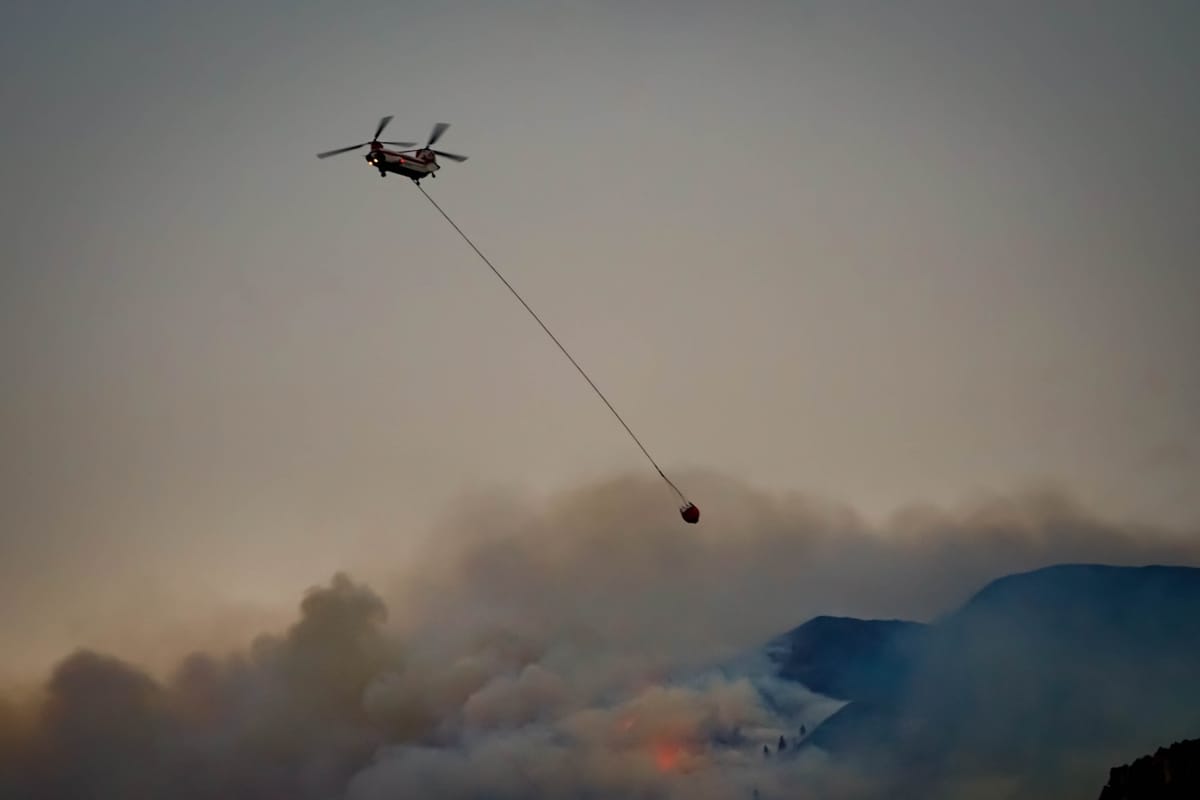
Defence Minister Nuno Melo used the inauguration of the new Esquadra de Voo 551 'Panteras' facility at Base Aérea n.º 8 in Ovar on Friday 8 May 2026 to confirm that two of the Força Aérea Portuguesa's recently delivered UH-60 Black Hawk helicopters will be folded into the Dispositivo Especial de Combate a Incêndios Rurais (DECIR) 2026 this summer — one tasked with direct fire attack, the other with crew transport. The two Black Hawks join a 76-aircraft national fleet, the largest aerial firefighting line-up Portugal has ever fielded for a fire season.
The Ovar facility itself was funded with roughly €2 million from the Plano de Recuperação e Resiliência (PRR), the same envelope underwriting the broader Black Hawk acquisition. Melo described the aircraft as "fantastic machines" and pointed to their precision in water-drop work as the operational case for adding state-owned rotorcraft to a fleet that has historically leaned almost entirely on contractor-operated airframes.
The numbers behind the Black Hawk programme
- 13 UH-60L Black Hawks contracted under the PRR-funded acquisition signed by the Ministério da Defesa Nacional.
- Nine already in Portugal as of the Ovar event, transported across the Atlantic in the holds of Embraer KC-390 transports operated by the Força Aérea itself.
- Six currently considered fully operational; the remaining four deliveries are scheduled to land before the end of August.
- Each airframe carries 2,950 litres of water per drop via an underbelly tank, or alternatively up to 12 fully-equipped passengers when reconfigured for ground-team projection.
- Operating unit: Esquadra 551 'Panteras', reactivated in late 2023 specifically for the rural-fire mission and based at BA8 Ovar.
Melo also confirmed two adjacent procurements that complete the medium-term aerial-firefighting picture. A set of Modular Airborne Fire Fighting System (MAFFS) kits for the Air Force's C-130 Hercules fleet is being manufactured in the United States and is expected to be installed in time for either the very end of 2026 or the start of 2027. Two Canadair CL-415-family amphibious water-bombers approved earlier under the same PRR line are not expected to arrive until 2029, which means the Black Hawks and the C-130 kits effectively bridge the gap until Portugal regains a proper amphibious tape on the Iberian aerial-firefighting map.
The Viseu exercise that surfaced the belly-tank issue
The Defence Minister's reassurance on Friday came two days after a more cautious read from the civil-protection side. Mário Silvestre, Comandante Nacional da Autoridade Nacional de Emergência e Proteção Civil (ANEPC), used the closing day of PT EU MODEX 2026 — a European Civil Protection Mechanism exercise hosted in Viseu from 5 to 7 May with more than 700 personnel from Portugal, Spain, France, Cyprus, Czechia and Poland — to flag a real operational gap that the Black Hawks bring with them.
Unlike the Mil Mi-8/17, Kamov KA-32 and AS350 platforms that have anchored DECIR fleets in recent seasons, the UH-60L does not draw water through a long cable-suspended Bambi bucket. It uses an underbelly tank bolted to the airframe, which forces the pilot to descend much closer to the surface of a reservoir, river or coastal hover-point to fill. "Não permite apanhar a água de uma distância tão alta", Silvestre told reporters in Viseu — the system "does not allow water collection from as high a distance" as the cable-bucket systems crews are used to. ANEPC's working assumption is that doctrine, route planning and the choice of refill points around the country will all need revision before peak season opens.
That is not a procurement scandal — it is the kind of methodological friction any aviation force absorbs when it shifts platform families — but it is a fair-sized retraining task on a tight calendar.
How the 76-aircraft DECIR 2026 fleet stacks up
ANEPC's Diretiva Operacional Nacional n.º 2 (DON2) — DECIR 2026 sets the seasonal phase calendar that all 76 aircraft will fly to. Fase Bravo opens on 15 May 2026 and runs to 31 May; Fase Charlie covers 1 to 30 June; the highest-readiness Fase Delta runs from 1 July through 30 September and is the band that pulls the full ~15,149 operationals, ~3,463 vehicles and ~50 simultaneous aerial means; Fase Charlie returns from 1 to 15 October as a draw-down. The two Black Hawks will be in operational readiness across the entire arc, but Phase Delta is when they will actually be tasked into fire columns.
The state-owned tape adds resilience that was conspicuously absent during the disastrous 2017 and 2022 seasons, when contractor availability and end-of-shift rules left commanders short of air assets at decisive moments. Folding the Air Force into the line-up also gives the Estado-Maior the option of pulling rotors back to other Air Force missions on quiet fire days — a flexibility that contracted assets, bound to DECIR for the duration of their charter, do not offer.
Defence-side investment is rising in parallel. Earlier this week the Partido Socialista tabled a defence-programming law charting Portugal's path to 5% of GDP on defence by 2035, and Atmos Space Cargo closed a €27.5 million round on Wednesday to spin up an in-house defence arm. The PRR-funded Black Hawks are an older line item — but they are the one piece of that picture that will be airborne, in Portuguese livery, fighting fires over Portuguese terrain, this summer.
What this means for residents
- Fire-season alerts: ANEPC's Phase Delta still kicks in on 1 July and runs to 30 September. Register for SMS alerts via
aviso.ptand keep 112 clear for actual emergencies. - If you live near Ovar (Aveiro district): expect more rotor noise out of BA8 from now through September, including night-time flights as Force Aérea crews build hours on the new platform before peak season.
- If you live near reservoirs or river hover-points: Black Hawks will sit lower over the water surface than the helicopters you may be used to seeing, because of the underbelly tank. Give them airspace.
- For rural property owners: the fleet upgrade does not change your obligations on the 50-metre fuel-break around the house. The civil-protection regime is the same; the fleet attacking what slips through it is what changed.
- Tourism operators: peak-season fire-smoke advisories from
fogos.ptremain the canonical source. The 76-aircraft fleet should reduce mean fire-duration in any given concelho, but it will not prevent ignitions.
What to watch next
The next operational milestone is the formal start of Fase Bravo on 15 May 2026, six days from now, which is when DECIR moves out of pre-season posture. Before then, Esquadra 551 needs to convert ANEPC's belly-tank methodology critique into a revised refill-point list. The four still-undelivered Black Hawks need to clear KC-390 transatlantic transport, acceptance trials and crew familiarisation; the Ministério da Defesa Nacional said on Friday that all four are on track for August, which would put the full 13-aircraft fleet within reach of Phase Delta operations during the back half of the peak season. Expect the next official update from the Estado-Maior da Força Aérea once the seventh airframe lands at Ovar. On the rural-property and fuel-management side of the file, our 28 May read on the Ministério da Agricultura limpeza-de-terrenos deadline extension — José Manuel Fernandes pushing the 31 May cliff to 30 June 2026 nationwide on the back of spring rainfall and a 142% Fixando contractor-demand surge, with coimas at €150-€10,000 for singulares and up to €25,000 for pessoas coletivas under the SGIFR Decreto-Lei 82/2021 framework sets the latest reference. On the 1 July Período Crítico wildfire side of the file, our 31 May read on ANEPC staging the 1 July Período Crítico across continental Portugal — Decreto-Lei 124/2006 SNDFCI restrictions on queimadas, queimas, foguetes, outdoor smoking and spark-generating maquinaria agrícola activate through 30 September alongside the DECIF Fase Charlie peak deployment, the two UH-60 Black Hawks reinforcing the 76-asset aerial fleet, the AGIF strategic coordination layer and the GNR UEPS / SEPNA enforcement on the contraordenação framework sets the latest reference. On the fire-fleet side of the file, the 23 forest firefighting trucks Timor-Leste's donation has just paid for sets out the contracts CCDR-Norte signed in Penafiel with brigades in 17 northern councils, the 75 percent funding rate capped at €187,500 a vehicle, and the 30 April 2027 deadline for getting them into DECIR.