ANEPC Stages the 1 July Período Crítico Across Continental Portugal — Decreto-Lei 124/2006 SNDFCI Restrictions on Queimadas, Foguetes and Outdoor Smoking Kick In Through 30 September Alongside the DECIF Charlie Peak Deployment
Tuesday 1 July activates the Período Crítico under Decreto-Lei 124/2006 SNDFCI — across continental Portugal the queimadas-foguetes-smoking restrictions kick in through 30 September alongside the DECIF Charlie peak deployment, the Black Hawk reinforcement and the AGIF coordination.
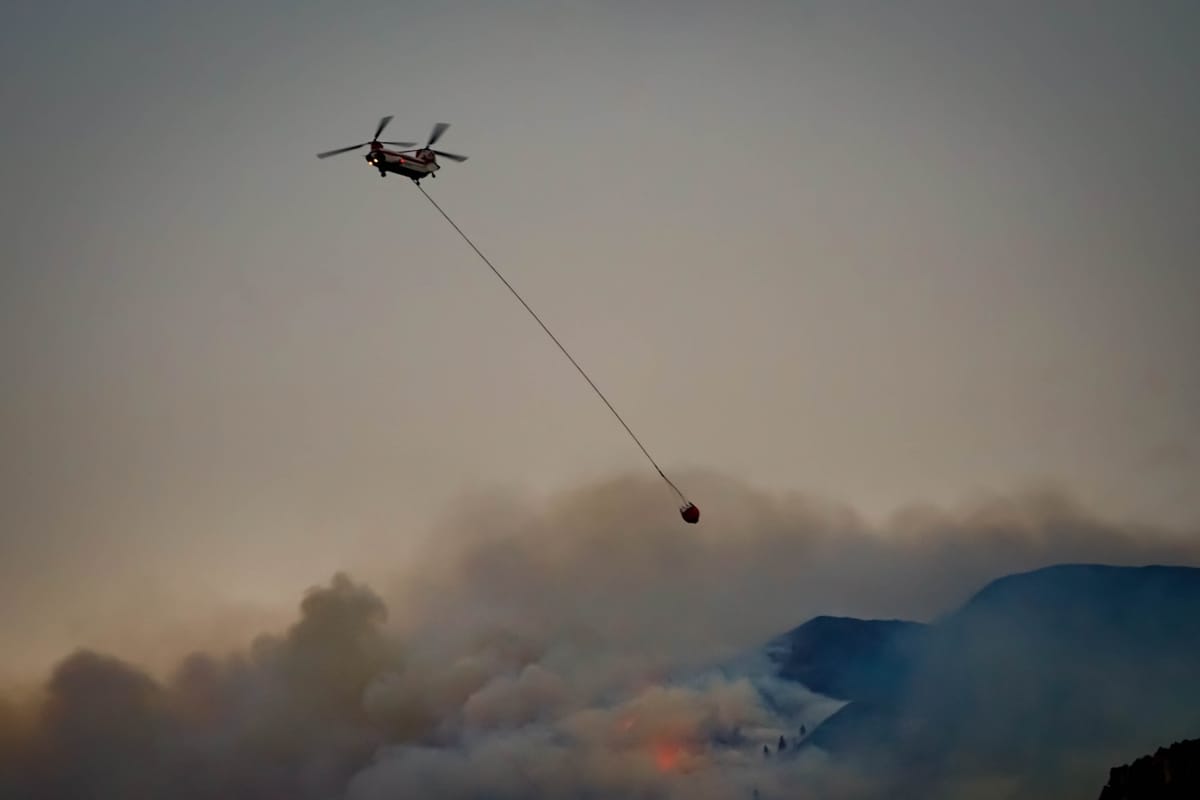
The annual Período Crítico — the statutorily-decreed high-risk-window across continental Portugal under the Sistema Nacional de Defesa da Floresta contra Incêndios — activates on Tuesday 1 July 2026, sliding the country into a 92-day band of binding restrictions on outdoor-burning, pyrotechnic and combustion-source behaviours that run uninterrupted through Tuesday 30 September. The trigger is the simultaneous DECIF (Dispositivo Especial de Combate a Incêndios Florestais) Fase Charlie step-up across the same 92-day window — the peak operational tier of the annual five-phase DECIF schedule, anchored on 14,000-plus operacionais, the full helicopter-and-fixed-wing aerial fleet (including the two new UH-60 Black Hawks Defesa minister Nuno Melo added to the 76-asset baseline on 9 May), and the joint ANEPC – GNR (UEPS) – ICNF – AGIF – Forças Armadas – Bombeiros Voluntários e Sapadores coordination architecture activated under the Comando Operacional Nacional. The current Fase Bravo (medium readiness, 15 May to 30 June) operates as the staging-and-bridging tier — the 15,149 operacionais activated on Friday 15 May hold the line through 30 June ahead of the Charlie ramp.
The Statutory Frame — Decreto-Lei 124/2006 and the SNDFCI
The Período Crítico is anchored statutorily in Decreto-Lei n.º 124/2006 of 28 June, which establishes the Sistema Nacional de Defesa da Floresta contra Incêndios (SNDFCI) and codifies the annual cycle of preventive, dissuasive and repressive measures. The Período Crítico itself is defined in Artigo 2.º alínea o) as the period during which special measures of prevention and combat against forest fires are operative, with the exact start and end dates fixed annually by joint Portaria of the Ministério da Administração Interna and the Ministério da Agricultura (or successor body). The 2026 instrument carries the canonical 1 July – 30 September window — historically the operative pattern across the last decade with limited adjustments for early-or-late peak-fire-risk readings.
The Decreto-Lei 124/2006 framework was reinforced after the catastrophic 2017 fires (Pedrógão Grande, October-fires sequence) through multiple amendments — most consequentially Decreto-Lei n.º 14/2019 on the Limpeza de Terrenos cleaning obligation (the annual rural-fuel-load reduction requirement, recently extended by Min. Agricultura to 30 June 2026 nationwide on Thursday 28 May), Decreto-Lei n.º 64/2018 on the territorial planning frame and Lei n.º 76/2017 on the wider sistema integrado de gestão. The complementary AGIF (Agência para a Gestão Integrada de Fogos Rurais), instituted under Decreto-Lei n.º 12/2018, runs the strategic-coordination layer above the operational ANEPC backbone, integrating prevention, suppression and post-fire response into a single agency frame.
The Behavioural Restrictions — What Activates on 1 July
The Período Crítico carries five distinct behavioural restrictions on residents and visitors across continental Portugal, codified in Decreto-Lei 124/2006 Artigo 27.º and the related portaria.
(a) Queimadas — the agricultural-residue burning practice — is strictly prohibited across all rural areas during the Período Crítico, with criminal sanctions under the Código Penal for negligent or wilful infraction that triggers an ignition. Outside the Período Crítico, queimadas require authorisation from the local Câmara Municipal or Junta de Freguesia and may only proceed with a sapador-florestal or equivalent professional in attendance.
(b) Queimas e fogueiras — small open-air fires for cooking, heating, leisure or agricultural micro-management — are prohibited in rural areas during the Período Crítico. The exception is licensed leisure or cultural events (Festas dos Santos Populares, romarias, festivais) which carry separate Câmara Municipal licences and require professional fire-watch attendance.
(c) Foguetes, balões com mecha and outras formas de pirotecnia — fireworks, sky lanterns and other pyrotechnic devices — are prohibited across rural-and-forest areas during the Período Crítico without ANEPC and ICNF authorisation. Municipal Santos Populares celebrations carry case-by-case exceptions but the Algarve, Alentejo and inland Centro perimeters operate the strictest restrictions on tourist-area shows.
(d) Fumar e lançar objectos em combustão — smoking outdoors in forest-and-rural areas and the disposal of any burning object (cigarette ends, matches, lighter residue) — is prohibited during the Período Crítico, with PSP and GNR enforcement on a contraordenação framework of €280 to €10,000 for individuals and €1,600 to €120,000 for legal persons.
(e) Maquinaria agrícola e florestal with potential to generate sparks — chainsaws, brush-cutters, harvesters, tractors without exhaust-spark arrestors — face restricted use windows during the highest-risk hours (12h00 – 19h00 typical) and the period of red-or-orange IPMA alerts. The agricultural sector operates an exception framework for harvest-critical windows with professional fire-watch attendance.
The DECIF Operational Schedule — The Five Phases
The DECIF annual operational schedule runs five phases on a sliding-readiness ladder. Fase Alfa (1 January – 14 May) sits at low readiness with prevention-and-planning focus. Fase Bravo (15 May – 30 June), currently active and activated on 15 May 2026 with 15,149 operacionais and 3,500-plus vehicles, carries medium readiness on the build-up to peak season. Fase Charlie (1 July – 30 September) is the peak tier — historically deploying 14,000-plus operacionais simultaneously, the full helicopter fleet, the heavy-suppression Canadair CL-415 fleet on bilateral cross-border arrangements with Spain and France, the GNR UEPS specialised intervention units, and the Forças Armadas reinforcement under the Operação Apoio Eficácia framework. Fase Delta (1-15 October) carries reduced-but-still-elevated readiness on the post-peak tail. Fase Echo (16 October – 31 December) winds down to maintenance-and-recovery readiness.
The Aerial Fleet — The Black Hawk Reinforcement
The DECIF aerial fleet for 2026 carries roughly 76 dedicated wildfire-suppression aircraft — a mix of medium-and-heavy helicopters (Kamov Ka-32, Sokol W-3A, Bell 412, AS350, Mi-171), the new two UH-60 Black Hawks reinforced into the dispositivo by Nuno Melo on 9 May, fixed-wing reconnaissance (Aviocar C-212), heavy-suppression amphibious assets (Air Tractor 802F Fire Boss) and the bilateral-aligned Spanish-French Canadair CL-415 access. The helicopter fleet sits at EMA (Empresa de Meios Aéreos)-operated and leased aircraft under multi-year frameworks with multiple operators. The annual investment envelope for the DECIF aerial fleet runs in the €60-€90 million range across the contracts and lease arrangements.
The AGIF Coordination Layer
The Agência para a Gestão Integrada de Fogos Rurais (AGIF) runs the strategic-coordination layer under the supervision of the Conselho de Ministros, with operational reach into prevention (the Programa Nacional de Ação 2020-2030 under PNA / PNGIFR), the Limpeza de Terrenos compliance frame, the territorial-planning interface with the Direção-Geral do Território, and the post-fire-recovery coordination. The AGIF presidency reports both to the MAI and the Ministério da Agricultura in a dual-supervision frame — the institutional architecture explicitly chosen after the 2017 review to lock in cross-ministry alignment on the rural-fire response.
The IPMA Risk-Level Frame
The Instituto Português do Mar e da Atmosfera (IPMA) operates the daily Risco de Incêndio Rural (RIR) classification across continental Portugal at the freguesia level — five tiers (Reduzido, Moderado, Elevado, Muito Elevado, Máximo) drive operational deployment, public-restriction enforcement and the IPMA aviso-amarelo-laranja-vermelho weather-warning framework. The Períodos Críticos historically carry Muito Elevado-or-Máximo readings across 55-70% of the freguesia map during July-August peak, with the Algarve, Alentejo interior, Beira Baixa, Trás-os-Montes and Vale do Tejo carrying the structurally highest-risk perimeters.
The PSP and GNR Enforcement Layer
The PSP urban-perimeter enforcement and the GNR rural-perimeter enforcement run a coordinated framework across the Período Crítico — the GNR Unidade de Emergência de Proteção e Socorro (UEPS) and the Serviço de Proteção da Natureza e do Ambiente (SEPNA) run specialised interventions on origem-suspeita investigations and on contraordenação enforcement. The 2025 cycle saw ten arrests for forest fires across the first three months per the earlier GNR sweep — origem-doloso (deliberate ignition) accounts for 25-35% of large-fire ignitions in the SCRIF database, against 50-60% on negligent origin and 8-12% on natural-cause origin.
Expat-Relevant Practical Implications
Seven practical implications matter most for foreign residents and visitors during the 1 July to 30 September Período Crítico.
(a) No outdoor burning of any kind in rural-or-forest areas — that includes garden-residue burning, the chuvinho-and-churrasco improvised in the country, leisure fires on rural land. Confine fires to indoor fireplaces and permitted barbecues on residential property with safe perimeters.
(b) Smoking outdoors carries explicit liability in rural-and-forest areas; carry an ashtray or cigarette pouch and do not discard ends. The GNR perimeter patrol enforces the contraordenação on direct observation.
(c) Algarve, Alentejo interior and Trás-os-Montes carry the highest-risk perimeters — short-let operators, AL holders and Quinta-based hospitality operators face heightened liability if a guest-attributable ignition is traced to their property. Confirm comprehensive insurance and brief incoming guests in writing on the Período Crítico restrictions.
(d) Limpeza de Terrenos compliance is the load-bearing prevention layer — the 30 June 2026 deadline (extended by Min. Agricultura José Manuel Fernandes on 28 May) is binding on landowners and tenants. Coima exposure for non-compliance runs €140 to €10,000 for individuals and €1,500 to €120,000 for legal persons; the AT-cross-cutting consultation on payment defaults can also trigger collateral consequences on IMI assessments.
(e) The 112 emergency line and the 117 SOS Floresta line are the two operative reporting channels — 112 for any emergency, 117 specifically for fire-or-smoke sightings on rural land. Both run 24/7 across the Período Crítico.
(f) The IPMA RIR daily reading is publicly available at ipma.pt and the ProCiv app — check before leisure or work in any rural area. Máximo readings carry de-facto suspended-activity status across most external functions.
(g) Insurance review — the seguro multirriscos habitação carries fire coverage by default, but the policy fine-print on the rural-perimeter use, the contributory-negligence clause and the Período Crítico-specific exclusions varies materially across the lender base. Review the apólice for the wildfire perimeter.
Sources
Tier 1 institutional sources: Decreto-Lei n.º 124/2006 of 28 June (dre.pt) — Tier 1 — for the SNDFCI statutory frame, the Período Crítico definition and the behavioural-restrictions schedule. Decreto-Lei n.º 14/2019 (dre.pt) — Tier 1 — for the Limpeza de Terrenos amendment. Decreto-Lei n.º 64/2018 and Lei n.º 76/2017 (dre.pt) — Tier 1 — for the wider integrated-management frame. Decreto-Lei n.º 12/2018 (dre.pt) — Tier 1 — for the AGIF institutional frame. Autoridade Nacional de Emergência e Proteção Civil (prociv.gov.pt) — Tier 1 institutional — for the DECIF annual operational schedule, the Fase Bravo / Charlie / Delta deployment tape and the Comando Operacional Nacional framework. AGIF (agif.pt) — Tier 1 — for the strategic-coordination and PNA / PNGIFR planning frame. ICNF (icnf.pt) — Tier 1 — for the SCRIF database, the post-fire recovery and the floresta-management frame. IPMA (ipma.pt) — Tier 1 — for the RIR daily classification and the aviso-meteorológico chain. GNR (gnr.pt) and PSP (psp.pt) — Tier 1 — for the UEPS and SEPNA enforcement and the contraordenação chain. Comissão Técnica Independente CTI 2017 (parlamento.pt) — Tier 1 — for the post-Pedrógão-Grande institutional review frame. Resolução do Conselho de Ministros annual DECIF approval (dre.pt) — Tier 1 — for the operational plan codification. Empresa de Meios Aéreos EMA (ema.pt) — Tier 1 — for the wildfire-suppression aerial-fleet frame.
Tier 2 Portuguese-language media: ECO (eco.sapo.pt), Observador (observador.pt), Público (publico.pt), Lusa (lusa.pt), Jornal de Negócios (jornaldenegocios.pt) — for the Portuguese-language operational reporting and the Conselho de Ministros DECIF coverage.
Cross-referenced internally to the Nuno Melo Black Hawk reinforcement piece, the Bravo 15 May activation piece, the Médio Tejo 66 rural-fires Mid-May piece, the INE rural-fire-hazard 30.6% land-share piece, the ten-arrests-three-months piece, the Wildfire Season 2026 resident's safety guide, the Limpeza de Terrenos 30 June extension piece, the Floresta Azul Fundo Ambiental piece and the wider environment-and-civil-protection series. Portugal Post not consulted (blacklisted). On the heat, weather and wildfire side of the file, our coverage of the 40C heatwave warning and the rising wildfire risk sets the latest reference. On the weather, drought and wildfire-risk side of the file, Portugal's slide into meteorological drought has the full picture as the fire season peaks. On the wildlife, farming and rural-Portugal side of the file, the overhaul of Iberian wolf compensation rules explains what has changed for livestock producers. On the smallholder-paperwork side of the file, our guide to keeping bees in Portugal and the September declaration of holdings sets out the DGAV register, the annual declaration window and the fines for missing it. On the fire-season side of the file, the Mouriscas fire that crossed from Abrantes into Mação sets out the resources it drew, where the season stands and why this corner of the Médio Tejo keeps burning. Separately, our guide to when you may lawfully burn cut vegetation, and when you may not sets out the 4-square-metre pile rule, the difference between a queima and a queimada, the days on which all open-air fire is banned, and the fines that follow when the paperwork is missing. On the fire-fleet side of the file, the 23 forest firefighting trucks Timor-Leste's donation has just paid for sets out the contracts CCDR-Norte signed in Penafiel with brigades in 17 northern councils, the 75 percent funding rate capped at €187,500 a vehicle, and the 30 April 2027 deadline for getting them into DECIR. On the compensation side of the file, the natural-catastrophe declaration that opened the €10 million farm-recovery call sets out the 32 parishes across nine councils the despacho actually names, the 30 percent damage threshold, the 100 / 80 / 50 support scale that turns on whether you hold agricultural insurance, and the 17:00 deadline on 27 October. On what the GNR finds when it investigates a fire, the GNR's own count of 173 fire-crime detentions this year out of 6,200 fires investigated, in which burning agricultural residues remains the largest identified cause sets the latest reference.