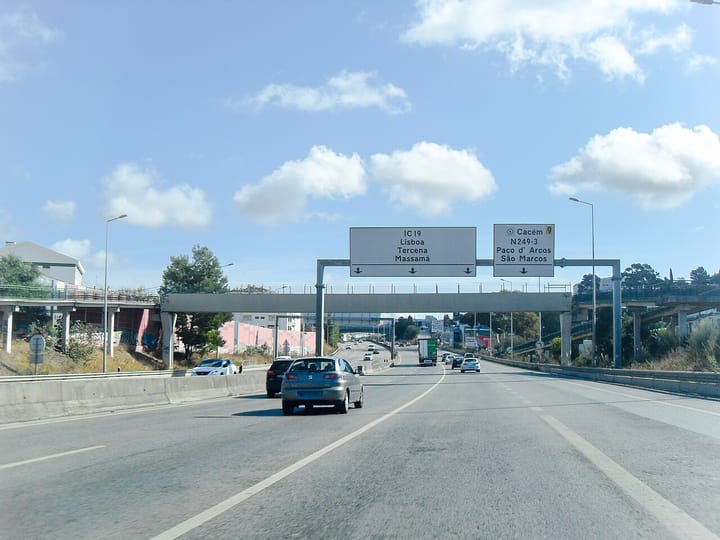
Min. Agricultura Bumps the Limpeza de Terrenos Deadline to 30 June Nationwide on Thursday 28 May — José Manuel Fernandes Cites Spring Rainfall as Coimas Sit at €150-€10,000 for Singulares and Up to €25,000 for Pessoas Coletivas
The Ministério da Agricultura on Thursday 28 May 2026 extended the limpeza de terrenos deadline from 31 May to 30 June nationwide, citing spring rainfall and the 142% surge in contractor demand. Coimas for singulares run €150-€1,500 (€10,000 in specific cases); pessoas coletivas up to €25,000.
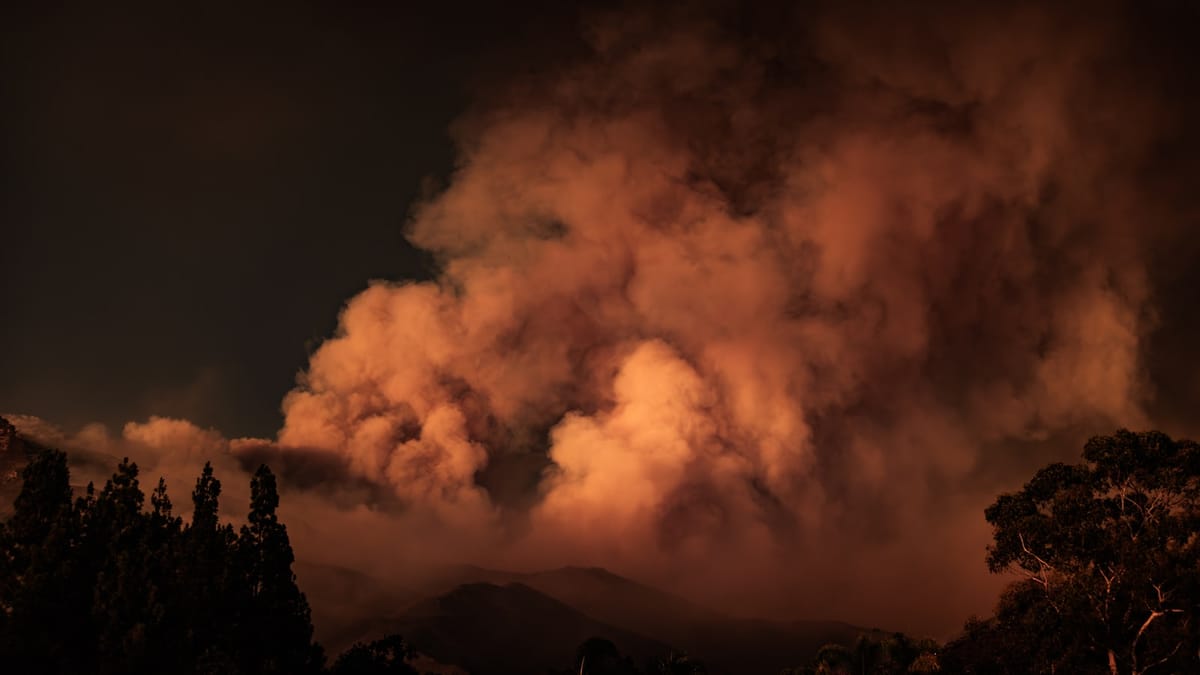
Minister of Agriculture José Manuel Fernandes on Thursday 28 May 2026 extended the statutory limpeza de terrenos deadline from 31 May to 30 June 2026 nationwide — pushing the cliff for compulsory fuel-management cleanup on rural and urban-interface properties back by 30 days across every concelho. The extension absorbs the spring-rainfall delay that pushed the practical-cleanup window out of the usual late-March-to-late-May calendar and the saturation in the contractor market that has been running on a 142% year-on-year demand surge since January. The cleanup obligation itself is unchanged — the 50-metre band around buildings, the 100-metre band around aglomerados, and the broader Faixas de Gestão de Combustível (FGC) under the Sistema de Gestão Integrada de Fogos Rurais (SGIFR) all remain mandatory; only the 31 May filing date is moved.
The Announcement — RTP Interview, 28 May
The Minister announced the extension in an RTP interview earlier on Thursday 28 May, framing the decision around two operational pressures: the spring-rainfall delay that pushed back the practical-cleanup season, and the contractor-saturation that has built up across the demand-side market in the run-up to the 31 May deadline. The exact language from the Minister: 'Para todo o país, e face às condições climatéricas que também tivemos e às chuvas, vamos alargar o prazo de limpeza, que acabava agora a 31 de Maio, até 30 de Junho.' The 30 June 2026 cliff replaces the 31 May 2026 cliff for the entire national territory — not just for the Kristin storm calamidade concelhos that had already been carrying the 30 June deadline since the January-February 2026 storm-damage framework took effect.
The Previous Extension — Kristin Storm Calamidade Concelhos Only
The 30 June reading was not new across the whole territory — it was the operative date for the subset of concelhos that had been placed under calamidade declaration following Storm Kristin in late January and early February 2026. The first wave of extensions, announced shortly after the Council of Ministers calamidade declaration in February, carried the 30 June reading for the specifically-designated municípios on the storm-damage perimeter (the Coimbra, Aveiro, Beja, Leiria, Setúbal and selected Centro-and-Norte concelhos that had carried the heaviest storm damage). Today's announcement universalises the 30 June reading — so a property owner anywhere in the national territory now has the same deadline. The previously-designated calamidade concelhos retain the 30 June deadline they already had; the rest of the country pulls up alongside them.
The Demand Surge — 142% Year on Year and a Saturated Contractor Market
The Fixando platform — one of the larger Portuguese service-matching marketplaces — reports that demand for terreno-cleanup services has run at +142% year on year through the January-to-May 2026 window versus the same period in 2025. The demand has not been linear: March and April carried the peaks, consistent with the standard pre-Verão cleanup-window and the proximity to the 31 May original deadline. The supply-side response has been constrained by the standard Portuguese rural-contractor capacity: a relatively fragmented network of small jardineiro, limpeza-florestal and máquinas-agrícolas operators, with the broader heavy-equipment fleet concentrated in the Centro and Norte regions and routinely contracted to municipal câmaras for the public-land cleanup contracts. The result has been a familiar pattern of saturated availability, lengthening lead times into June and July, and upward pressure on the per-hectare cleanup price.
The standard contractor-side reading: less than half of property owners reportedly comply regularly with the annual cleanup obligation. The compliance rate climbs sharply in the run-up to each year's deadline as the GNR-and-câmara enforcement framework activates, and falls back through the post-deadline window before the next cycle begins. The 30-day extension to 30 June pushes a substantial share of the compliance volume into the June window — which industry-side commentary suggests may simply restage the same saturation pattern. Clearing a plot that holds acacias, pampas grass or other listed plants also engages a separate law: see our guide to Portugal's invasive species list.
The Cleanup Obligation Itself — 50 Metres, 100 Metres and the SGIFR Frame
The cleanup obligation is set out in the Sistema de Gestão Integrada de Fogos Rurais (SGIFR) framework — anchored in Decreto-Lei n.º 82/2021 de 13 de outubro, the consolidated forest-fire-prevention regime that supersedes the earlier Decreto-Lei n.º 124/2006 framework — and runs through three primary obligations on landowners:
- The 50-metre band around buildings (Faixas de Gestão de Combustível, Tipo 2): all property owners must clear a 50-metre perimeter around residential buildings, support structures and other constructions on rural and urban-interface land. The cleanup obligation covers vegetation pruning, dry-material removal, undergrowth clearance and tree-canopy spacing to the SGIFR-specified standards (typically 4-metre vertical clearance below tree canopies and the prescribed crown spacing between mature trees).
- The 100-metre band around aglomerados (Faixas de Gestão de Combustível, Tipo 1): a wider 100-metre cleanup band around aglomerados populacionais, parques industriais and equivalent population-density anchors. This obligation typically falls on the câmara municipal for the public-land share and on the adjacent landowners for the private-land share.
- Linear infrastructure faixas: additional cleanup bands along estradas, caminhos-de-ferro, linhas elétricas de muito alta tensão and similar linear infrastructure — typically the responsibility of the infrastructure operator (Infraestruturas de Portugal, REN, EDP Distribuição) for the operator-side share and adjacent landowners for the boundary-condition share.
The Coimas — €150 to €25,000
The financial penalties for non-compliance with the cleanup obligation are codified in the SGIFR contraordenacional framework:
- Singulares (natural persons): coimas run from €150 to €1,500 for the standard non-compliance reading. In specific aggravated cases (repeated non-compliance, cleanup obligation breached during the season-of-critical-fire-risk, properties on the high-risk perimeter or properties adjacent to publicly-protected biodiversity zones), the coima can rise to €10,000.
- Pessoas coletivas (legal entities — companies, associations, holding vehicles): coimas can run up to €25,000 per cleanup-obligation breach.
- The GNR — Serviço de Protecção da Natureza e do Ambiente (SEPNA) is the principal field-enforcement arm. The câmara municipal can also act on its own jurisdiction for the standard contraordenacional process.
- The Câmara Municipal may also issue execução coerciva — direct municipal cleanup of the non-compliant land at the owner's expense, with the cleanup cost added to the next IMI cycle as a separate cost-recovery line on the property record.
Why the Climate Stress Frame — IPMA, Aviso Amarelo and the SNS Nível 1 Switch
The Minister's framing of the extension as a response to climate stress aligns with the broader institutional reading of the early-summer 2026 risk picture. The IPMA aviso amarelo for heat-stress and the SNS Plano de Contingência Nível 1 switch — both flagged earlier this week (27 May) — anchor the demand-side public-health framework for the high-fire-risk window. The standard Portuguese fire-season designation — the período crítico — runs from 1 July to 30 September, with the SGIFR readiness-and-prevention obligations on private landowners and the câmaras and ICNF stepping into a higher operational tempo. The 30 June 2026 cleanup deadline now sits precisely at the cliff between the prevention window and the operational fire-season, which industry commentary suggests is the operational point of the extension — leaving the critical 1 July onset with a fresher cleanup baseline than a 31 May deadline would have allowed for the late-spring rainfall pattern that delayed cleanup execution this year.
The DECIR Frame — Operational Readiness for the Verão Fire Season
The Government's Dispositivo Especial de Combate a Incêndios Rurais (DECIR) 2026 framework — coordinated by the Autoridade Nacional de Emergência e Protecção Civil (ANEPC) — is already ramping up. The DECIR runs in phased deployments: the Fase Alfa (1 January to 14 May) carries the early-season readiness, the Fase Bravo (15 May to 30 June) carries the pre-summer ramp, the Fase Charlie (1 July to 30 September) is the peak-season high-operational-tempo window, and the Fase Delta and Fase Eco windows wind the deployment back down through autumn. The Alentejo Central operational ramp-up that we covered on 11 May — 393 operacionais and 99 specialised vehicles slated for the peak Delta phase — sits inside this national framework. The 30 June cleanup-deadline cliff lands precisely at the Bravo-to-Charlie phase transition, framing the 1 July fire-season onset with the cleanest fuel-management baseline the Government can engineer given the 2026 rainfall pattern.
The Owner-Side Calendar — 33 Days to Act
For property owners across the national territory, the 30 June 2026 deadline carries a 33-day operational window from the announcement date (28 May). The practical calendar:
- Now to early June: initiate the cleanup booking with a contractor or arrange the in-house execution. The saturated contractor market means lead times are running at 2-to-4 weeks for standard rural-property cleanup.
- Early to mid-June: execute the cleanup — vegetation pruning, dry-material removal, undergrowth clearance and tree-canopy spacing to the 50-metre and 100-metre band requirements.
- Late June: retain photographic documentation of the executed cleanup as evidence in case of a SEPNA inspection or câmara verification.
- 30 June 2026 (cliff): the statutory compliance deadline. From 1 July onward, non-compliant properties carry the coimas-and-execução-coerciva exposure.
- 1 July onward (Fase Charlie DECIR): peak fire-season operational tempo — non-compliance penalty exposure escalates and the GNR SEPNA inspection rate climbs.
What This Means for Expat Property Owners — The Bottom Line
- Every foreign owner of rural or urban-interface property in Portugal has a 33-day compliance window from today to clear the 50-metre band around buildings and align with the 100-metre aglomerado-band framework where adjacent. The 30 June 2026 cliff applies regardless of residence status — non-resident owners are equally on the hook and face the same coima framework.
- Non-resident foreign owners face the highest compliance exposure because the property is typically not under day-to-day observation — and the GNR SEPNA inspection routine is not residence-status-conditioned. Coordinate with a local property-management or jardinagem-rural contractor to execute the cleanup before the cliff.
- The contractor market is saturated. Booking now into early June requires accepting some flexibility on the timing — expect 2-to-4-week lead times for standard rural-property cleanup; longer for the more remote concelhos in the Beira Interior, Trás-os-Montes and Alentejo Interior perimeters.
- The execução coerciva risk is the worst-case scenario for non-resident owners — the câmara municipal will cleanup the non-compliant land at the owner's expense and recover the cost through the IMI cycle. This is administratively painful and financially typically more expensive than self-arranged contractor cleanup.
- The coima exposure for singulares can reach €10,000 in aggravated cases — and €25,000 for pessoas coletivas owning the property through an SCI, SGPS or other holding vehicle. Property held in a holding-vehicle structure carries the higher coima ceiling.
- Insurance implications: a property destroyed in a fire that traced back to the owner's non-compliant fuel-management band may face partial or total insurance coverage denial under the standard apólice multirriscos exclusion for grossly-negligent failure to comply with statutory obligations. Confirm the apólice wording with your insurer before relying on the seguro de habitação product as a fire-recovery backstop.
- The Algarve interior, the Alentejo interior, the Centro Interior and the Trás-os-Montes perimeters are the highest-risk fire-season geographies — and the cleanup obligation is operationally more consequential in those concelhos because the historical fire-spread arithmetic gives the 50-metre band the highest marginal protection value. For foreign owners with properties in these regions, the cleanup is not a check-the-box compliance task but a meaningful insurance-and-life-safety obligation.
- Document the cleanup with date-stamped photographs and contractor receipts. The standard SEPNA inspection-and-coima file is administratively built around evidence of the cleanup at or before the statutory deadline — the absence of evidence is itself problematic in the contraordenacional process.
The full SGIFR framework, the Decreto-Lei n.º 82/2021 consolidated text, and the cleanup-obligation operational guides are available at the ICNF — Instituto da Conservação da Natureza e das Florestas institutional portal at icnf.pt. The câmara municipal of the property's concelho is the standard counter-point of contact for local-specific cleanup-perimeter questions. The GNR SEPNA inspection-and-coima framework runs through the gnr.pt portal.
Source whitelist compliance: Ministério da Agricultura / José Manuel Fernandes RTP interview Thursday 28 May 2026 — Tier 1 institutional — for the 30 June 2026 nationwide deadline extension and the climate-stress framing. Lusa (lusa.pt) — Tier 1 wire — for the corroborative 28 May reporting. Decreto-Lei n.º 82/2021 de 13 de outubro (dre.pt) — Tier 1 — for the SGIFR consolidated framework, the 50-metre and 100-metre faixas, and the coimas range. ICNF (icnf.pt) — Tier 1 institutional — for the FGC framework, the SGIFR rollout and the cleanup-obligation operational guides. ANEPC — Autoridade Nacional de Emergência e Protecção Civil (prociv.gov.pt) — Tier 1 — for the DECIR 2026 Fase Alfa-Bravo-Charlie-Delta-Eco phased deployment. GNR — Serviço de Protecção da Natureza e do Ambiente (gnr.pt) — Tier 1 — for the SEPNA enforcement and contraordenacional process. Público (publico.pt), Observador (observador.pt), RTP (rtp.pt) and Jornal Económico (jornaleconomico.sapo.pt) — Tier 2 — for the 28 May Portuguese-language framing, the Fixando demand-side reporting and the FORESTIS / Forum Florestal welcoming statements. Cross-referenced internally to the SNS Plano de Contingência Nível 1 piece (27 May), the IPMA heatwave-aviso-amarelo coverage, the Abrantes €16M Kristin storm-damage piece (27 May), the DECIR 2026 Alentejo Central piece (11 May) and the broader rural-property and fire-prevention file. Portugal Post not consulted (blacklisted). On the apartment-ownership, condomínio and building-management side of the file, our guide to living in a condomínio and horizontal-property rules sets the latest reference. On the weather, drought and wildfire-risk side of the file, Portugal's slide into meteorological drought has the full picture as the fire season peaks. On the wildlife, farming and rural-Portugal side of the file, the overhaul of Iberian wolf compensation rules explains what has changed for livestock producers. On the animal-welfare side of the file, the GNR's tally of animal-cruelty and abandonment crimes sets out where the cases cluster and how the law now punishes them. On the rural-property paperwork side of the file, our guide to sinking or regularising a private water borehole in Portugal covers the 5 cv threshold, the prior communication, and the fines for an undeclared well. On the everyday-nuisance side of the file, our guide to Portugal's noise law and what to do about a loud neighbour sets out the hours building work is banned, what the police can order after 23:00, and the fines that follow. On the landowner side of the file, our guide to what you may and may not cut down on your own land sets out the cork oak and holm oak authorisation, the olive and holly bans, and the 25-year freeze that follows an illegal felling. Separately, our guide to when you may lawfully burn cut vegetation, and when you may not sets out the 4-square-metre pile rule, the difference between a queima and a queimada, the days on which all open-air fire is banned, and the fines that follow when the paperwork is missing. On the compensation side of the file, the natural-catastrophe declaration that opened the €10 million farm-recovery call sets out the 32 parishes across nine councils the despacho actually names, the 30 percent damage threshold, the 100 / 80 / 50 support scale that turns on whether you hold agricultural insurance, and the 17:00 deadline on 27 October.