The Government Declares Católica's New Lisbon Business School Campus a Project of National Public Interest, With Room for 5,000 More Students
Resolution 184/2026 backs Campus Veritati, two buildings for the business school and an 800-seat conference centre, plus a pedestrian garden over Avenida Lusíada. It gives no cost, no timetable and no public funding.
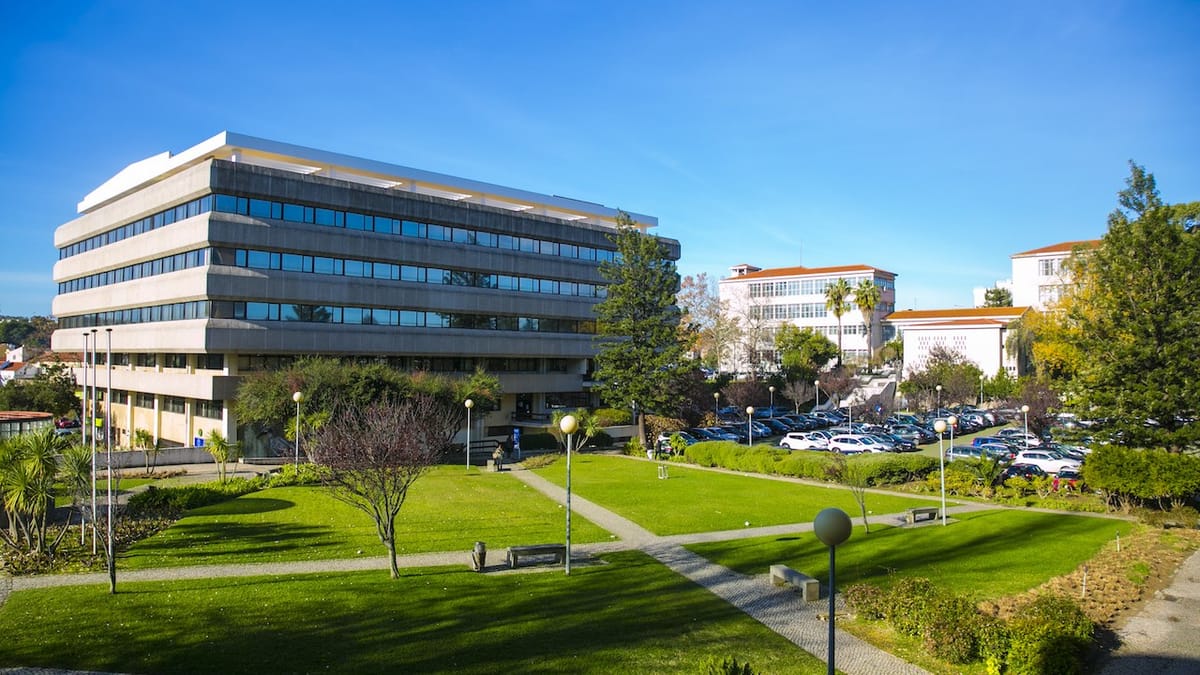
The government has declared the Universidade Católica Portuguesa's planned Campus Veritati in Lisbon a project of national public interest. The new campus is designed to take about 5,000 more students and to put a pedestrian garden over Avenida Lusíada.
Resolução do Conselho de Ministros n.º 184/2026 (Council of Ministers Resolution 184/2026), published in the Diário da República (the official gazette) on Thursday 24 September, covers both the project and the urban redevelopment attached to it. The resolution was approved on 9 September and signed by Prime Minister Luís Montenegro. It takes effect on Friday, the day after publication. The government states that Lisbon City Council was consulted.
What will be built
According to the resolution, Campus Veritati is a new university site on the northern side of Católica's existing campus. It will have two buildings, one for the Católica Lisbon School of Business and Economics and one for a multi-purpose conference centre with an innovation centre, holding about 800 people.
The project also frees up space on the southern campus. That space will become green and leisure areas, and a suspended garden or landscaped square will be built over Avenida Lusíada for pedestrians only. The government argues that the avenue currently acts as a barrier in an area it describes as having poor quality of urban life. It says the crossing would make it safer to walk between the two sides and would support shops and services nearby.
The government's case
The resolution estimates that the project will create 1,500 jobs during construction and 750 once it is operating. It also expects the campus to strengthen research capacity and make the Lisbon region, and the country, more attractive and competitive.
The text praises the business school, noting that it was the first in Portugal to earn Triple Crown accreditation and that it appears in the Financial Times rankings. It also cites the university's scholarships for students resident in Portugal and for international students, particularly from the Portuguese-speaking African countries and Timor-Leste.
The government links the decision to its programme's commitment to a national higher education system run by public, private and cooperative institutions together, and to its goal of attracting international students. It calls the campus "a valuable facility for collective use intended for citizens in general". It also points out that the new conference and public spaces will be open to the wider public as well as to the academic community.
What the resolution does not say
The two-page text gives no cost, no construction timetable and no opening date for the new buildings. It does not spell out what practical consequences the national public interest label will have for licensing or planning, and it mentions no public funding. It simply declares and recognises the project's national public interest, citing the Council of Ministers' general powers under Article 199 of the Constitution.
Católica is a private university with more than 50 years of teaching and research behind it, in the resolution's own description. The new buildings go on the northern side of its Lisbon campus, and the space freed on the southern side is what makes the garden over Avenida Lusíada possible.