Lisbon's Final Batch of Sterile Tiger Mosquitoes Goes Out in Alvalade Today, With a Controlled Trial Pencilled In for May
The releases complete a first phase that tracks how far sterile males spread and how long they live in a city. If results are good, a May 2027 study will compare a release zone with a control area.
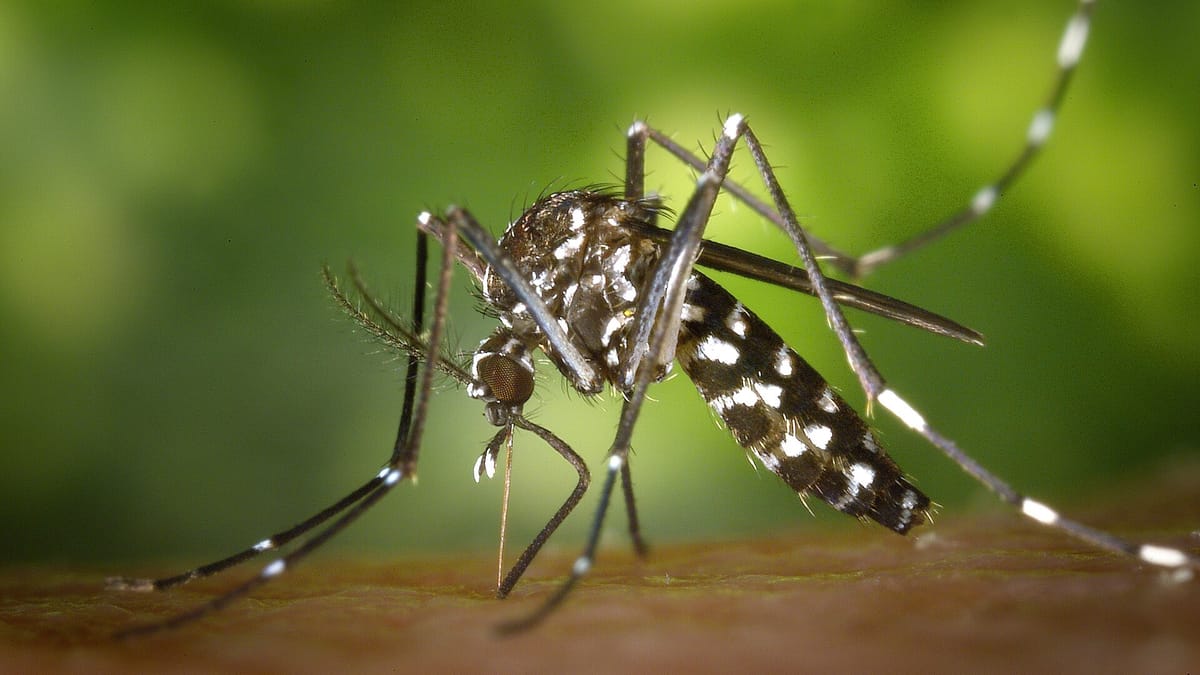
The last batch of sterile tiger mosquitoes in Lisbon's first field trial goes out in Alvalade on Thursday. It completes a September programme of releases that public health officials hope will show whether the technique can work in a European city.
The mosquitoes are all male Aedes albopictus, the Asian tiger mosquito, sterilised before release. Afonso Moreira, a public health doctor at the Unidade de Saúde Pública Francisco George (Francisco George Public Health Unit) of the Unidade Local de Saúde (ULS, Local Health Unit) Santa Maria, told Lusa that 60,000 had already been released before this final round. Only females need blood, so the males released do not bite and cannot pass on disease.
How the technique works
The Sterile Insect Technique relies on numbers. Sterile males compete with wild males for females, and a female that mates with a sterile male produces no offspring. Released in large enough numbers over time, they should shrink the local population. The technique uses no insecticide. According to ULS Santa Maria, the released males die naturally within a few days.
This first phase is not yet a test of whether the population falls. It is a mark, release and recapture study, designed to measure how far the sterile males spread and how long they survive in an urban setting. Traps have been installed around Alvalade, and accredited technicians inspect them regularly and collect samples.
Moreira said Alvalade was chosen for its vegetation and its interior courtyards and back gardens, which offer good conditions for the mosquito to breed.
A controlled trial in May, if phase one goes well
The next stage is planned for May 2027, provided the first results are favourable. Moreira described it as a comparative study: sterile mosquitoes would be released in one area while a similar area serves as a control, to see whether the release makes a measurable difference.
The project, known as POR5007, is coordinated by the Instituto Nacional de Saúde Doutor Ricardo Jorge (National Health Institute, INSA) and supported and funded by the International Atomic Energy Agency. Tragsa, a Spanish public company with recognised experience of the technique, is a partner. Lisbon City Council, the Alvalade parish council and the Direção-Geral da Saúde (Directorate-General of Health) are also involved. The first release, of 30,000 insects, took place on 10 September, when ULS Santa Maria said the September phase would total 90,000.
Why Lisbon is doing this
The tiger mosquito is an invasive species that can carry the dengue, chikungunya and Zika viruses. Disease requires the mosquito to bite an infected person first and then pass the virus on, but its spread has made it a public health priority. INSA's 2025 vector surveillance report placed it in 28 mainland municipalities, including Lisbon, as we reported in May.
Moreira stressed that sterile males are only one tool. The main defence is still removing the small pools of standing water where the species breeds, in public spaces and on private property alike. Residents who spot a dark mosquito with white stripes on its legs and body can photograph it and submit it through the Mosquito Alert app, which ULS Santa Maria promotes for mapping the species.