Portugal's Tile and Brick Makers Stand to Pay Less for Carbon After an EU Deal on About 120 Million Extra Free Allowances
The European Parliament and EU governments have agreed to raise the benchmarks behind free carbon allowances for heavy industry in 2026 to 2030. Ceramics is the sector set to gain most, and about 35 Portuguese plants are on the list.
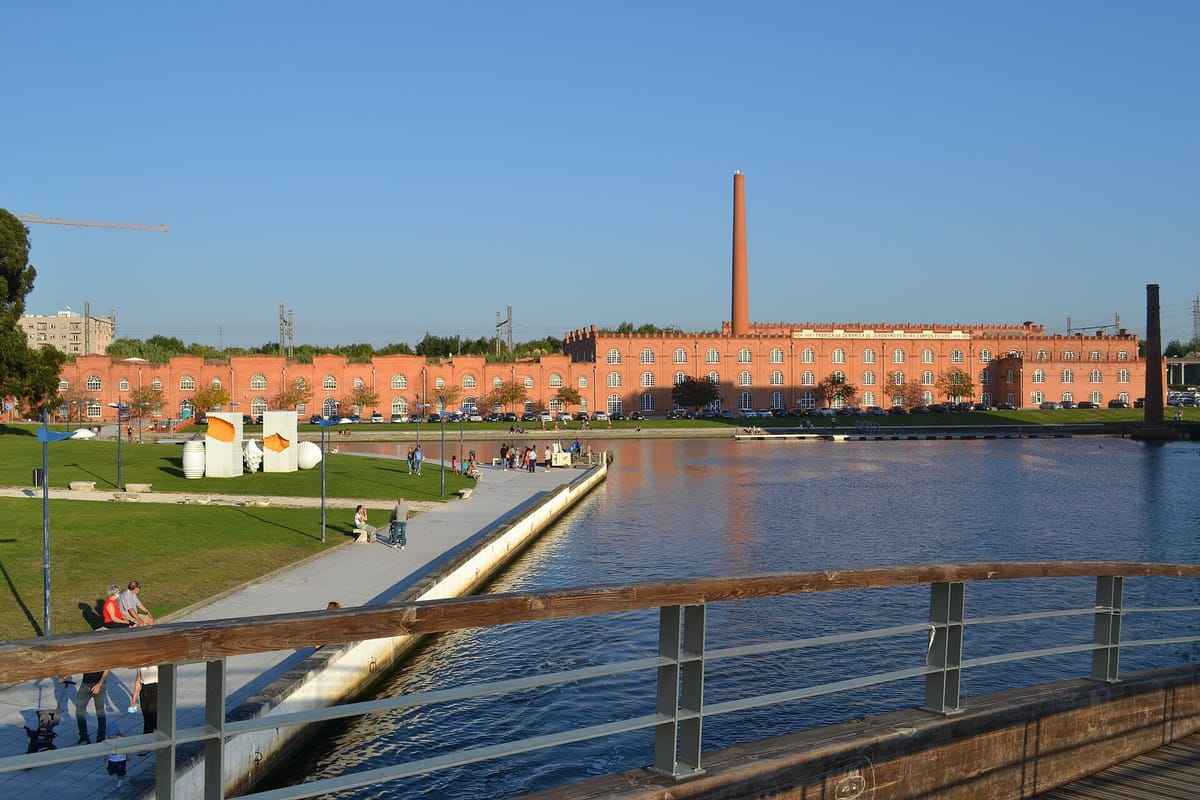
Europe's heavy industry will get about 120 million more carbon allowances free of charge over 2026 to 2030 under a deal struck this week by the European Parliament and EU governments, and Portugal's ceramics makers are among the firms most likely to benefit. The European Commission, which welcomed the agreement in its daily news of 13 November, puts the extra allowances at more than 10 billion euros.
On Saturday the Ministério do Ambiente e Energia (Ministry of Environment and Energy) called it "an excellent piece of news" for Portuguese industry, "in particular for the ceramics sector", in a communiqué reported by Lusa (in Portuguese).
What was agreed
Under the EU Emissions Trading System (ETS), known in Portugal as the Comércio Europeu de Licenças de Emissão (CELE), factories and power plants must hand in one allowance for every tonne of carbon dioxide they emit. Industries at risk of moving production outside Europe, where carbon is not priced, receive part of those allowances free.
How many they get depends on benchmarks. The 10 percent most efficient plants in a sector set the benchmark, and it is tightened every five years. Where no product benchmark exists, the system falls back on benchmarks based on the heat or fuel a plant uses. The latest update to those fallback values would have cut free allocation for several sectors, and the Commission proposed a separate fix in July 2026.
The deal raises the heat and fuel fallback benchmarks for 2026 to 2030. It also tells the Commission to set fuel benchmarks for individual sectors in the same period, an approach that, the Commission says, "will in particular benefit the ceramics sector, which is at high risk of carbon leakage". The ministry says up to 121 million extra free allowances could be made available across the EU.
The agreement is provisional. The Parliament and the Council of the EU still have to adopt it formally, and the sector-specific benchmarks are still to be written.
Why Portugal pushed for it
The ministry says the government had warned that the revised benchmarks could hurt sectors it calls strategic for Portugal, naming ceramics, glass and cement. It describes ceramics as a sector made up largely of small and medium-sized firms, with a strong export record and high exposure to energy costs and foreign competition.
"We cannot ask our companies to invest ever more to cut emissions and, at the same time, penalise them for that effort," the minister, Maria da Graça Carvalho, said in the statement. The ministry stresses that the free allowances do not remove any environmental obligation: companies must still surrender allowances to cover their actual emissions, but will need to buy fewer of them on the market.
How many Portuguese plants are involved
The Agência Portuguesa do Ambiente (Portuguese Environment Agency, APA), which runs the system in Portugal, publishes the free allocation for each plant. Its national allocation table for 2021 to 2025 (PDF in Portuguese) lists 129 installations, and about 35 of them are ceramics plants: makers of roof tiles and bricks, wall and floor tiles, and stoneware tableware. Pulp and paper mills, glassworks, cement and lime works, oil refining, chemical plants, textile finishers and food factories make up much of the rest.
APA's free allocation page (in Portuguese) does not yet carry plant-by-plant figures for 2026 to 2030, so it is too early to say how many extra allowances any Portuguese factory will receive.
What it does not change
The deal concerns industrial plants under the existing ETS. It does not touch the separate carbon market for heating fuels and road fuels that starts in 2028, under which fuel suppliers will have to buy permits for the fuel burned in homes and cars, nor Portugal's 1.6 billion euro plan to help low-income households with that cost.
Earlier this week, the Commission's climate progress report ranked Portugal second in the EU for rising net emissions in 2025, a rise it put down mostly to forests and land rather than industry.