The European Parliament Stripped a Portuguese MEP of His Immunity on Tuesday Over Words Portuguese Prosecutors Had Already Ruled Lawful
Francisco Assis loses his immunity so an Almada judge can open a pretrial investigation into a March 2022 press release he issued as president of the Economic and Social Council. The Public Prosecutor's Office had closed the case as free expression.
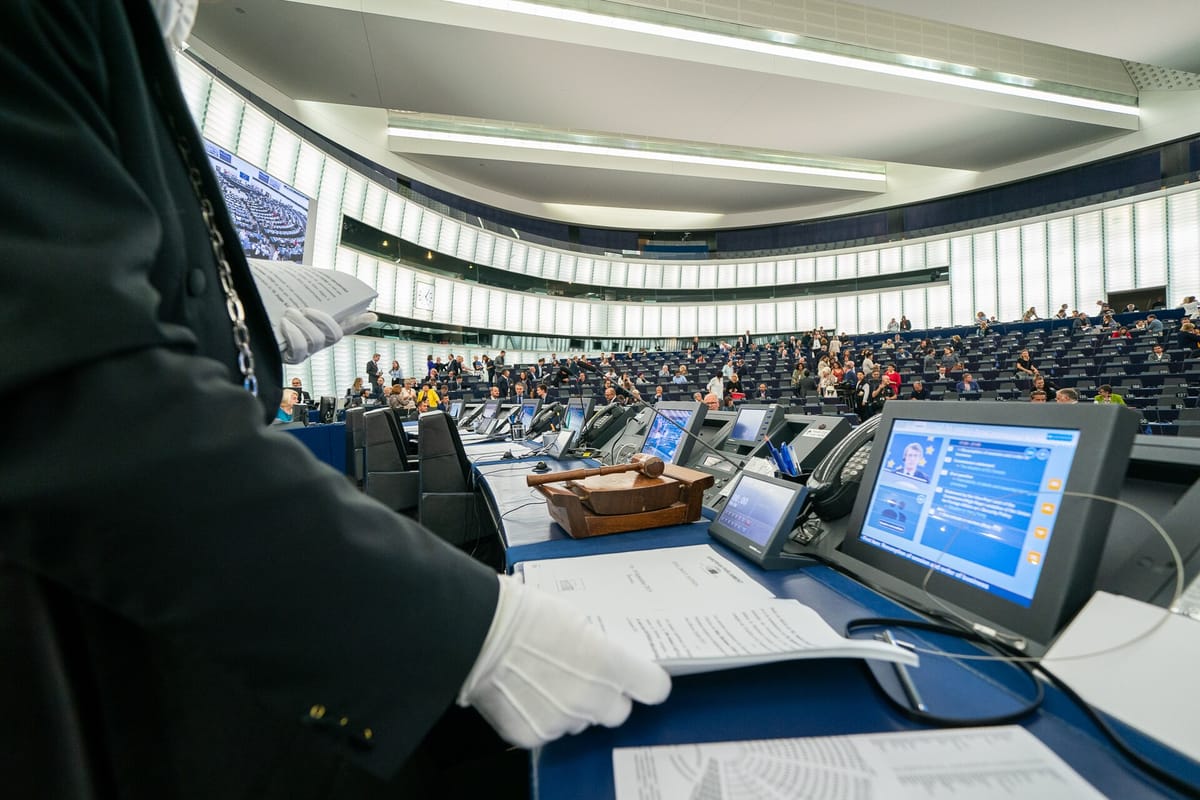
The European Parliament voted in Strasbourg on Tuesday to lift the parliamentary immunity of Francisco Assis, the Portuguese Socialist MEP, so that a Portuguese court can open a pretrial investigation into a press release he issued four years ago. The prosecutors who first looked at that press release had already decided it was no crime.
The request came from the criminal investigative judge in Almada, attached to the District Court of Lisbon, on 18 March 2026, and was announced in the chamber eight days later. The Committee on Legal Affairs adopted its report on 7 September by 24 votes to nil, with no abstentions, and Tuesday's plenary decision followed it. Assis was heard by the committee on 15 July. The offence alleged is aggravated defamation under Article 180(1) of the Portuguese Criminal Code, read with Article 132(2)(l) and Article 184.
A 2022 press release about Ukraine
The conduct at issue dates to 31 March 2022, five weeks into the full-scale Russian invasion of Ukraine, when Assis was president of the Conselho Económico e Social (Economic and Social Council), the constitutional body that brings government, employers and unions together. According to the judge's request, quoted in the parliament's report, Assis issued a statement arguing that the complainant's continued presence at the Presidency of the Council of Ministers "degrades the country and flatly contradicts the Government's political position on the barbaric Russian invasion of the sovereign state of Ukraine".
The same statement described the complainant as a "collaborator with the autocratic and criminal power installed in the Kremlin" and called for "measures to be taken to address this serious institutional anomaly". The parliament's report does not name the complainant. RTP, carrying the Lusa wire, identified him as the jurist and commentator Alexandre Guerreiro, who at the time said Assis had committed a crime of calumny and that the matter would be resolved in the proper forum.
Prosecutors closed it once already
The most striking passage in the parliament's report is what happened next in Portugal. The Ministério Público (Public Prosecutor's Office) examined the complaint and closed the preliminary investigation, finding that no offence had been committed because the statements fell within the right to freedom of expression guaranteed by Article 37 of the Constitution. It also noted that both men are public figures holding public office in Portuguese political life, and so "must necessarily be more resilient to criticism".
The complainant then challenged that closing order as void and asked for an instrução, the pretrial judicial investigation a Portuguese complainant can request when prosecutors decline to charge. That step cannot proceed against a sitting MEP without the parliament's authorisation, which is what produced Tuesday's vote.
Why the parliament let it through
Assis was elected to the European Parliament in June 2024, more than two years after the press release, so he was not an MEP at the time. The report finds that Article 8 of Protocol No 7 on the Privileges and Immunities of the European Union, which shields opinions expressed in the performance of parliamentary duties, does not apply, because the statement was made in a national role. What remained was Article 9, which extends to MEPs in their own country whatever immunity national parliamentarians enjoy, in this case under Article 157 of the Portuguese Constitution.
Parliament found no sign of fumus persecutionis, its test for whether proceedings are really aimed at damaging a member's political work and the institution's independence. It added the standard caveat that it cannot act as a court and that a member in a waiver procedure is not a defendant. The merits are for the Portuguese courts.
The decision goes immediately to the competent authorities in Portugal and to Assis himself. The rapporteur was Dominik Tarczyński, a Polish MEP of the European Conservatives and Reformists group.