The 7.3 Billion Euro Closing Account on Portugal's Recovery-Plan Research Consortia: 1,270 Products Against a Target of 959
The Ministry of Economy and Territorial Cohesion published the final count on Tuesday. Fifty-one Mobilising and Green Agendas ended with 1,270 products, processes and services against a contracted 959, involving 1,100 companies and research centres and about 11,000 highly qualified jobs.

The Ministério da Economia e da Coesão Territorial (Ministry of Economy and Territorial Cohesion) published the closing account on Tuesday for the largest business-research instrument inside Portugal's recovery plan. Across 51 Agendas Mobilizadoras (Mobilising Agendas) and Agendas Verdes (Green Agendas), the consortia ended with 1,270 products, processes and services against an initial contracted target of 959, drawing in 1,100 companies and research centres and mobilising about 7.3 billion euros. The ministry counts roughly 11,000 new highly qualified jobs inside those consortia.
Where the extra 311 came from
The jump from 959 to 1,270 is not an accident of good execution. It was bought.
A reprogramming agreed in August 2025 lifted the agendas' grant allocation from an initial 930 million euros to roughly 3 billion, and let 30 of the consortia raise their ambition and add work. That exercise incorporated 311 new products, processes and services. It also moved the deadline for finishing the physical work from 31 December 2025 to 30 June 2026, with financial execution running on to 31 December 2026.
So this week's figures close two different clocks. The building had to stop at the end of June; the paying does not stop until the end of the year. That is why the account arrives now rather than in the last week of August, when the plan's own headline milestone date falls.
What the money built
The ministry led with hardware. New Space Portugal expanded the Constelação Atlântico to eleven satellites. Aero.Next Portugal produced a retractable landing gear in composite material and a light regional aircraft designed for dual civil and military use. Health from Portugal worked on innovative therapies, ovarian cancer screening and artificial intelligence applied to medical imaging. Route 25 covered autonomous mobility, R2UTechnologies modular construction, and Vine and Wine Portugal delivered a digital winery and autonomous agricultural vehicles. Economy minister Manuel Castro Almeida called the set one of the best components of the recovery plan.
The number that is not in the release
Nowhere in the account is there a figure for revenue. A product counts as delivered when it has been developed, not when anyone has bought it, and the consortia have been open about that gap: the phrase circulating around the agendas since June has been that the sector now has to sell.
The same caution applies to the 11,000 jobs. That is a count of highly qualified posts created inside consortium members over the life of the programme, not a net national employment figure, and the test is how many survive once the grant money stops. Portugal has already seen what that transition looks like: when recovery-plan funding ran out for the country's Collaborative Laboratories, the state had to open a 45 million euro Compete tender to keep them going.
What this means if you live here
- These are the sectors that will still be hiring in 2027. Aeronautics and space, information and communication technologies, and transport, mobility and logistics took the largest reinforcements in 2025. Energy was the one strategic area cut back, after a reassessment of how mature its technologies were.
- The funding window has changed, not closed. If your business worked with a consortium, the successor calls run through Compete 2030 and Portugal 2030, not the recovery plan.
- Expect commercial results later. Most of these 1,270 outputs are prototypes, pilots and platforms. Consumer-facing versions arrive over the next few years, if at all.
The recovery plan closes its books on a final financial sprint that runs to the end of December. The agendas have filed a strong account on their own terms. Whether it was a good use of 7.3 billion euros gets answered somewhere else, on the invoices these consortia manage to issue over the next five years.
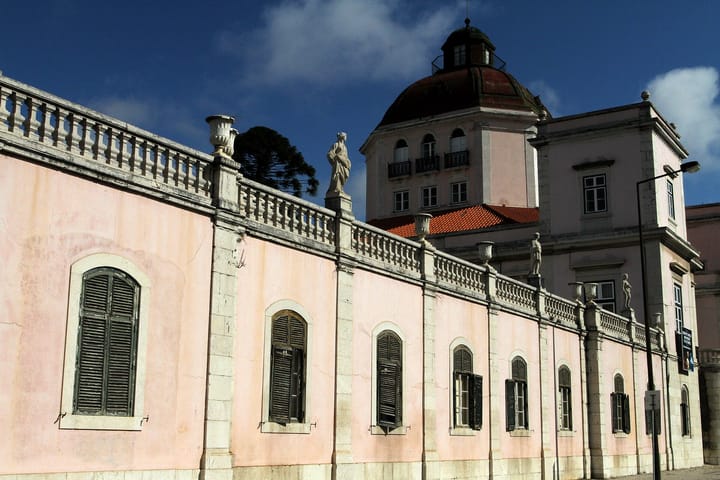
Feature image: the Instituto de Engenharia Eletrónica e Informática de Aveiro at the University of Aveiro. Photo via Wikimedia Commons, CC BY-SA 4.0.