TAP Earns 61.3 Million Euros in the Third Quarter, but a 176 Million Euro Jump in Fuel Costs Keeps Its Nine Months in the Red
TAP made a net profit of 61.3 million euros from July to September, down 64.6 million on a year earlier, and lost 37.9 million euros over nine months as jet fuel got dearer. Fares are rising to make up part of the gap, the airline says.
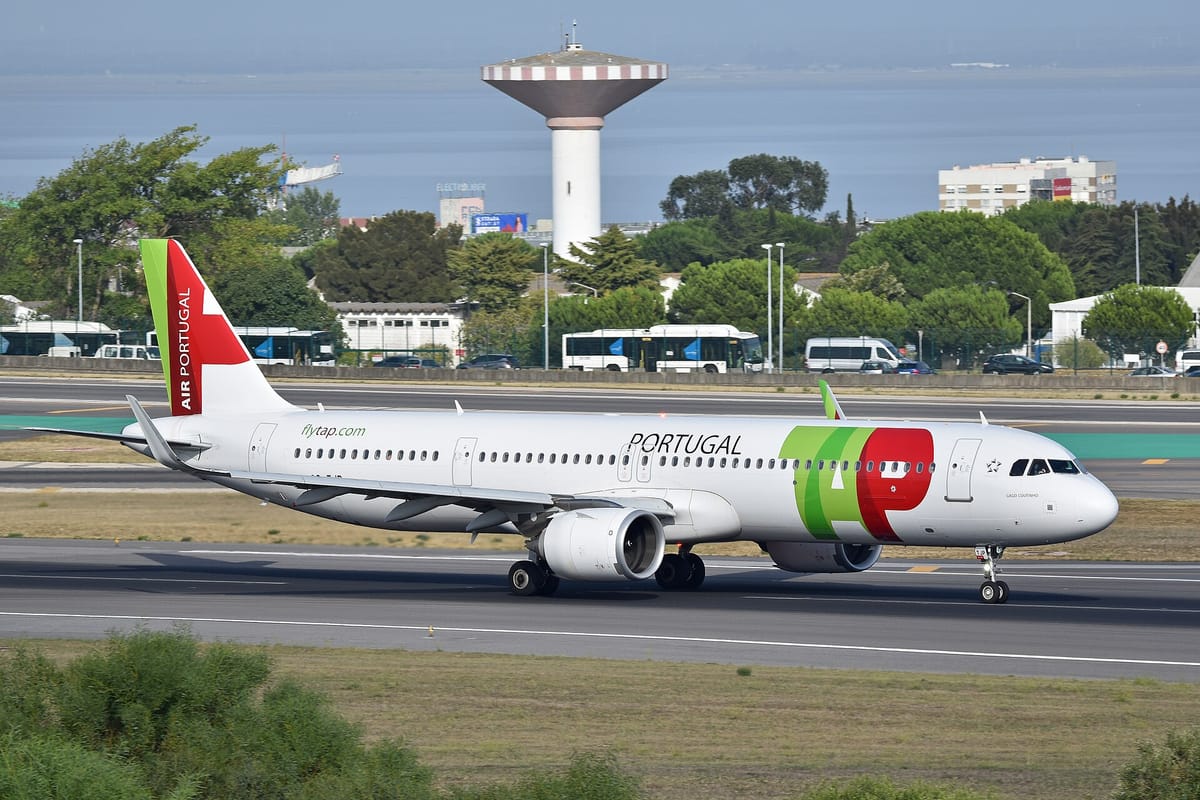
TAP Air Portugal made a net profit of 61.3 million euros in the third quarter of 2026, from July to September, the airline said on Friday 27 November. That is 64.6 million euros less than in the same quarter of 2025, and fuel is most of the reason: TAP's fuel bill rose by 87.1 million euros, or 32.4 percent, on the back of a sharp rise in the market price of jet fuel.
The summer profit was not enough to cover the first half's loss. Over the first nine months of the year TAP lost 37.9 million euros, 93.1 million euros worse than a year earlier, when it made a profit over the same period. The figures are preliminary and unaudited, according to the full earnings release.
The numbers
- Third quarter: operating revenue of 1,349.9 million euros (up 1.8 percent), of which 1,236.3 million came from passengers (up 3.6 percent). TAP carried 4.8 million passengers (down 0.6 percent) on 32,400 flights (down 1.1 percent), with planes 87.4 percent full.
- First nine months: 13.0 million passengers (up 2.4 percent) and operating revenue of 3,389.7 million euros (up 3.3 percent). Fuel costs rose by 176.4 million euros (up 23.7 percent).
- Operating profit: recurring EBITDA of 272.4 million euros in the quarter (a 20.2 percent margin) and 454.3 million euros in the nine months, down 137.7 million euros year on year. Recurring EBIT, the measure after depreciation, was 46.2 million euros over the nine months, down 181.0 million euros.
- Cash: 1,032.4 million euros at 30 September, up 267.0 million euros since the end of 2025, mainly because of the 350 million euros of bonds TAP sold in June. Net debt rose to 3.5 times recurring EBITDA, from 2.6 times at the end of 2025.
Fuel, wages and a bigger fleet
Recurring operating costs rose by 9.3 percent in the quarter, to 1,220.0 million euros. Besides fuel, depreciation rose by 19.7 million euros as new aircraft arrived, and staff costs rose by 14.7 million euros (5.8 percent), which TAP puts down mainly to pay rises agreed in its collective labour agreements. Over nine months staff costs were up 51.0 million euros (6.9 percent), reflecting those pay rises and more staff.
TAP ended September with 105 aircraft in operation, four more than in June, after two new Airbus A321neo jets arrived and two other aircraft entered or returned to service. It says 73 percent of its medium and long-haul fleet is now from Airbus's newer, more fuel-efficient "neo" family.
Higher fares are part of the answer
TAP says that since the start of the second quarter it has taken "commercial actions" to recover part of the higher fuel bill through revenue. Passenger revenue per available seat-kilometre, the industry's measure of how much an airline earns from each seat it flies, rose 4.4 percent in the quarter and about 10 percent in September alone. It rose in every market: Africa (7 percent), Europe (5 percent), North America (4 percent) and South America (2 percent).
The airline expects that trend to continue into the last quarter of the year, "increasingly supported by yield growth", meaning more revenue for each passenger-kilometre flown. Economy Prime, the premium economy cabin TAP put on long-haul flights in June, lifted premium cabins' share of revenue by about three percentage points.
Capacity fell 0.7 percent in the quarter. TAP says it was managing capacity tightly while fuel was dear, that Economy Prime meant fewer seats on long-haul aircraft, and that flights to Venezuela were suspended and then gradually resumed. On the network side, TAP opened Lisbon to Athens in July and Lisbon to Curitiba in Brazil, and added flights from Porto to Praia in Cape Verde and to Terceira in the Azores. The seasonal San Francisco route, which runs via Terceira, ended its summer run and is due back in summer 2027.
Waiting for Lufthansa
These are the first quarterly results since the government chose the Lufthansa Group as TAP's future private shareholder in October and signed the sale agreements in November. TAP says the deal still needs regulatory approval, and until then it will focus on its 2026 to 2035 strategic plan. In the first half, TAP's loss had widened to 99.2 million euros, also because of fuel.
Luís Rodrigues, TAP's chief executive, said the quarter "confirmed the resilience of TAP's business model" and that the airline enters the fourth quarter "with stronger revenue momentum". He added a warning: "since the end of the quarter, the economic and social, geopolitical and regulatory environments have not evolved positively, calling for full prudence."