Private Newsrooms Can Sell Their Archives to Portugal's AMÁLIA AI Model From a 6 Million Euro Pot, Under a New Decree
Decree-Law 219/2026 sets aside up to 15 million euros: 9 million to help private media digitise their archives and 6 million to pay them for handing everything published up to 2026 to AMÁLIA. RTP and Lusa are excluded, and storm-hit radio stations get more aid.
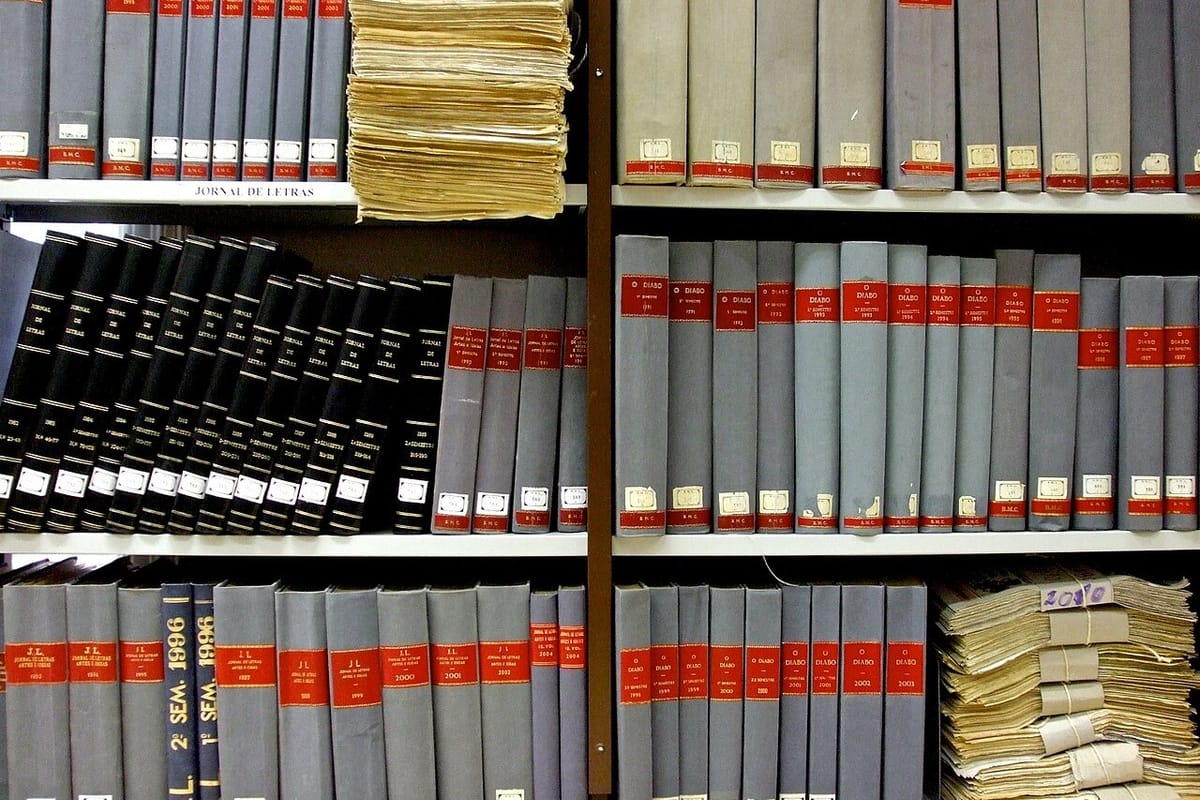
Portugal's privately owned newspapers, radio stations and television channels can now be paid for handing their back catalogues to AMÁLIA, the Portuguese-language artificial intelligence model being built with public money. Decreto-Lei n.º 219/2026 (Decree-Law 219/2026), published in the Diário da República (the official gazette) on 26 November and in force since Friday, sets aside up to 15 million euros for a new Media Digital Archives Programme. Six million of it is earmarked to pay outlets for their archives.
In September the government said it would approach media companies for their archives. This decree sets the terms.
Two separate pots
- Digitisation grants (9 million euros). These cover moving material off analogue or obsolete formats, cataloguing it and adding metadata. Grants cover up to 90 percent of eligible costs, cut to no less than 75 percent if the call is oversubscribed, and ministers can add up to 6 million euros more from 2027. A national outlet needs a project of at least 500,000 euros (outlets can apply jointly); 15 percent of the pot is reserved for regional and local media, whose minimum is 75,000 euros.
- Payment for archives (6 million euros). Outlets that sign up hand over their digital text, photo, audio and video archives up to 31 December 2026, and share the 6 million.
Only outlets registered with the Entidade Reguladora para a Comunicação Social (ERC, the media regulator) and based in Portugal can apply. The public broadcaster RTP and the Lusa news agency are excluded because, the decree says, both already get extraordinary state support for modernisation in 2025 to 2027.
What the archives can be used for
The archives can be used to train AMÁLIA, or any "sovereign" language model that succeeds it, for 10 years. Public universities, state laboratories and public research consortia can also use them for research, but cannot pass them on. Outlets can hold back unpublished material, material covered by professional secrecy, content whose rights they do not own, and anything else they can justify excluding.
The deal gives neither the state nor the AMÁLIA consortium exclusive rights, and material that is not freely available today does not become public as a result. Anything published from 2027 would need a separate contract. The decree asks AMÁLIA to cite outlets as sources and link to their websites "whenever technically possible and reasonable", which is short of a firm obligation. Outlets can get up to 33 percent in advance; the rest is paid once the Agência para a Reforma Tecnológica do Estado (ARTE, the state technology reform agency) confirms the archive has actually been transferred.
Who runs it
The money flows through VISAPRESS, a cooperative that manages rights in media content, rather than through a ministry, which the decree says protects press independence. The government's media task force, #PortugalMediaLab, funds and oversees it. VISAPRESS will open the call and draw up the rule for splitting the 6 million between outlets, which ARTE must approve; being a VISAPRESS member cannot give an outlet an edge. The Tribunal de Contas (Court of Auditors) reviews the contracts before money moves, and anything unallocated by the end of 2028 goes back to the state.
It is a second attempt. A 2025 scheme under the Recovery and Resilience Plan was open only to national free-to-air TV channels, and the decree says its spending fell "far short" of the budget.
More for storm-hit radio
The same decree raises the fund for radio stations whose transmitters were damaged by Storm Kristin from 500,000 euros to 1.2 million, because validated applications showed far higher needs than the sector's first estimates. The storm has drawn more than 600 million euros of public support so far.