Supreme Court Upholds Annulment of a Braga Pupil's 12-Day Suspension Over Messages in a Private WhatsApp Group
Portugal's Supreme Court of Justice says a school cannot discipline a pupil using messages from a closed WhatsApp group passed on without her consent. What the Estatuto do Aluno says about hearings and appeals.
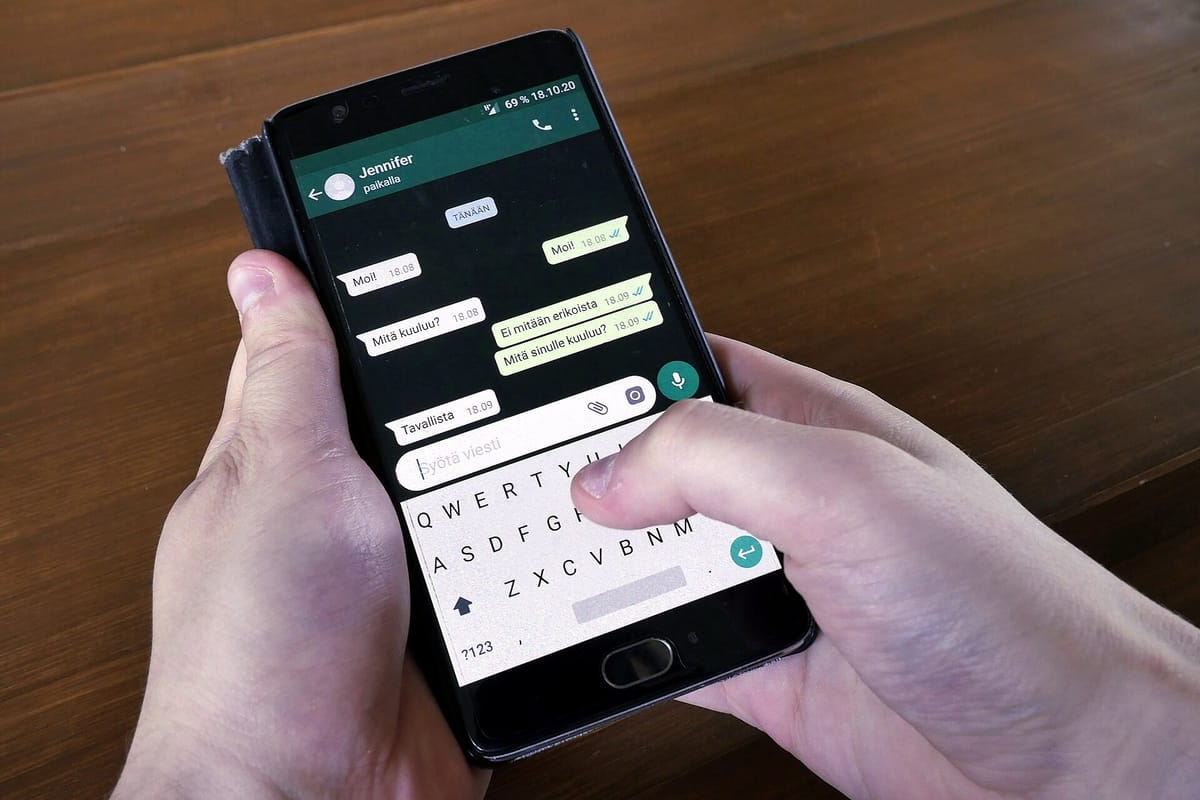
Portugal's Supreme Court of Justice (STJ) has upheld the annulment of a 12-day suspension that a private school in Braga imposed on a 16-year-old pupil over messages she wrote in a closed WhatsApp group. In a ruling dated 29 September and reported by Lusa on 22 October, the court held that a school cannot build a disciplinary case on private group messages passed on without their author's consent.
What happened
According to the Lusa report carried by Observador, the teaching cooperative Alfacoop suspended the pupil for 12 days in February 2024 after a disciplinary process. The messages were in a closed WhatsApp group she ran, with nine other pupils as members. Two others passed the messages to the school's management.
The school accused her of disparaging and defamatory remarks about third parties, slang and stickers that it said attacked the good name, reputation and moral integrity of pupils and teachers. It argued that it had not intruded on her correspondence, since others had handed the messages over.
Her father went to court, asking for the suspension to be annulled and for 140,000 euros in compensation. The first-instance court dismissed the case. On appeal, the Relação annulled the suspension and ordered the damages claim (for psychological, emotional, reputational and academic harm) to be assessed on its merits. The STJ has now confirmed that decision on the school's appeal. The ruling was not unanimous: one judge would have restored the first-instance decision, finding the school had done nothing unlawful in obtaining the messages.
The court's reasoning
The STJ found that messages shared in a private, closed WhatsApp group "belong to the sphere of the private life" of its members and are protected by the constitutional guarantees of privacy and confidential communications. That the messages reached the school's management without the author's permission did not make them public. Using them, the court said, is "unlawful evidence, inadmissible" in a disciplinary process, and a process resting on such evidence is null. The ruling has not yet appeared in the STJ's public database on dgsi.pt, so the quotations here are Lusa's.
What the law says about school discipline
The rules are set by the Estatuto do Aluno e Ética Escolar, Lei n.º 51/2012 (Portuguese only). It applies in full to state schools; private and cooperative schools must adapt their internal rules to its fundamental principles (article 3). For parents, the key points are:
- The scale of penalties. Article 28 lists a recorded reprimand, suspension of up to 3 working days, suspension of 4 to 12 working days, transfer and expulsion. Twelve days is the top of the second suspension band.
- A formal procedure. A suspension of 4 days or more requires a disciplinary procedure (article 30). The head must open it within two working days of learning of the facts, appoint a teacher as investigator and notify the parents of a minor by the quickest means.
- The right to be heard. An oral hearing of the pupil, and of a minor's parent or guardian, is compulsory, with at least one working day's notice. Even a suspension of up to 3 days may only follow the pupil's hearing and defence.
- Appeal. A final decision can be appealed within five working days through the school's administrative office (article 36). An appeal against a suspension of 4 to 12 days, a transfer or an expulsion suspends the measure until it is decided.
Families can also go to court, as this one did. See also our reports on the GNR's school crime figures and the PSP's Safe School report, and on the draft rules on AI in schools.