Supreme Court Ranks Soares da Costa's Former Workers Above Bankinter in a €6 Million Payout
Portugal's Supreme Court of Justice rejected Bankinter's bid to annul the distribution of about €6.1 million from a property sale, confirming that the bankrupt builder's ex-workers' privileged wage claims outrank the bank's mortgage. Around 800 former staff share the proceeds after a decade.
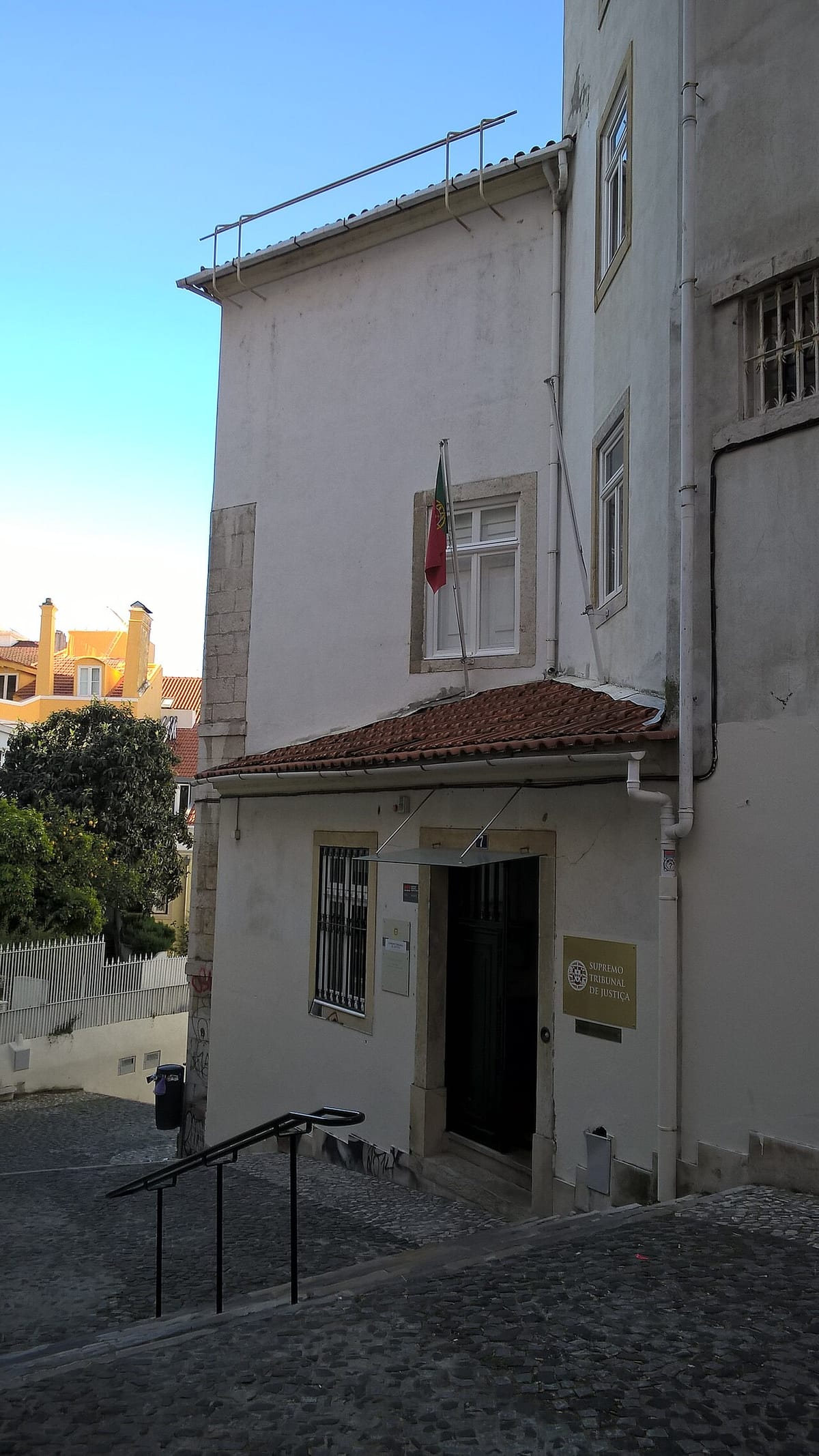
Portugal's Supreme Court of Justice (Supremo Tribunal de Justiça) has handed a defeat to the Spanish bank Bankinter and a long-delayed victory to hundreds of former workers of Soares da Costa, once the country's largest construction company. In a ruling reported on 6 August, the court rejected Bankinter's attempt to overturn the distribution of about 6.1 million euros to the group's ex-employees, money raised from the sale of one of the insolvent company's properties.
The fight was over who gets paid first. The asset in question is a works depot in the north of the country — the Estaleiro Norte — that was sold for 6.66 million euros to the Belgian logistics and real-estate group VGP as the insolvency was wound down. Bankinter held a mortgage (hipoteca) over the site and argued that, as a secured creditor, it should be repaid from the proceeds before anyone else. The former workers countered that their unpaid wages were protected as privileged labour credits (créditos laborais privilegiados), a category that, under Portuguese insolvency law, can rank ahead of even a mortgage-holder.
The Supreme Court sided with the workers, confirming that their claims took priority and dismissing the bank's action to annul the payout. It is a significant affirmation of a principle that matters well beyond this case: when a company collapses, the people who were owed their salaries are not automatically pushed behind the banks that lent against its buildings.
The sums involved should be read carefully. The roughly 6.1 million euros is the pool up for distribution to privileged creditors from that single property sale, not a cheque handed directly to staff. Earlier reporting indicated that around 800 former employees were in line to share a first tranche of some 4 million euros — a partial recovery of wages that had gone unpaid for years, arriving only after roughly a decade of legal wrangling. Against the scale of what the workforce was originally owed, it is a fraction; against the prospect of receiving nothing, it is a meaningful win.
Soares da Costa's fall was a long one. Founded in 1918, the firm grew into Portugal's biggest builder, worked on projects across Africa and elsewhere, and at its peak employed more than 8,000 people. Years of financial strain, a failed restructuring and mounting unpaid wages ended with the company being declared insolvent in 2023, and creditors approving its liquidation that July. The insolvency left debts of around 526 million euros, with the Portuguese state and the banks among the largest claimants — the state alone is owed more than 200 million euros.
For the country's construction workers, the judgment is a marker worth noting in an industry that has seen more than one large employer buckle. It establishes, at the level of the highest court, that wage claims can outrank a bank's collateral when the assets of a failed builder are carved up. For Bankinter, it is a costly reminder that a mortgage is not always the front of the queue. And for the roughly 800 people who spent a decade waiting, it means that at least part of what they earned, long ago, is finally on its way. On what happens when the property is sold out from under the debtor, our guide to buying a repossessed property at auction in Portugal, covering the judicial and tax tracks, the opening prices, the fifteen days to pay and which registered charges survive the sale sets the latest reference. On what a creditor may and may not reach here, our guide to the penhora, under which two thirds of net pay cannot be seized, protection is floored at one minimum wage and capped at three, a permanent home is reached last, and an objection has to be filed within ten days sets the latest reference. On how long a Portuguese debt stays enforceable in the first place, our guide to prescrição, the limitation periods that decide when a Portuguese debt can no longer be enforced, and the written acknowledgement that resets every one of them sets the latest reference.