Super Bock Agrees a Phased 35-Hour Week and a 2.3% Pay Rise in a Five-Year Deal With Its Union
The Super Bock Group and the union Sintab have signed a five-year deal phasing the drinks maker's staff down to a 35-hour week and raising pay 2.3%, with a EUR75 minimum backdated to January - a rare private-sector move to the shorter week.
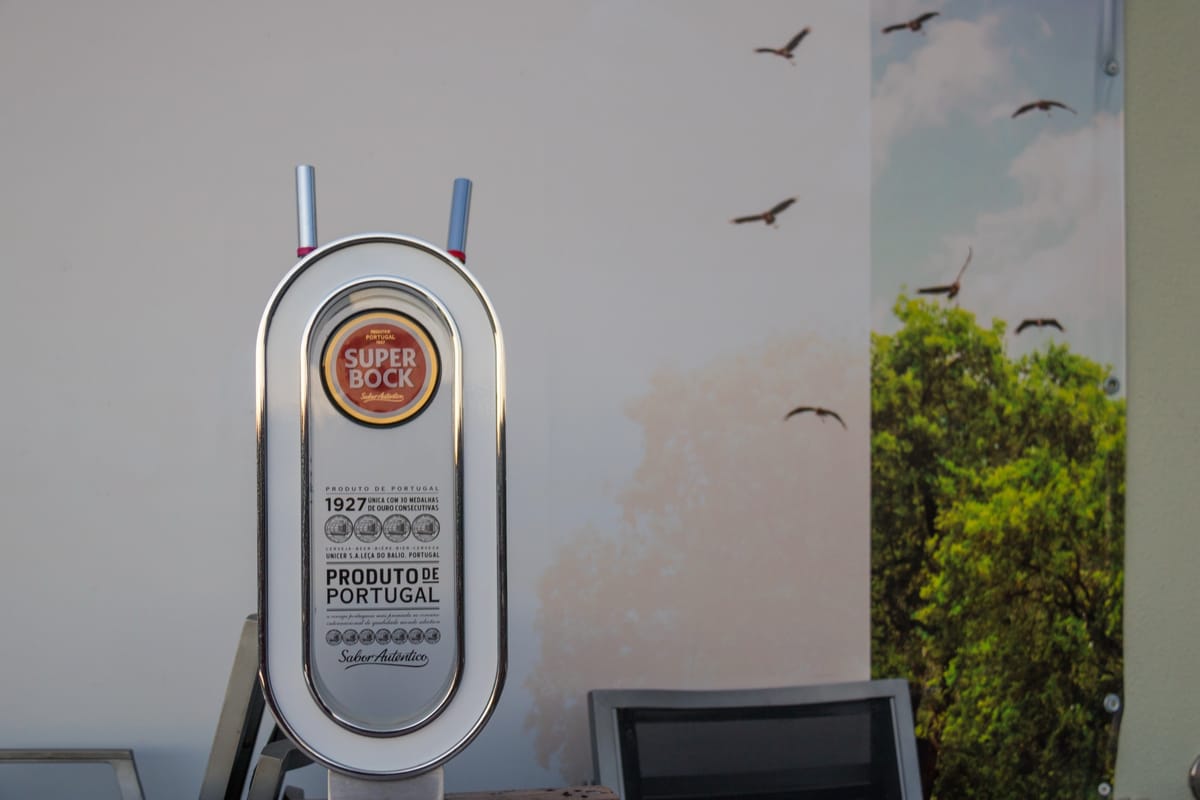
One of Portugal’s best-known companies is moving towards a shorter working week. The Super Bock Group — the Matosinhos-based drinks maker behind the Super Bock beer brand, along with bottled waters, wines and soft drinks — has signed a new collective labour agreement with the union Sintab (Sindicato dos Trabalhadores da Agricultura e das Indústrias de Alimentação, Bebidas e Tabacos, the farming, food, drink and tobacco workers’ union) that will phase its staff down to a 35-hour week and raise pay.
The deal, reached after nine months of talks, sets a five-year framework running through 2030. Its headline is the gradual reduction of the working week to 35 hours for all workers — a change to be introduced in stages rather than overnight — and an immediate pay rise of 2.3%, with a guaranteed minimum increase of €75 a month, backdated to January 2026. It took thirteen negotiating sessions and five workers’ assemblies to get there; when the result was put to a vote, 81% of those taking part backed it.
“Rights are not given”
Sintab called the agreement “a historic victory,” framing it in the language of the labour movement: “rights are not given — they are won through collective organisation.” The company struck a more measured tone, presenting the accord as a balance between “improved work-life balance” for its employees and “organisational predictability” for the business, with wages set to keep rising over the life of the contract. For a group whose production and bottling lines run on shift work, moving to 35 hours without cutting output is a genuine operational commitment, which is why the reduction is being spread across the agreement rather than switched on at once.
The pay side is more modest than the hours side. A 2.3% rise sits below the 3.0% inflation rate Portugal recorded in July, so in real terms the increase is close to flat; the €75 monthly floor matters most to workers at the lower end of the pay scale, for whom a percentage rise would otherwise be small in cash terms. The bigger prize for staff is time rather than money — a shorter standard week in a sector where long shifts are the norm.
A test case for the 35-hour week
The move is notable because it comes from the private sector. Portugal’s 35-hour week has, for years, been mainly a feature of public-administration employment; most private industrial contracts still rest on a 40-hour standard. A large, unionised manufacturer agreeing to bring its whole workforce down to 35 hours — and doing so through negotiation rather than legislation — gives unions a concrete precedent to point to when they sit down with other employers. It also lands in a wider debate about working time in Portugal, where politicians and business groups have sparred over whether shorter weeks help productivity and retention or simply raise costs.
For Super Bock, the calculation appears to be that predictable labour peace and a reputation as a good employer are worth the commitment, in a tight labour market where drink and food manufacturers compete hard for shift workers. Whether the phased 35-hour week spreads beyond the group’s gates will depend on how smoothly it can cut hours without denting the production that keeps its bottles on the shelves.