Storm-Hit Councils Are Set to Get Until at Least 31 December to Claim Up to 60 Percent of Repair Costs From the Municipal Emergency Fund
The minister says the 30 November deadline for councils to claim Municipal Emergency Fund aid for storm-damaged roads, schools and public buildings will move to at least 31 December. It is not yet in the Diário da República. Here is what it covers and what residents can do.
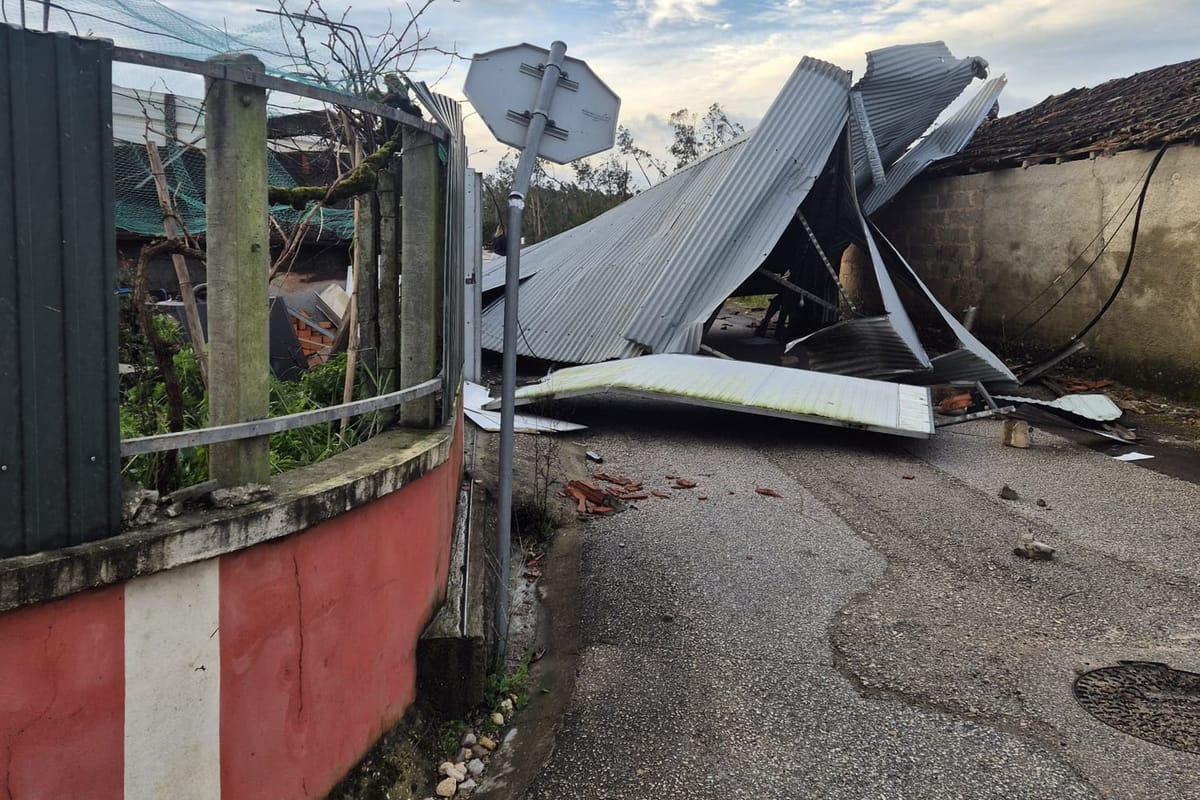
Councils still repairing roads, schools and other public buildings damaged by the storms of January and February are likely to get at least an extra month to ask the State for help. Manuel Castro Almeida, the Minister of Economy and Territorial Cohesion, told a parliamentary hearing on the 2027 budget on Thursday 29 October that the Government intends to extend the application deadline for the Fundo de Emergência Municipal (FEM, the Municipal Emergency Fund) from 30 November to "at least" 31 December, ECO reported.
"The idea is to extend the deadline at least until 31 December, or into the first days of January, to make it easier for the municipalities to apply," he said, after several councils warned that the deadline was tight. The extension has been announced but not yet published: no act changing the date appeared in either series of the Diário da República (the official gazette) on Thursday, so 30 November remains the legal deadline until it does.
What the fund pays for
The fund opened on 1 August under Despacho n.º 9675-B/2026 of 31 July. According to the Government's announcement, it is open to municipalities, parishes (freguesias) and inter-municipal bodies in the areas covered by the declaration of calamity. It pays for the repair, rebuilding and replacement of public infrastructure and equipment, with the State covering no more than 60 percent of the total eligible cost. Applications go to the relevant regional coordination and development commission (CCDR). Councils apply once they have costed the damage, established what insurers owe and drawn up repair projects. For the other 40 percent, the Government says a credit line is being designed with the European Investment Bank.
Before the fund opened, the Government had already advanced 75 million euros to 84 municipalities for urgent work on roads, schools and other council buildings.
Why councils asked for more time
Among those pressing for more time was the Leiria region. On 27 October the Leiria Region Inter-Municipal Community, which groups ten councils including Leiria, Marinha Grande and Pombal, asked for an urgent meeting with the Secretary of State for Local Administration to seek an extension and a simpler application platform, Lusa reported via Observador. Its president, Jorge Vala, said the hardest-hit councils have "thousands of items" to document with the same staff who are drafting next year's budget, and doubted that one more month, with Christmas in it, would be enough.
Money paid so far
At the same hearing, Lusa reported, the minister said storm recovery has so far absorbed 3,030 million euros under the PTRR (Portugal Transformação, Recuperação e Resiliência), in grants and State credit lines. Another 970 million euros is planned for 2027. He said home-repair support for families has been paid and that, leaving aside one municipality, more than 99.4 percent of cases are resolved. ECO named that municipality as Leiria, where most of the damage was concentrated. Leiria alone received 10,807 home applications.
What it means for you
- You cannot apply to this fund yourself. It is for councils, parishes and inter-municipal bodies, and covers public infrastructure and equipment only, such as council roads and schools.
- If a public road, path or building near you is still damaged, report it to your junta de freguesia (parish council) or câmara municipal (town council) now. Councils can only claim damage they have costed, so it helps if they know about it before they file.
- Watch for the formal change. Until a new date is published in the Diário da República, councils are working to 30 November.