European Investment Bank Adds 300 Million Euros for Affordable Homes in Portugal, With 750 Million for Storm Recovery and 400 Million for the Lisbon Metro
The EIB's new loan to IFRRU 2030 is aimed mostly at private construction and renovation, and takes its housing lending in Portugal past 3 billion euros in two years. Here is what was announced on its 50th anniversary, and what it means for owners.
The European Investment Bank (EIB) is lending another 300 million euros for housing in Portugal. EIB Group President Nadia Calviño announced the loan on Tuesday at the Ministry of Finance in Lisbon, at an event marking 50 years since the bank's first operation in the country, on 7 April 1976. The money goes to IFRRU 2030, the state-backed instrument that finances the renovation and building of homes, and it was one of several operations announced on the day, alongside 750 million euros for areas hit by last winter's storms and 400 million for the Lisbon Metro.
"We are stepping up our support for housing in Portugal. Today we signed a new loan of 300 million euros to support construction and rehabilitation, directed above all at the private sector," Calviño said, according to Lusa, as reported by Observador.
What was announced
The EIB's own release lists the operations, which it expects to complete by the end of 2026:
- Housing: 300 million euros of EIB financing for IFRRU 2030 "to promote affordable and sustainable housing".
- Storm recovery: a 750 million euro package for areas hit by extreme weather, made up of 250 million euros of financing to the government for damaged municipal infrastructure and equipment and a 500 million euro loan to Banco Português de Fomento (the state development bank) to help small and mid-sized companies rebuild.
- Lisbon Metro: 400 million euros to Metropolitano de Lisboa to modernise and expand the network. Calviño said this covers new trains, upgraded signalling and the extension of the Red Line, according to Lusa, as reported by Notícias ao Minuto.
- Electricity grids: a third 300 million euro tranche for EDP's distribution networks in Portugal and Spain, of which 213 million euros is for Portugal.
- Company finance: a 150 million euro guarantee with Caixa Geral de Depósitos (CGD, the state-owned bank), which the EIB expects to mobilise 420 million euros of credit for small and mid-sized suppliers, and Portugal's participation, with up to 50 million euros, in the second European Tech Champions Initiative.
- Councils: 250 million euros to help public bodies, including municipalities, pay their share of investments under the EU-funded programmes for 2021 to 2027.
Three billion euros for housing in two years
The EIB says housing has become one of its largest social priorities in Portugal: across 2025 and 2026 it has committed more than 3 billion euros to housing, for programmes that foresee building or renovating more than 70,000 homes. Calviño said the new loan comes on top of two earlier packages for affordable and social housing. One of them is the 1.5 billion euro loan for social housing whose first 500 million euro tranche was signed in September, for the 1.º Direito programme for people living in substandard homes.
IFRRU 2030 (Instrumento Financeiro para a Reabilitação e Revitalização Urbanas, the financial instrument for urban rehabilitation and revitalisation) was set up by Council of Ministers Resolution n.º 180/2023. Its stated aims are to increase the supply of housing at affordable cost, improve the energy efficiency of homes, with priority for tackling energy poverty, and revive town centres. The resolution opens it to a wide range of final beneficiaries: councils, private individuals, companies, cooperatives and charities. It names the EIB, the Council of Europe Development Bank and Banco Português de Fomento among its possible funders.
What it means for owners and renters
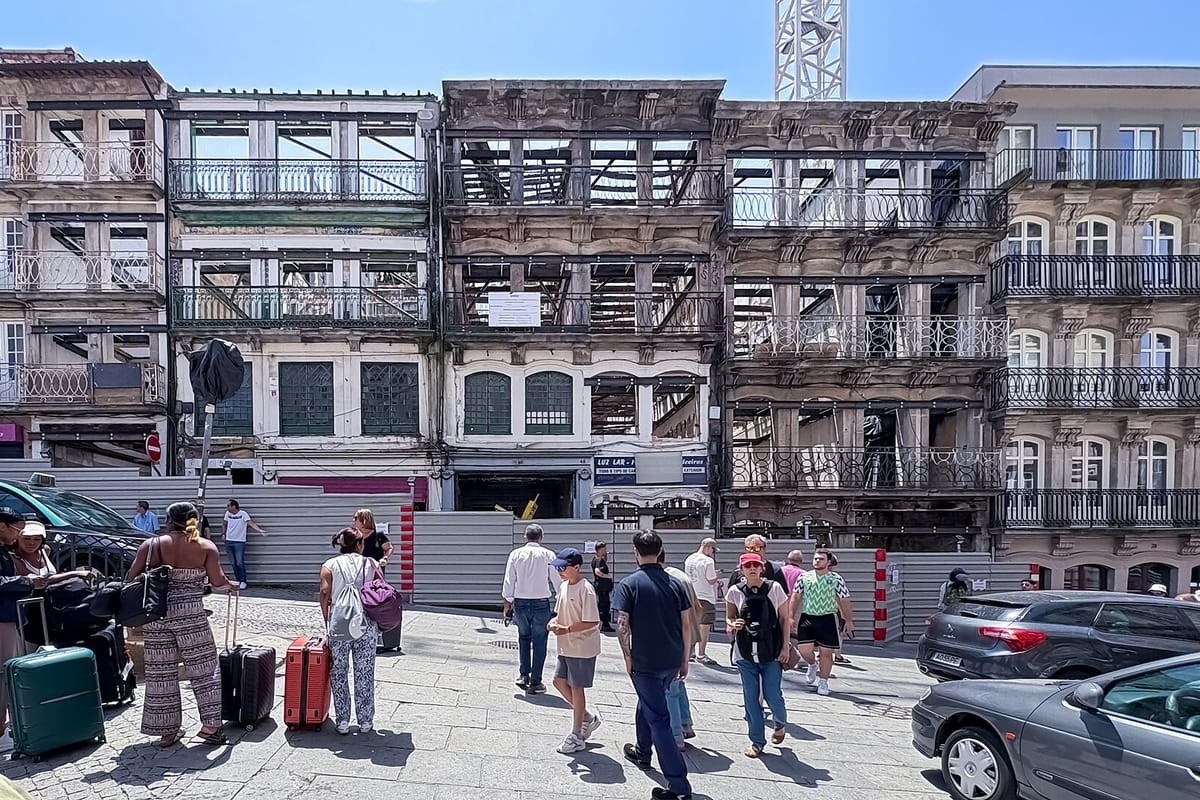
The EIB money is lent to the instrument, not to households directly, and the release does not say how many homes this tranche will pay for, what rents will apply or when loans will be available. The IFRRU website still describes the earlier IFRRU 2020 scheme. Under that scheme, owners applied through a set of selected commercial banks for loans on better terms than the market. The building had to be fully renovated and sit in an urban rehabilitation area (ARU), and each project needed a binding opinion from the local council and an energy certificate before and after the works. Anyone thinking of renovating a building should check with their council's IFRRU contact point, and watch the IFRRU site for the 2030 terms.
The storm money
The storm package is for the recovery of areas hit between 22 January and 15 February, when storms including Kristin caused damage that the government, in its application to the EU Solidarity Fund, put at more than 5.3 billion euros, according to Lusa. Much of the central region was still waiting to rebuild six months on. Calviño said the package was already being put into practice.
For the Metro, the loan adds to the funding for the Red Line extension, which the government had said in May would, if necessary, come from the state budget after a 285 million euro share was dropped from the Recovery and Resilience Plan.
Over five decades the EIB Group says it has invested more than 70 billion euros in more than 1,000 projects in Portugal, from the Vasco da Gama Bridge to the Lisbon and Porto metros. In 2025 it mobilised 12 billion euros of investment in the country, about 4 percent of GDP. President António José Seguro, the Deputy Finance Minister and Secretary of State for the Budget José Maria Brandão de Brito and Lisbon mayor Carlos Moedas attended Tuesday's event.