Spain Extends the Almaraz Nuclear Plant to 2030, and Portuguese Campaigners Press Lisbon to Object
Spain will keep the ageing Almaraz nuclear plant, on the Tagus barely 100 km from the Portuguese border, running until June 2030. The environmental group Zero wants Lisbon to object, and the border districts of the Beira Baixa are already demanding answers.
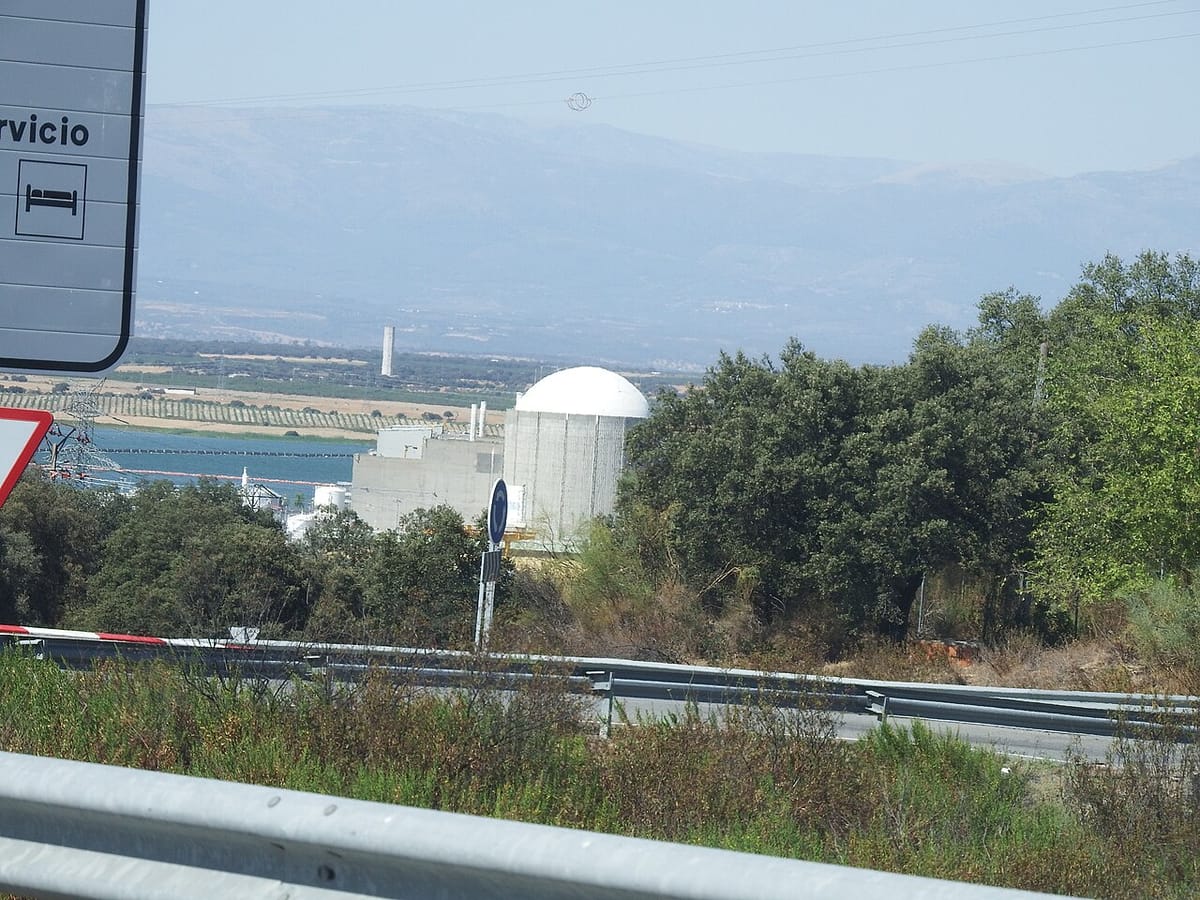
Spain has decided to keep one of its oldest nuclear power stations running for three more years — and because the plant sits on the Tagus (Tejo) river barely 100 kilometres from the Portuguese border, the decision has landed squarely in Portuguese politics. On Friday 14 August, Spain's Ministry for the Ecological Transition and the Demographic Challenge (Ministério da Transição Ecológica e do Desafio Demográfico, MITECO) published an order in the state gazette renewing the operating licences of the two reactors at the Almaraz Nuclear Power Plant until June 2030.
A three-year reprieve for two ageing reactors
The extension was requested back in October 2025 by the plant's three owners — the Spanish utilities Iberdrola, Endesa and Naturgy — and cleared a favourable technical report from Spain's independent regulator, the Nuclear Safety Council (Consejo de Seguridad Nuclear, CSN), on 16 July, subject to strict safety conditions. Under the operators' earlier shutdown protocol, Unit I was due to close on 1 November 2027 and Unit II on 31 October 2028; both will now run to 2030 (Euronews and Público put the precise date at 8 June 2030, though the wire copy carried by Portuguese outlets says only "June 2030").
The Spanish government justified the move by pointing to a changed energy landscape and gas-price volatility, arguing that keeping Almaraz online to 2030 would have only a "limited and insignificant" effect on the rollout of renewables while trimming reliance on imported gas (a characterisation reported by Expresso). Almaraz is, by Euronews's account, the highest-generating nuclear plant in Spanish history, supplying roughly 7% of the country's electricity and employing some 4,000 people in Extremadura — figures that come from a single source and are best treated as indicative.
Zero wants Lisbon to speak up
The Portuguese environmental association Zero (Zero – Associação Sistema Terrestre Sustentável, "Zero – Sustainable Earth System Association") reacted the same day, calling on the Portuguese government to "publicly take a critical position on this postponement" and to press Madrid to honour the original closure calendar. In Zero's framing, Unit I would reach 49 years of operation and Unit II almost 47 — well beyond the 40 years for which their pressurised-water reactors were originally designed — and every added year raises the risk of a serious failure.
"We are talking about a high-risk industrial infrastructure," Zero's vice-president, Susana Fonseca, told the wire service Lusa, noting that the plant lies about 100 kilometres from the border and that Portuguese territory is "very exposed" to the consequences of any accident. The association also wants a funded, jointly planned Portugal–Spain scheme for electricity storage and grid flexibility, aligned with phasing out all nuclear plants on the Iberian Peninsula by 2035.
The border districts are watching
The unease is loudest in the Beira Baixa, the Portuguese region directly downstream. The Beira Baixa Inter-municipal Community (Comunidade Intermunicipal da Beira Baixa, CIMBB) said it would formally ask Portugal's Environment Ministry what it did to object; its president, João Lobo, called the decision "controversial" and warned that "in the event of an accident, the biggest impact could be in Beira Baixa, but all of Portugal would be affected." The mayor of Castelo Branco voiced "deep concern," and the council of Vila Velha de Ródão said it was "very apprehensive."
As of Friday, the Portuguese government had not publicly responded. Portugal has objected to Almaraz before — parliament has passed condemnation texts, and the plant's proposed on-site nuclear-waste store drew cross-border consultations in 2024 — against the backdrop of a wider, unresolved national argument over whether Portugal itself should ever go nuclear. For now, the country's most contentious reactor is a Spanish one on a shared river, and the pressure on Lisbon is to say so out loud.