Sixty of the 398 People Who Entered a Portuguese Cabinet Since 1976 Were Women, and Half of Them Arrived With a Doctorate
Women ministers are twice as likely as men to hold a doctorate, and the study reads that as a higher bar rather than a triumph. Most of them land in peripheral portfolios.
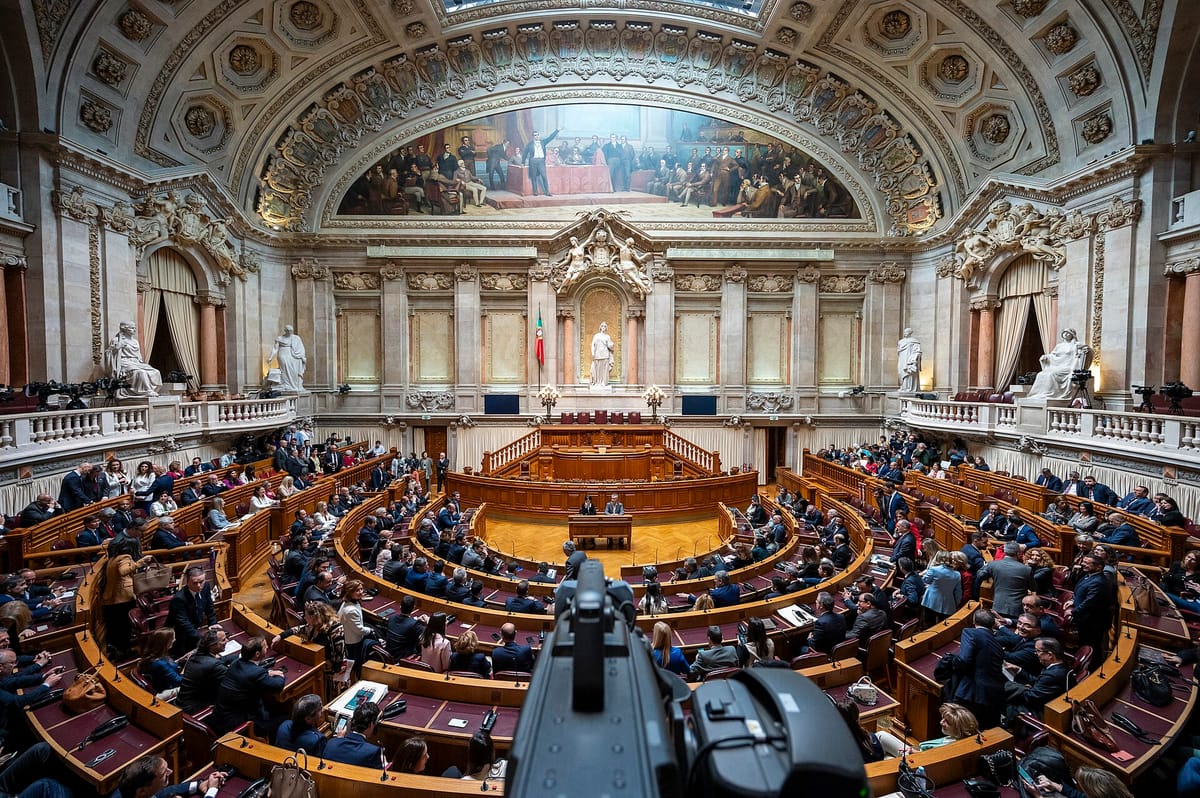
Of the 398 people who took a ministerial portfolio in a Portuguese government at the moment it was sworn in, between 1976 and 2025, sixty were women. That is 15 percent against 85 percent, and it is the starting point for the gender chapter of a study published on Monday.
The chapter, "Género e acesso ao poder executivo", is written by Edna Costa and forms part of "Quem Governa Portugal? Perfis ministeriais em perspetiva comparada (1976-2025)", the Fundação Francisco Manuel dos Santos study coordinated by Marcelo Camerlo and António Costa Pinto. The disparity, the text says, "in percentage terms as much as in absolute numbers, shows the persistent under-representation of women in access to executive office, even in a context of democratisation and of growing emphasis on gender equality".
Forty years from the first appointment to parity
Until 1985 there were almost no women at all. The breakthrough came with Leonor Beleza, appointed health minister in the tenth constitutional government under Cavaco Silva. Growth after that was slow. António Guterres showed greater willingness to appoint women from 1995; the governments of José Sócrates deepened the trend and crossed 30 percent for the first time in 2009. Passos Coelho then named just two women ministers in 2011, 18 percent of his cabinet.
António Costa raised the figure to four in 2015, but a near-parity executive arrived only in 2019, when a Costa government passed the 40 percent threshold for the first time. In 2022 it reached 53 percent. The governments of Luís Montenegro have held high figures since, 41 percent and 37.5 percent, which the author reads as a possible consolidation while warning it is premature to call it durable.
A higher bar to clear
The most striking finding is not the count but the qualifications behind it. Women ministers hold higher academic credentials than their male colleagues: 50 percent have a doctorate, against 25 percent of the men. The study's conclusion is that women "depend disproportionately on technical credentials to access power", which is another way of saying that more expertise is demanded of them before the door opens.
Where that door opens also matters. Across the whole 1976 to 2025 period, women holding ministerial portfolios in Portugal are concentrated in peripheral departments and in the social area. "The female presence in the strategic core of government, where decision-making power and the most significant budget resources are concentrated, is residual," the text says, adding that this limits what women ministers can influence.
Two routes in, and only one reaches the centre
The study identifies a further pattern that ties the gender finding back to the report's central argument about party control. Among women, party membership functions as a necessary condition for reaching the hard core of government. In the peripheral portfolios, by contrast, more than half of the women appointed, 53.7 percent, are independents recruited for their technical capital.
Read alongside the main study, which finds that Portuguese parties have absorbed technical expertise rather than surrendered to it, the gender chapter describes a narrower version of the same bargain. Expertise buys a woman a seat at the table. A party card is what buys a seat at the part of the table where the money is.