Seventeen Narco-Boats Seized and All 37 Suspects Released: Portugal's Maritime Police Inspectors Demand a Budget of Their Own
Their association says the force has been starved since 2002, recruited no one from 2009 to 2015 and received four new boats in 17 years. It wants the Polícia Judiciária coordinating operations at sea.
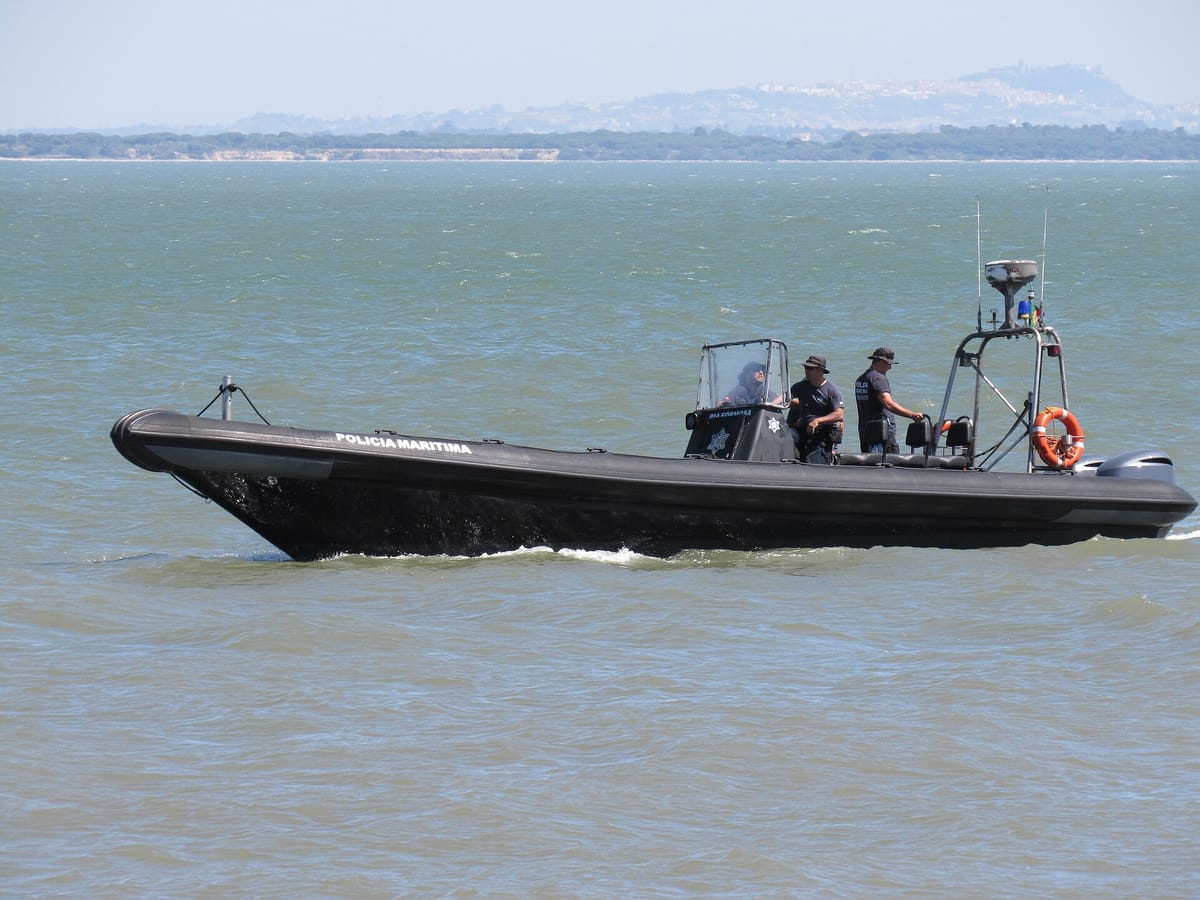
Portugal's Maritime Police has seized 17 high-speed "narco-boats" since January, along with more than nine tonnes of fuel, about a tonne of hashish and five tonnes of cocaine, and has detained 37 suspects. Every one of them, says the association that represents its inspectors and chiefs, has been released with only light coercive measures.
"Without a shared tactical machinery, we will go on arresting at sea only to release on land," the president of the Associação dos Inspetores e Chefes da Polícia Marítima, Manuel José Serrano Faustino, wrote in a note sent to the media on Thursday.
A coast used as a logistics platform
The association describes the seizure and abandonment of high-speed boats in Portuguese waters as happening "almost daily". It calls the boats key pieces in international drug trafficking, which it says uses the Portuguese coast as a logistics platform.
Its main demand is for the Polícia Judiciária, which holds the specialised competence to investigate this kind of trafficking, to be present at the scene. "It is not enough for the Maritime Police to do the work of containment and force at sea," Faustino wrote. "It is imperative that the Polícia Judiciária coordinates, directs and acts through a direct channel in the theatre of operations."
"Institutional suffocation"
The association goes further, arguing that the root of the problem is what it calls the "institutional suffocation" of the Maritime Police. Since the creation of the National Maritime Authority in 2002, it says, the force has been "progressively decapitalised". It blames the Navy's doctrine of "dual use", which it says fed the "militaristic illusion" that warships and navy personnel could replace police officers, "ignoring the barriers of the Constitution, the law and the very nature of the institutions".
The examples it gives of what it calls a collapse:
- Recruitment: zero between 2009 and 2015. The few dozen officers trained in recent years are "a drop in an ocean of shortages", and the only reinforcements planned are for 2027 and 2028.
- Boats: only four new vessels received since 2009.
- Budget: the Maritime Police still has no budget of its own, although it is the only police force with the training to act across the whole maritime scene.
- Staffing: the Maritime Authority structure now has more Navy personnel on secondment than serving maritime police officers, the association says.
What the inspectors want
The association asks for autonomy and investment: a budget of its own for the Maritime Police, more officers and equipment, and "integrated cooperation". That would mean a permanent, barrier-free line of communication between the GNR's coastal surveillance system and the Maritime Police, and anti-trafficking operations coordinated by the Polícia Judiciária under the supervision of the Internal Security System, with technological support and coastal surveillance from the Air Force and the Navy.
"The security of our maritime borders and the sovereignty of our territory cannot go on being held hostage to budget gaps or games of institutional influence," Faustino wrote.
The Maritime Police sits within the National Maritime Authority, whose head is the Navy's Chief of Staff, which is why the association's complaint is aimed as much at the Navy as at the government.