Russia Says It Downed a Rare Portuguese Tekever Drone, Days After the Maker Won a €467 Million UK Army Contract
Russian forces claim to have brought down a Tekever AR3, a reconnaissance drone made by the Portuguese defence-tech firm Tekever and supplied to Ukraine — even as the company lands a British Army contract worth up to €467 million.
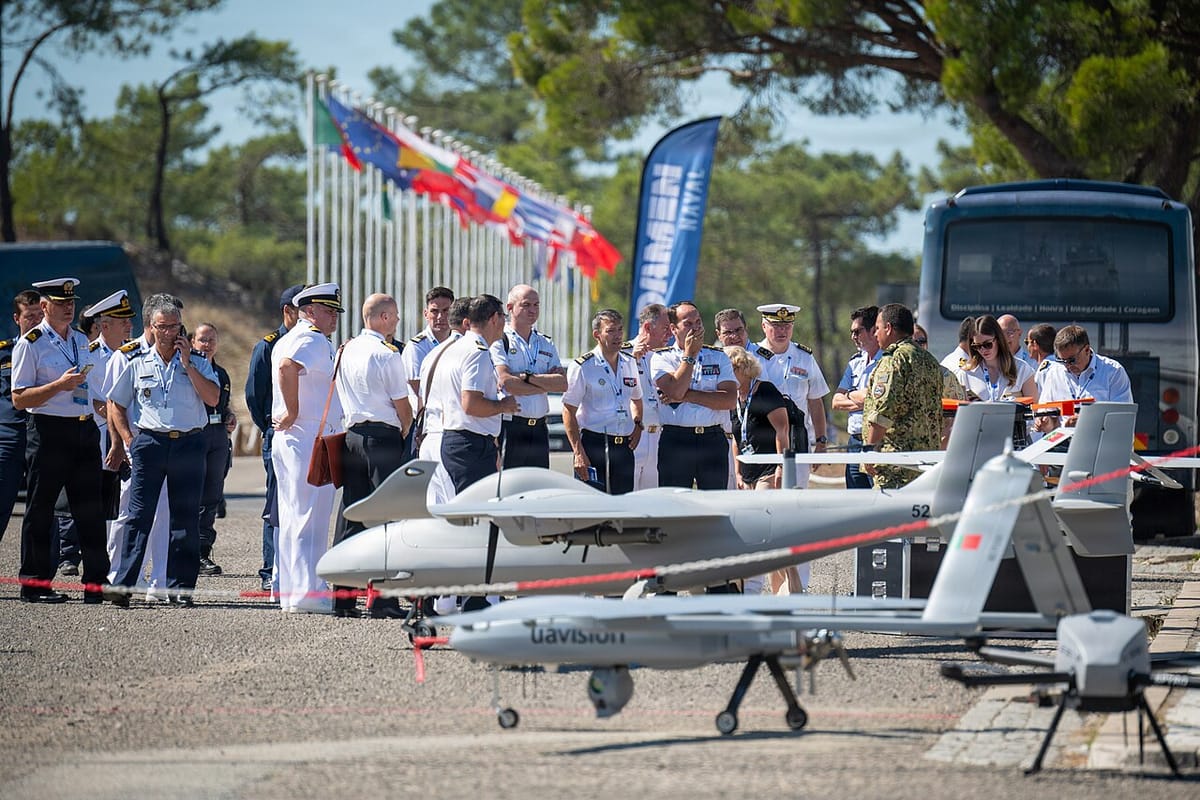
A Portuguese-made drone has become an unlikely trophy on the Russian front line. Russian forces say they brought down a rare reconnaissance drone built by Tekever, the Lisbon-founded defence-technology company, in the Bryansk border region — an episode that, together with a major new British contract announced this week, has thrust the once-obscure firm into the spotlight.
According to an account given to Russia's state news agency by a military officer, an anti-drone unit intercepted a Tekever AR3, a fixed-wing surveillance aircraft supplied to Ukraine. The device was reportedly transferred to a research institute so that specialists could study its design, technical specifications and engineering. The soldiers described a chase of nearly 30 minutes against a drone circling at roughly 2.5 kilometres' altitude and 90 to 100 kilometres per hour, and said they had "never seen anything like it before" — an admission that doubles as a backhanded compliment to Portuguese engineering.
Tekever has been arming Ukraine's reconnaissance effort since 2023, when it began supplying drones through the United Kingdom-led International Fund for Ukraine. The AR3 is a portable, catapult-launched system used for intelligence, surveillance and reconnaissance over land and sea, and its performance in the war has helped turn the company into one of Europe's most closely watched defence start-ups.
The loss of a single aircraft matters far less than the commercial momentum behind it. This week Tekever confirmed it will supply drones to the British Army under a contract worth up to €467 million, leading a consortium of United Kingdom partners. For a Portuguese firm, a deal of that size with a NATO ally is a landmark — and it cements Tekever's status as a rare domestic "unicorn," a privately held company valued in the billions.
The twin developments land at a moment when Europe is rearming and defence spending is climbing across the continent. Portugal, long a modest player in the sector, suddenly has a national champion whose products are being tested in the most demanding conditions imaginable and bought by one of the world's better-resourced armies. That combination — battlefield-proven hardware and blue-chip export orders — is exactly what governments hoping to build a domestic defence industry aspire to.
For residents and observers of Portugal, the Tekever story is less about one drone than about what it signals. It shows a Portuguese technology firm competing at the top of a strategic industry, drawing investment and high-skilled jobs to a country better known for tourism and services. It ties Portugal more visibly into Europe's collective security effort at a time of heightened tension. And it is a reminder that the "tech scene" taking root in Lisbon and beyond now stretches well past consumer apps into hardware with geopolitical weight — the kind of company whose fortunes governments, investors and allies will all be watching closely in the months ahead.