Ronaldo's Mineral Water Plant Takes Shape in a Bragança Village, Due to Bottle Up to 600 Million Litres a Year From 2028
Earthworks are under way in Gostei on the close to 20 million euro plant, owned half by Cristiano Ronaldo and half by Grupo Outeirinho. It will start with 30 to 35 jobs and sell its water abroad.
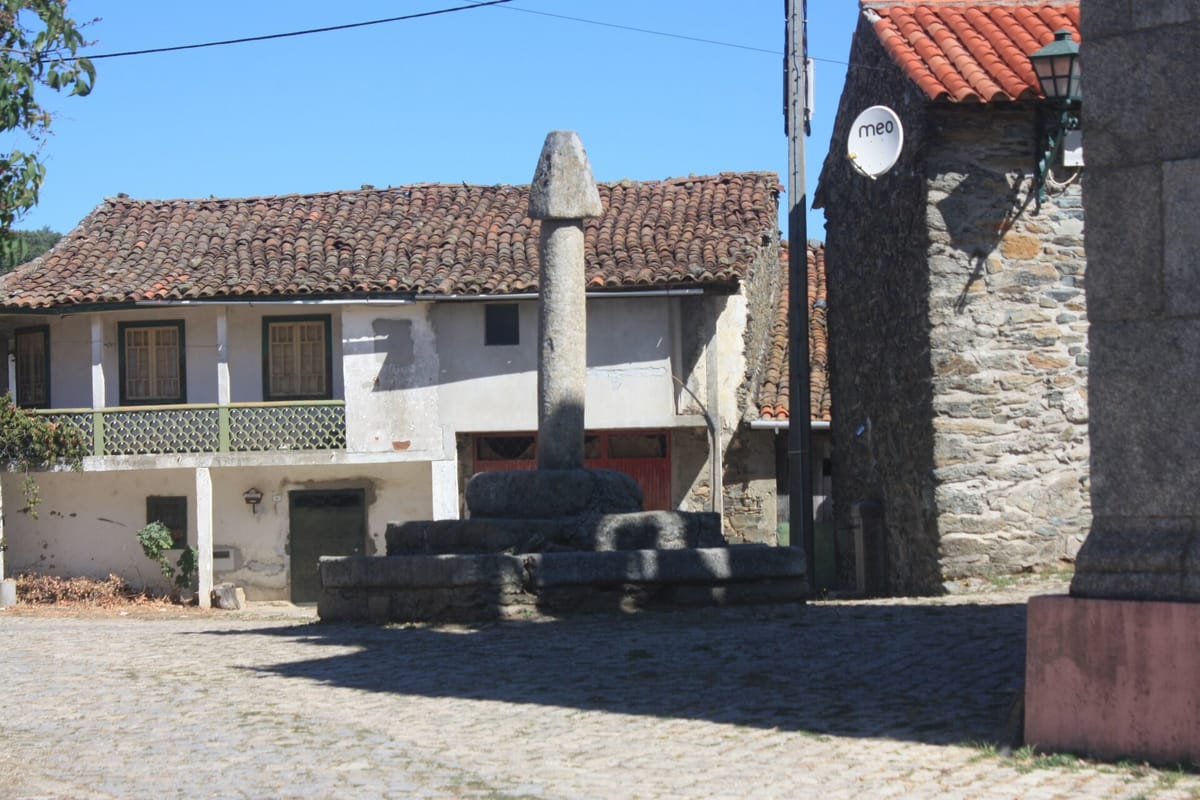
Earthworks have begun in Gostei, a village a few kilometres outside Bragança, on a mineral water bottling plant owned half by Cristiano Ronaldo. The investment is close to 20 million euros, and the company behind it says the plant will be ready by the end of 2027 and will "certainly" be operating in early 2028.
The project belongs to Maravilha Decimal, a company held 50 percent by the footballer and 50 percent by Grupo Outeirinho, one of Portugal's largest bottled water producers. It has been announced for several years. Francisco Ferreira, one of Grupo Outeirinho's directors, gave the Lusa news agency an update on Monday.
What is being built
Ground levelling is under way and the base of the building is going in. Ferreira said the structure should be standing "in March or April". Once running, the plant will be able to bottle "500 to 600 million litres a year" from the Gostei spring, on three filling lines, including one for glass and one for PET plastic.
The first phase will employ 30 to 35 people, Ferreira said, with "many more" needed once production is under way. If all goes well, he added, the plant will eventually run 24 hours a day on three shifts. New staff will first be trained at one of Grupo Outeirinho's existing factories.
The investment, which may exceed 19 million euros, is for now paid entirely by Maravilha Decimal. The company may later apply to the Portugal 2030 programme of EU funds for the exterior finishes. The bottle has its own design, being developed by a company in Italy.
Water for export
The water from Gostei is meant to be sold abroad. "We are going to bet on exporting the water," Ferreira said, because it has characteristics "that satisfy us a great deal". The selling point, as Lusa reported it, is an alkaline pH and what are described as antioxidant properties beneficial to health; the health claim has not been backed by any published evidence. "It is a water that does not exist on the market," Ferreira said.
Getting this far required laboratory testing of the water, which must be validated by the Directorate-General of Health (DGS), and authorisation from the Directorate-General of Energy and Geology (DGEG) to tap and exploit the spring. A protection perimeter has also been drawn around the source, restricting activities nearby that could contaminate it.
Ferreira also sought to reassure neighbours. He said the plant "makes no noise at all" and that lorries will not disrupt local traffic, because every manoeuvre will take place behind the building, where the packing hall will sit.
Who is behind it
Grupo Outeirinho has four factories in Portugal and holds more than 40 percent of the national bottled water market, according to Ferreira, exporting to China and Spain. Besides the Gostei plant, it plans another in Monção, in the Minho. It also runs a factory in Chamusca that makes the preforms, handles and caps that become its bottles and large water jugs.
For Bragança, a district that has lost population for decades, even a few dozen industrial jobs are significant. The plant joins a run of recent factory announcements in the interior and the north, including a smart water meter factory in Paredes whose first stone was laid last week.
At home, the bottled water market competes with public supply: Portugal's tap water meets the safety standard in 98.84 percent of checks, as we reported in September.