Rewilding Portugal Releases 17 Wild Rabbits Into the Côa Valley to Rebuild the Prey Base for Lynx and Eagles
Rewilding Portugal has released 17 wild rabbits into fenced warrens on the Ermo das Águias estate in the Côa valley, the first step in rebuilding the prey base that Iberian lynx, imperial eagles and wolves depend on. Público reports the colony could reach around 70 by 2027.
Conservation projects usually make headlines with charismatic predators — a lynx, a wolf, an eagle. This month a rewilding effort in northeastern Portugal started at the other end of the food chain, with 17 wild rabbits.
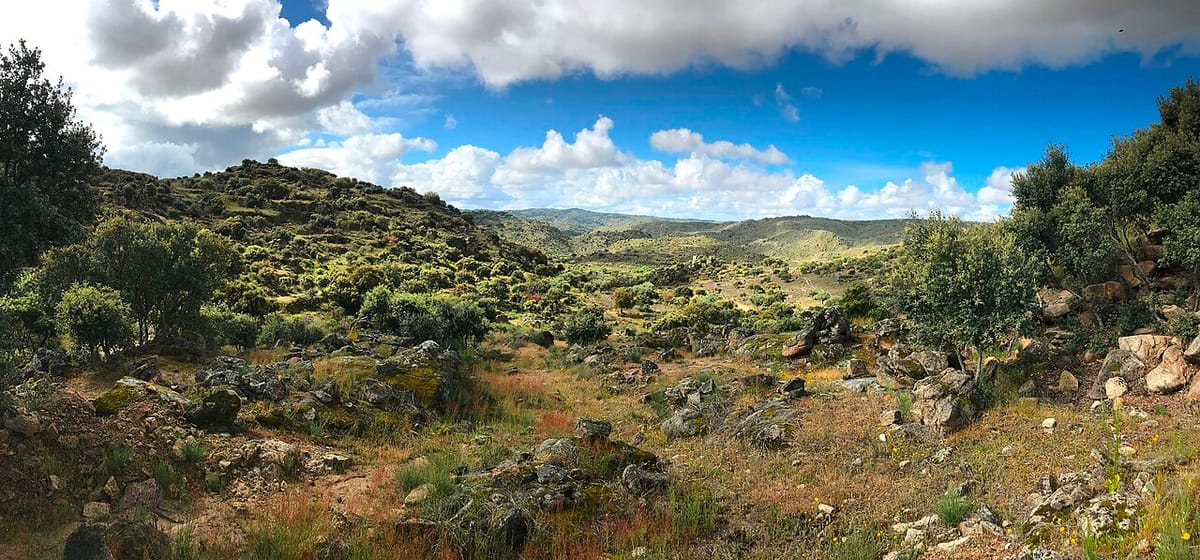
The animals were released in early August by Rewilding Portugal, the group behind the Greater Côa Valley restoration project, onto the Ermo das Águias estate on the left bank of the Côa river, in the municipality of Pinhel in the Guarda district. It is the group's first reintroduction of the European wild rabbit (coelho-bravo), and the site was chosen only after biologists and former hunters confirmed the species had vanished from it entirely.
The rabbits have not simply been let loose. Across roughly 600 hectares they were placed in three artificial warrens — marouços in Portuguese — each ringed by electric fencing and stocked with food, water and shelter so the animals can acclimatise safely. Each warren holds a small breeding nucleus of four or five females and a single male, high-density groups meant to reproduce quickly and then spill out naturally into the surrounding land as numbers grow. Público reports the colony could reach around 70 animals by 2027.
The point of all this is to rebuild the bottom of an ecosystem. The wild rabbit is the principal prey of the Iberian lynx (lince-ibérico) and the Iberian imperial eagle (águia-imperial-ibérica), and a food source for more than 20 other Iberian predators, among them the Iberian wolf (lobo-ibérico). Without a healthy rabbit population, the emblematic hunters that conservationists hope to see return to the region simply have nothing to eat. Iberian lynx are already dispersing through the area, but no breeding population has established itself in the Côa valley.
That prey base has been badly eroded. A first Iberian-wide census, reported by Público in June 2025, found wild rabbit numbers across Portugal and Spain fell about 17.6 percent between 2009 and 2022, hollowed out by the viral diseases myxomatosis and rabbit haemorrhagic disease alongside habitat loss. The paradox is stark: a creature treated as an agricultural pest across much of Europe is classed as endangered in the Iberian Peninsula, where whole predator guilds evolved to depend on it.
The rabbit release is one piece of a much larger ambition. The Greater Côa Valley project aims to stitch together a wildlife corridor running some 120,000 hectares from the Serra da Malcata to the Douro, using natural grazing by Sorraia horses and Tauros cattle — a back-bred stand-in for the extinct aurochs — to keep the landscape open. The rabbit work falls under an EU-funded LIFE programme project, which also plans a dedicated captive-breeding enclosure to supply animals for future top-ups. Rewilding Portugal says it will next reinforce populations at another of its areas, Paul de Toirões, where fresh warrens are already being prepared. Update: the 2025 Iberian lynx census counted a record 394 wild Iberian lynx in Portugal and 2,663 across the peninsula, with roads still the main cause of death.