Portugal's Wild Iberian Lynx Population Reaches a Record 394 as the Peninsula Count Hits 2,663
The 2025 Iberian lynx census counts 394 lynx in Portugal, up from 354, and 2,663 across the peninsula. All of Portugal's breeding animals live in the Guadiana valley, and 12 of the 13 found dead in Portugal last year were killed on roads.
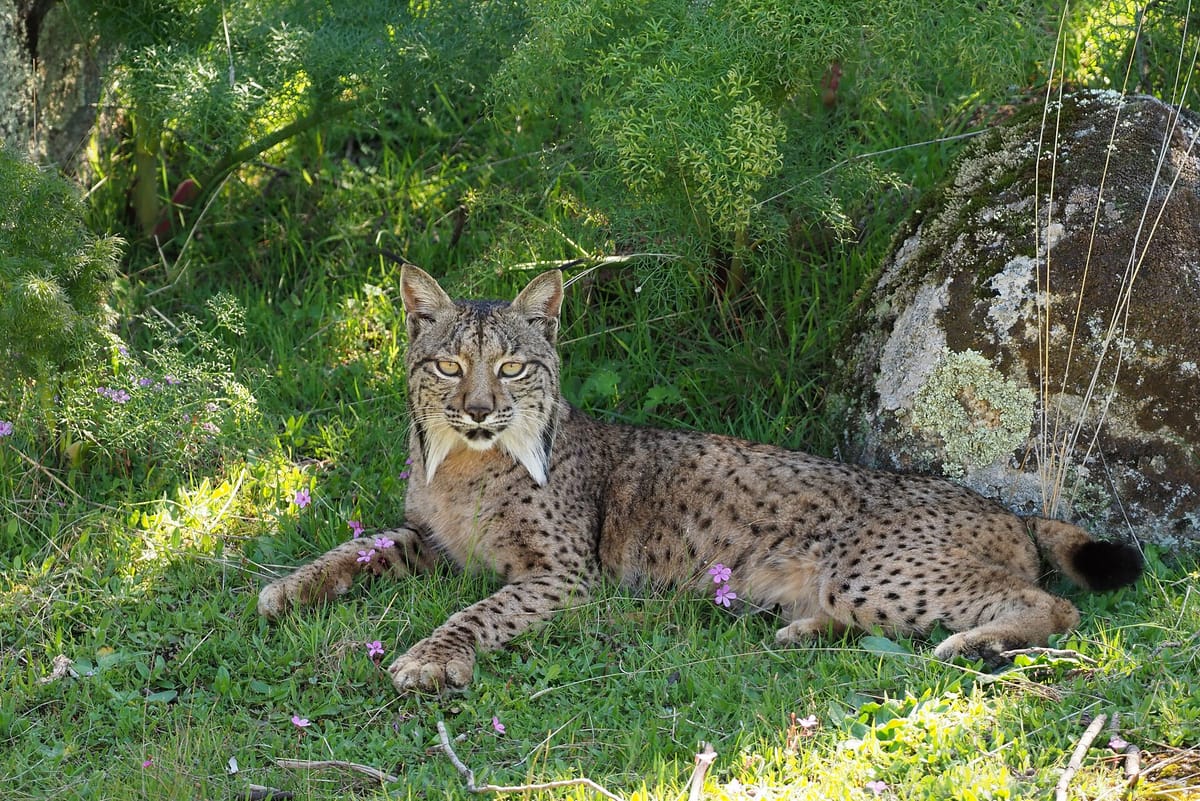
Portugal counted 394 wild Iberian lynx in 2025, the highest figure since joint monitoring with Spain began, according to the 2025 Iberian lynx census published by Spain's environment ministry. Across the whole peninsula the count reached 2,663 animals, also a record, and almost double the 1,365 recorded in 2021.
The census is compiled each year by the environmental authorities of both countries, with data for Portugal supplied by the Instituto da Conservação da Natureza e das Florestas (ICNF, the nature and forests institute). The Portuguese government marked the results on World Environment Day, 5 June, in a statement from the Ministry of Environment and Energy, which noted that fewer than 100 lynx were left in the wild in 2002. Environment minister Maria da Graça Carvalho called the recovery "one of the greatest success stories of nature conservation in Europe".
The numbers
Of the 394 lynx counted in Portugal, 265 were adults or subadults and 129 were cubs born during 2025. The census recorded 74 breeding or territorial females in Portugal, which works out at 1.7 cubs per female. Among the adults and subadults, 152 were male and 113 female.
That is a clear step up on the year before. The 2024 census put Portugal at 354 lynx, with 67 breeding females and 110 cubs. The Portuguese population therefore grew by 40 animals, or about 11 percent, in a year.
Across the peninsula, the 2025 total of 2,663 compares with 2,401 in 2024, a rise of 10.9 percent. Spain holds 2,269 of the animals (85.2 percent) and Portugal 394 (14.8 percent). The census found 542 breeding females, 72 more than a year earlier, and 952 cubs. Lynx were present in 26 separate areas of the peninsula and bred in 18 of them; only one of those breeding areas is in Portugal.
Where the lynx live in Portugal
Portugal's entire breeding population sits in a single nucleus the census calls Vale do Guadiana, in the south east of the country. According to ICNF, reintroduction began there in 2015, in the municipality of Mértola, after years of surveys of rabbit numbers, scrub cover and road risk. Twenty-seven captive-bred lynx were released between 2015 and 2017, and lynx have been breeding in the wild there since 2016.
The range has since spread along the valley. ICNF's 2025 monitoring campaign worked across eight areas stretching from Odeleite, in the north east of the Algarve, to the Serpa area in the Baixo Alentejo. Between September and December 2025 its teams caught a record 35 lynx, nine of them juveniles, to examine, vaccinate and sample them before releasing them again.
Portugal also breeds lynx in captivity at the Centro Nacional de Reprodução do Lince-Ibérico (national Iberian lynx breeding centre) in Silves, which the government credits alongside ICNF for the country's share of the recovery.
What is driving the recovery
The International Union for Conservation of Nature (IUCN) moved the Iberian lynx from Endangered to Vulnerable on its Red List in June 2024. It attributed the turnaround to work to increase numbers of the European rabbit, the lynx's main prey, to protect and restore Mediterranean scrub and woodland, and to cut deaths caused by people, along with captive breeding and the movement of animals between populations to widen their genetic diversity.
ICNF notes that reintroduction is only considered in areas averaging more than two wild rabbits per hectare, and that rabbit numbers are supported by scrub management, food crops and artificial shelters.
The threats
Roads are the biggest killer. The 2025 census recorded 273 lynx deaths across the peninsula, and 212 of them (77.7 percent) were animals hit on roads and tracks. In Portugal, 13 dead lynx were recorded in 2025, and 12 of those were road deaths. In 2024 the Portuguese figure was 12 deaths, 10 of them on the road.
Disease and persecution also play a part. Across the peninsula, 13 lynx died of illnesses such as feline leukaemia and feline parvovirus, and nine were shot or otherwise illegally killed. The IUCN warns that the species remains exposed to swings in rabbit numbers if there are further virus outbreaks, and to diseases caught from domestic cats. ICNF lists the decline of the wild rabbit among the main threats, after myxomatosis from the 1950s and rabbit haemorrhagic disease from the late 1980s cut rabbit numbers sharply.
To reduce collisions, ICNF says 22 of the lynx caught in its 2025 campaign were fitted with collars using LoRaWAN technology that can communicate with the Waze navigation app and warn drivers when a lynx is near a dangerous stretch of road.
What you can do
- Slow down on roads in the Guadiana valley, between Serpa, Mértola and the north eastern Algarve. ICNF reminds drivers that being hit by a vehicle is the main unnatural cause of death for the lynx.
- Report a sighting. ICNF asks anyone who thinks they have seen a lynx in Portugal to note the place and details and contact it, on 213 507 900.
- Report a dead lynx. Do not touch the animal. Take a photograph if you can and contact the environmental protection service of the Guarda Nacional Republicana (GNR, the national guard) on its SOS Ambiente line, 808 200 520.