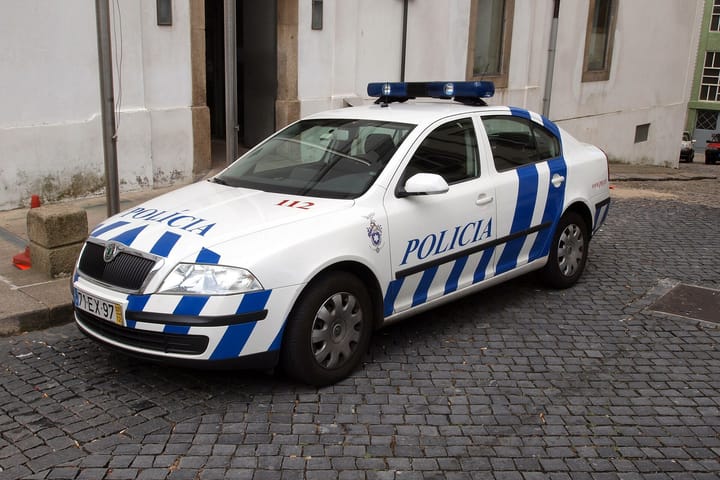
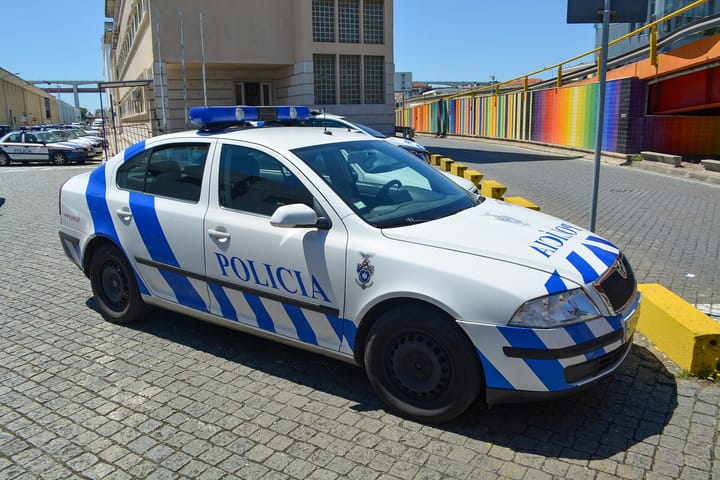
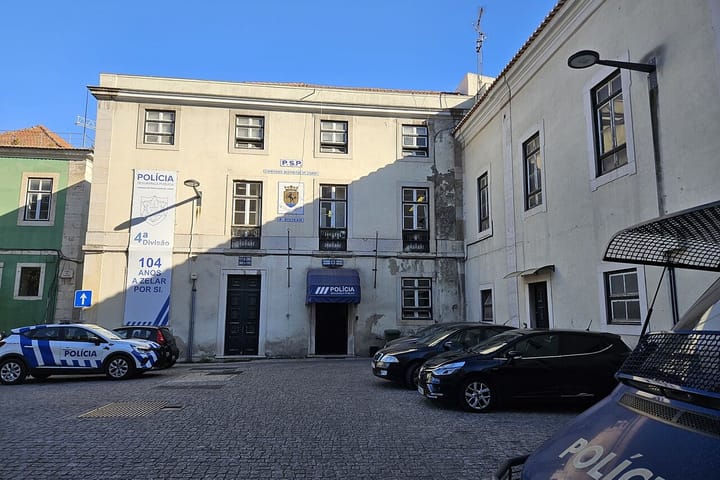
PSP Makes Six Detentions and Fires Warning Shots After Confrontos at Assembleia da República Following the 3 June CGTP General-Strike March — Leitão Amaro Flags 'Limits Exceeded'
PSP made six detentions and fired warning shots after confrontations at Assembleia da República late on 3 June 2026 — Article 347/348 Código Penal track, garbage bins on fire, glass bottles thrown at cordon. Leitão Amaro: 'some exceeded the limits'; CGTP distanced from the post-march sub-group.

The Polícia de Segurança Pública (PSP — Public Security Police) made six detentions and fired warning shots into the air to disperse a sub-group of protestors after confrontations erupted on the streets adjacent to the Assembleia da República (Parliament) in Lisbon late on the afternoon of Wednesday, 3 June 2026 — about an hour and forty-five minutes after the official Confederação Geral dos Trabalhadores Portugueses (CGTP — General Confederation of Portuguese Workers) general-strike march had formally concluded at the Praça do Município. The PSP detentions carry charges of disobedience, resistance and coercion of a public official (resistência e coação a funcionário público) under Articles 347 and 348 of the Código Penal — a frame that escalates the misdemeanour-side affray into a Tribunal de Pequena Instância Criminal (Small-Claims Criminal Court) docket entry and could carry custodial sentencing exposure of up to five years on aggravated track. The Ministro da Presidência Leitão Amaro flagged that "some exceeded the limits of the right to protest" in a televised press call from São Bento late on Wednesday evening, while CGTP Secretary-General Tiago Oliveira distanced the union confederation from the post-march sub-group action.
The operational timeline: from a 4:15 PM march closure to a 6:00 PM road-reopening flashpoint and the warning shots that followed
The CGTP general-strike demonstration that started at the Praça do Marquês de Pombal at 2:30 PM on Wednesday closed at the Praça do Município (Lisbon City Hall square) at approximately 4:15 PM with a structured set of speeches from the CGTP leadership, the Federação Nacional dos Professores (FENPROF — National Teachers' Federation), and the Sindicato dos Trabalhadores em Funções Públicas e Sociais (STFPSSRA — Public-Service Workers' Union). PSP operational planning had blocked off Avenida da Liberdade between Restauradores and Marquês de Pombal for the duration of the march and the post-march dispersal window. At approximately 6:00 PM, PSP units began the standard traffic-reopening sequence on Avenida da Liberdade — moving barriers, signalling to motorist-side access, and asking remaining protestor sub-groups to clear the road. According to the post-event briefing from PSP Superintendente Jorge Resende, who anchored the Wednesday-evening operational read, the disturbances began when a sub-group of approximately 40-60 protestors refused to clear the traffic zone, raised barriers to block the road, and then escalated to throwing glass bottles, firecrackers and smoke canisters at the PSP cordon. The PSP unit on the cordon line fired warning shots into the air — standard public-order doctrine under the Regulamento de Atuação Policial em Manifestações (Police Operating Regulation for Demonstrations) — to create dispersal space and protect the line. Six detentions followed across the next forty minutes as protestors scattered into the adjacent streets around the Parliament (Rua de São Bento, Praça do Município de Lisboa side streets, Avenida Dom Carlos I), with garbage bins set on fire in at least three locations.
The charging architecture: Articles 347, 348 and the public-order escalation track
The six detainees were transported to PSP Comando Metropolitano de Lisboa (Lisbon Metropolitan Command) at Comando-Geral and processed through standard interlocutório (first-instance examination) ahead of Tribunal de Pequena Instância Criminal arraignment scheduled for Thursday morning. The charging frame under Article 347 of the Código Penal (Penal Code) carries the resistência e coação a funcionário (resistance and coercion of a public official) frame at one-year-to-five-years custodial-sentencing exposure on the qualified track, and Article 348 carries the desobediência (disobedience) frame at the standard six-month-to-three-year track with public-order-aggravation aggravators. Operations against a PSP cordon with thrown projectiles routinely qualify for the Article 347 track under jurisprudence consolidated through the Supremo Tribunal de Justiça (STJ — Supreme Court of Justice) Acórdão 5/2018 reading on the projectile-vector aggravator. The six detainees will likely face a coercion-and-resistance qualifier charge with a custodial-sentencing exposure window in the 1-3 year band on first-conviction default, with a subsequent suspension-of-sentence (suspensão da execução da pena) track likely depending on individual record and on the credible-incident-causation framing at the Article 347-2 qualifier line.
The government and union responses: Leitão Amaro's 'limits exceeded' framing and Tiago Oliveira's distancing-and-condemnation read
Ministro da Presidência António Leitão Amaro — the second Montenegro government's lead political-communication interface on the public-order side of the Wednesday strike — held a televised press call from São Bento at approximately 7:45 PM with a structured three-part frame. First, he congratulated the PSP for what he characterised as a professional, proportionate, and disciplined operational response under provocation. Second, he flagged that "some exceeded the limits of the right to protest" in a phrasing that drew the political line between the legitimate CGTP march and the post-march sub-group action: "the right to demonstrate is constitutional and absolute, but the right to resort to violence is non-existent and has no place in Portuguese democracy." Third, he extended the Government's solidarity to the PSP officers who absorbed the projectile vector through the cordon line. Leitão Amaro also drew a substantive read on the strike-day adesão (participation) figures: the Government read placed adesão at "very reduced" expression in the private sector and "reduced" in the public sector. CGTP Secretary-General Tiago Oliveira anchored a parallel three-part frame in a Wednesday-evening read from the Praça do Município wind-down site: first, he claimed that the strike had been "a great mobilisation" with hospital sector at minimum-services, urban solid waste collection at near-100% adesão in most districts, the Setúbal and Sines ports closed, and substantial private-sector adesão at workplaces of all sizes; second, he condemned the post-march violence in unambiguous terms and distanced the CGTP confederation from the sub-group action — noting that the CGTP march had concluded under organised CGTP marshalling at 4:15 PM and that subsequent action did not carry CGTP coordination; third, he flagged the Pacote Laboral Trabalho XXI (Labour Package Trabalho XXI) legislative-package thread as the underlying policy stake that the Wednesday strike had been called to register opposition against, and called on the Government to open formal social-dialogue negotiations.
The PSP operational record: warning shots, the cordon-defence frame, and the post-2017 jurisprudence on dispersal-doctrine proportionality
The PSP's use of warning shots fired into the air remains a comparatively rare operational tool in the Portuguese public-order doctrine — although it sits comfortably inside the standard Regulamento de Atuação Policial em Manifestações framework and Article 12 of the Estatuto Profissional do Pessoal das Forças de Segurança (Statute of Security Forces Personnel) escalation ladder. The 2018 Acordão of the Tribunal Constitucional (Constitutional Court) on the proportionality of dispersal techniques (Acordão 286/2018) confirmed that warning shots fall comfortably inside the constitutionally proportionate dispersal toolkit when the protestor vector includes projectile aggression and the operational cordon is under credible structural threat. The 2017-2026 statistical record from the PSP Direcção Nacional shows warning-shot deployments across public-order incidents at a frequency of approximately 6-12 incidents per year — a baseline that the 3 June 2026 deployment falls inside without setting a fresh ceiling. The PSP cordon line on the Assembleia da República side carried no reported officer-side injuries through the incident, though several officers required short-term post-incident treatment for projectile impact under the standard Centro de Saúde Sede-PSP medical-response cycle. The Inspecção-Geral da Administração Interna (IGAI — Inspector-General for the Internal Administration) opened the standard post-incident inspection thread on Thursday morning, with a public report calendared for the second half of June.
What the incident means for the broader Pacote Laboral Trabalho XXI legislative debate now moving through the Assembleia da República
The Wednesday public-order incident lands at a politically sensitive moment for the Pacote Laboral Trabalho XXI legislative track. The Government's Trabalho XXI package — over 100 proposed amendments to the Código do Trabalho (Labour Code) — entered Parliamentary debate in mid-May after sustained Concertação Social (Social Dialogue) opposition from both the CGTP and the Union General de Trabalhadores (UGT — General Union of Workers) during the early-2026 social-partner consultation cycle. The CGTP general strike of 3 June 2026 was timed precisely to coincide with the Parliamentary specialty-stage scrutiny window on the Trabalho XXI bill. Leitão Amaro's Wednesday-evening framing flagged a Government openness to "approximate positions" on the labour-law file — a softening of the Government's earlier hard-edge framing on the Trabalho XXI structural architecture, and the first formal signal that the Government may give ground on specific clauses (the cession of credit-time provisions, the Banco de Horas (Hours Bank) elasticity expansion, the early-termination notice-period reduction) to recover the social-dialogue interface ahead of the final Parliamentary vote. The CGTP read of Leitão Amaro's Wednesday-evening softening framing is cautious — Tiago Oliveira flagged it as "a positive signal but not yet a credible negotiating opening" and reiterated the CGTP's preferred reading that the entire Trabalho XXI architecture should be withdrawn from the Parliamentary track and resubmitted for fresh social-partner consultation. The Assembleia da República is currently calendared to vote on the Trabalho XXI bill in specialty-stage during the second half of June 2026, with the final vote scheduled before the late-July Parliamentary recess.
What this means for expat residents and households following Portuguese public-order policy
For expat residents in Lisbon and across the country who follow Portuguese public-order policy and labour-law developments, the 3 June Assembleia da República incident carries six practical reads worth flagging up front. First, the PSP operational doctrine on public-order dispersal — including the use of warning shots — sits inside the constitutionally proportionate toolkit confirmed by the Tribunal Constitucional Acordão 286/2018, and the IGAI post-incident inspection thread provides an independent civilian-oversight check on the PSP operational record. Second, the right to protest in Portugal remains constitutionally robust under Article 45 of the Constituição da República Portuguesa (Portuguese Constitution) — and the post-march sub-group action does not affect the constitutional protection of the larger CGTP march itself, which was held lawfully and concluded peacefully at 4:15 PM. Third, expat residents who work in sectors that may be affected by the Pacote Laboral Trabalho XXI legislative package (including domestic-service contracts under Decreto-Lei 235/92, Recibos Verdes self-employed contracts, tempo inteiro Código do Trabalho contracts) should watch the second-half-of-June Parliamentary specialty-stage vote calendar for the structural-amendment outcome on the cession-of-credit, Banco de Horas, and notice-period clauses — and the Leitão Amaro softening signal opens the possibility of substantive Government concessions on specific clauses. Fourth, the operational read on Lisbon-side public-order operations during high-strike-density windows is that the PSP cordon-and-dispersal architecture works under credible-threat provocation — and that the Avenida da Liberdade / São Bento perimeter is the structural focal point for downtown public-order incidents during legislative-period strike windows. Fifth, expat workers in PSP, GNR, or related security-services-adjacent roles should track the IGAI post-incident report for the structural framing on dispersal-doctrine evolution and the operational-conduct lessons learned. Sixth, the 6-detention number is a comparatively contained outcome relative to the post-march sub-group escalation — the PSP cordon held, the protestor sub-group dispersed without major injuries to either side, and the structural civic peace was restored within an hour of the warning-shot deployment. The political consequence — particularly on the Trabalho XXI legislative file — is likely to be more substantial than the public-order-incident-specific consequences. On the football, policing and stadium-safety side of the file, the sharp rise in arrests at Portuguese sporting events sets out the season's arrest and infraction figures. On the policing and public-security staffing side of the file, Portugal's struggle to recruit new PSP officers looks at why fewer people are applying to join the force. On the immigration-enforcement side of the file, the coming crackdown on 'front shops' used to house migrants illegally shows how Lisbon and Porto want a say in business licensing to close them down.