Primary Schools Short of Teachers May Hire Basic Education Graduates Without a Master's, as the Cabinet Also Clears 40 Million Euros for Farmers and a Road Safety Strategy
The Council of Ministers approved the decree letting basic education graduates teach Years 1 to 4 where qualified teachers are scarce, 40 million euros for fertiliser and energy costs, a road safety strategy to halve deaths by 2030, and a new Madeira free trade zone regime.
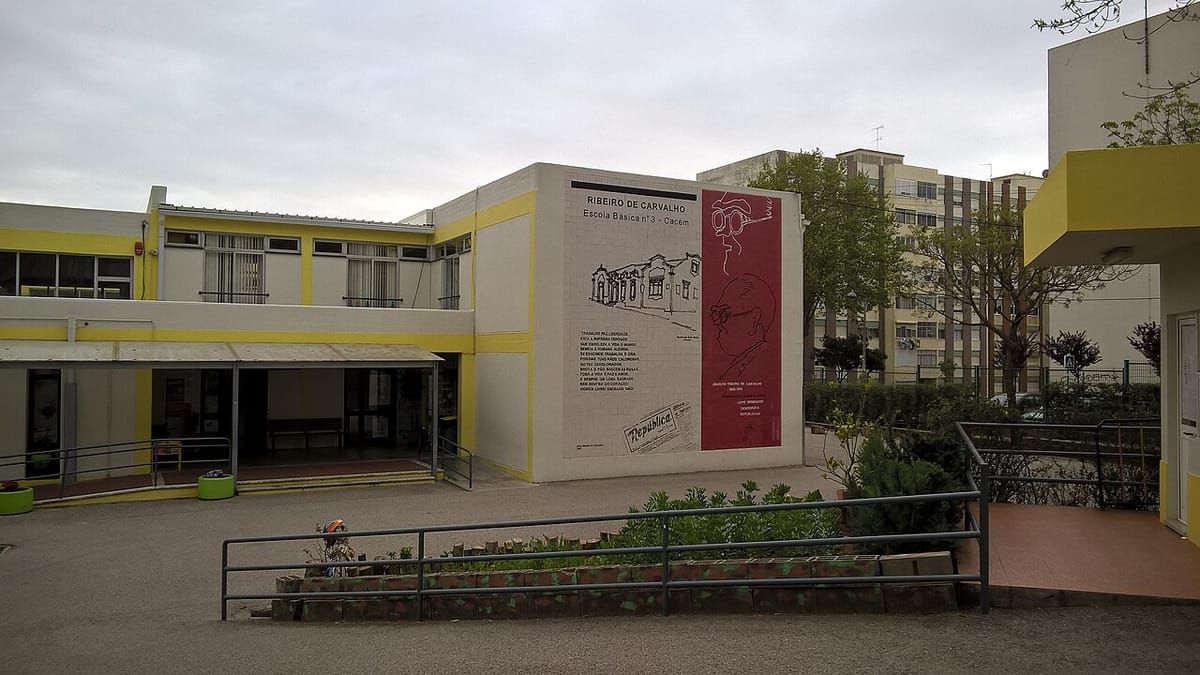
Primary schools that cannot find a fully qualified teacher will be allowed to hire graduates in basic education who have not yet done the master's degree the profession requires. The Conselho de Ministros (Council of Ministers) approved the decree-law on Thursday 5 November, the Government's communiqué says. The same meeting approved 40 million euros for farmers, the national road safety strategy to 2030 and a successor to the Madeira free trade zone's tax regime.
Teachers for Years 1 to 4
The decree allows, "on an exceptional basis", holders of a licenciatura em Educação Básica (bachelor's degree in basic education) to teach in the 1.º ciclo, the first four years of school. It applies only in areas where it remains hard to find teachers with a full professional qualification. The normal route into teaching, a master's degree, stays the preferred one, the Government says. The aim is that every class has a teacher, and that these recruits later finish the training needed to qualify fully.
- Why now: on Wednesday the Education Minister, Fernando Alexandre, told MPs that 265 teaching timetables were still unfilled, 83 of them in the 1.º ciclo, Lusa reported via Observador.
- The unions: the ministry put the draft to the unions on 27 October. On Thursday the Federação Nacional dos Professores (Fenprof, National Federation of Teachers) said teaching Years 1 to 4 should demand more training, not less, and that it may ask for supplementary negotiation. Fenprof has already complained to the Ombudsman over how a separate hiring decree was approved.
- Not yet in force: like any decree-law, it must be promulgated by the President and published in the Diário da República (official gazette). The communiqué gives no start date.
For parents, the decree does not change who teaches classes that already have a qualified teacher. It is meant for classes that would otherwise have no teacher at all.
40 million euros for farmers' fertiliser and energy costs
A resolution grants 40 million euros of extraordinary support to farmers for the rise in fertiliser and energy costs that the Government blames on the crisis in the Middle East. The money comes from three pots:
- 11.9 million euros of national funds;
- 8.1 million euros from the EU's agricultural crisis reserve;
- 20 million euros from PEPAC, Portugal's Common Agricultural Policy plan.
Farmers will apply for both parts through a single application on the portal of the Instituto de Financiamento da Agricultura e Pescas (IFAP, the farm and fisheries payments agency). The communiqué gives no opening date. With 20 million euros allocated in June from the State Budget, the Government puts the total response at 60 million euros. The Agriculture Minister had promised more help with fertiliser bills in August.
Road safety strategy to 2030
The Government approved the Estratégia Nacional de Segurança Rodoviária 2030 (National Road Safety Strategy 2030). It aims to at least halve the number of people killed and seriously injured on the roads by 2030, compared with 2019. It covers safer infrastructure, protection for pedestrians, cyclists and motorcyclists, preventing risky behaviour and a more effective response to victims, and it will be carried out through two action plans, for 2027/2028 and 2029/2030.
The cabinet signed off a version in June, which then went to public consultation over the summer, Observador reports. It cites provisional figures from the Autoridade Nacional de Segurança Rodoviária (ANSR, National Road Safety Authority): 418 deaths so far this year, up 10.8 percent on the same period of 2025, and 2,564 people seriously injured, up 4.8 percent.
Madeira free trade zone keeps its 5 percent rate
The Government will ask Parliament for authorisation to set a new tax regime for companies licensed in the Zona Franca da Madeira (Madeira Free Trade Zone) from 1 January 2027. The 5 percent corporate tax (IRC) rate stays, with stricter requirements to show real economic activity in Madeira and tighter controls. The communiqué does not say what those requirements will be. Under the current regime, only companies licensed by 31 December 2026 qualify, ECO explains. Nothing changes until Parliament approves the authorisation and the Government passes the decree.
Also approved
- Drugs law: a bill adding new psychoactive substances identified by the EU and the UN Commission on Narcotic Drugs to the list of controlled substances, without affecting authorised therapeutic and scientific uses.
- Loulé municipal police: ratification of a municipal police force for Loulé, in the Algarve, under the mayor. It will police planning, environment, traffic, parking and use of public space, working with the national police forces, for a population of more than 72,000.
- Pensioners' post: up to 13.18 million euros for the Instituto da Segurança Social (Social Security Institute) to buy postal services from 2027 to 2029. These cover pensioners' annual income statements, among other letters.
- Braga: a revised payment schedule for the new building of the Polícia Judiciária's (Judicial Police) Braga criminal investigation department, keeping the 6.3 million euro total.