President Refers the Government's New Return and Asylum Law to the Constitutional Court
President António José Seguro has asked the Constitutional Court for a preventive review of the government's new Return and Asylum Law, citing doubts over child welfare, longer administrative detention for foreigners who have committed no crime, and removals carried out before appeals are decided.
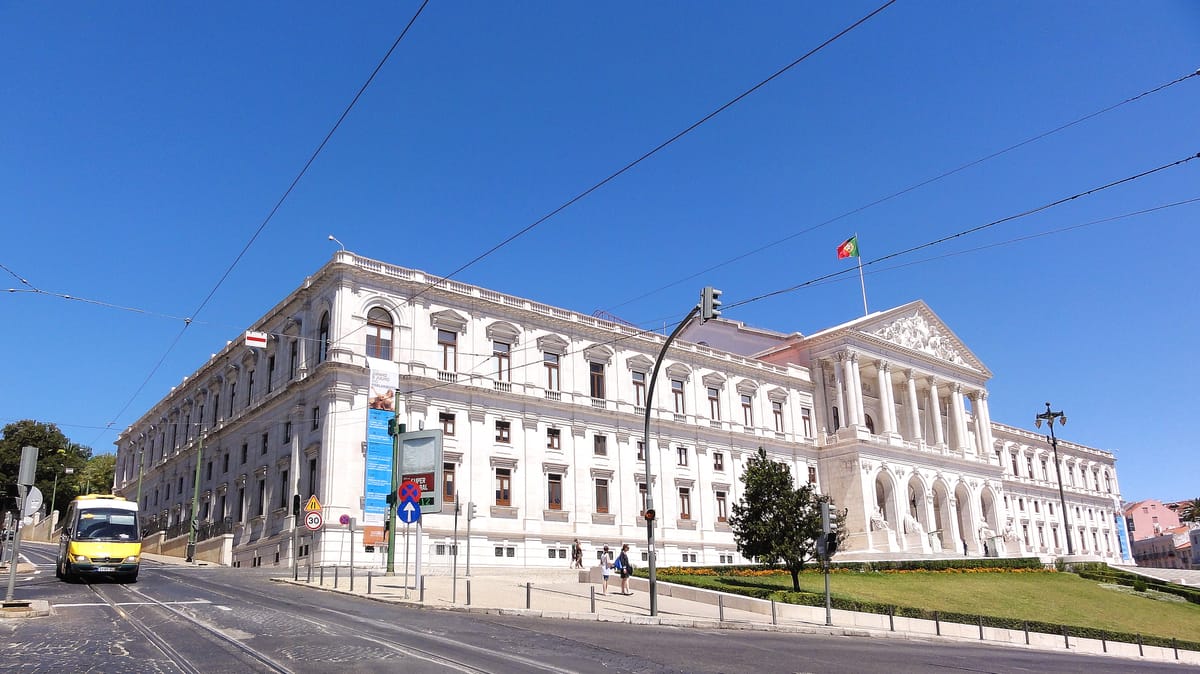
Portugal's most consequential immigration overhaul in years has been paused at the door of the country's highest court. President António José Seguro asked the Tribunal Constitucional (Constitutional Court) on Friday, 7 August, to conduct a fiscalização preventiva (preventive constitutional review) of the decree that rewrites the rules on the entry, residence, removal and asylum of foreign nationals — the package widely known as the Lei do Retorno (Return Law). Until the court rules, the law cannot take effect.
Seguro said he was acting on "founded doubts" about the text rather than rejecting it outright. His central concern is whether the law adequately protects the interesse superior da criança (best interest of the child). He warned that its provisions could lead to parents being separated from their children, or to the indirect expulsion of minors who are themselves Portuguese citizens because their parents are removed. In his message to the court, he invoked both the European Convention on Human Rights and the United Nations Refugee Convention.
Two further points troubled him. The decree, he argued, "substantially increases" the maximum period for which foreigners who have committed no crime can be held in detenção administrativa (administrative detention) while their cases are processed. And it changes the effect of appeals against unfavourable decisions from suspensive to merely devolutivo (devolutive) — meaning an afastamento coercivo (coercive removal) could be carried out before a court has ruled on the appeal, potentially deporting someone who later wins their case.
The law itself was approved in a final vote in Parliament on 17 July, built on two bills from the governing coalition of the Partido Social Democrata (Social Democratic Party, PSD) and the Centro Democrático e Social–Partido Popular (CDS–People's Party). It passed with the votes of the PSD, the Iniciativa Liberal (Liberal Initiative, IL) and the CDS, while the hard-right Chega abstained. Ranged against it were the Partido Socialista (Socialist Party, PS), Livre, the Partido Comunista Português (Portuguese Communist Party, PCP), the Bloco de Esquerda (Left Bloc, BE), the animal-and-nature party PAN and the regionalist JPP.
The referral drew an immediate backlash from Chega, which called it "an irresponsibility" of "enormous gravity" and accused the President of obstructing a crackdown on illegal immigration. Seguro pushed back the same day, insisting that he too favours "fiercely combating illegal immigration" and framing his intervention as a defence of constitutional limits rather than of open borders.
For Portugal's large non-EU population — the workers, students and families whose right to stay is governed precisely by these rules — the stakes are concrete. The Return Law would tighten the conditions for residence and speed up removals, and the outcome of the constitutional challenge will determine whether it enters force as written, returns to Parliament for changes, or is struck down in part. The Tribunal Constitucional has no fixed deadline for preventive reviews, but such cases are typically decided within weeks. Until it speaks, one of the government's flagship measures remains on hold, and the many residents whose lives it would reshape are left waiting for the verdict. On the constitutional side of the file, the Constitutional Court ruling that cleared the return and asylum law sets out the eleven norms the seven-judge bench declined to strike down, why the reasoning turns on nothing being automatic, and the twenty-day clock Article 136 now puts on the President.