Portuguese Ministers Stay About 600 Days, and the Parties Now Recruit Specialists Without Giving Up the Nomination
A new study profiles every minister since 1976. Expertise has risen sharply, but the parties absorbed it rather than lost ground to it, and foreign affairs is still kept for the loyal.
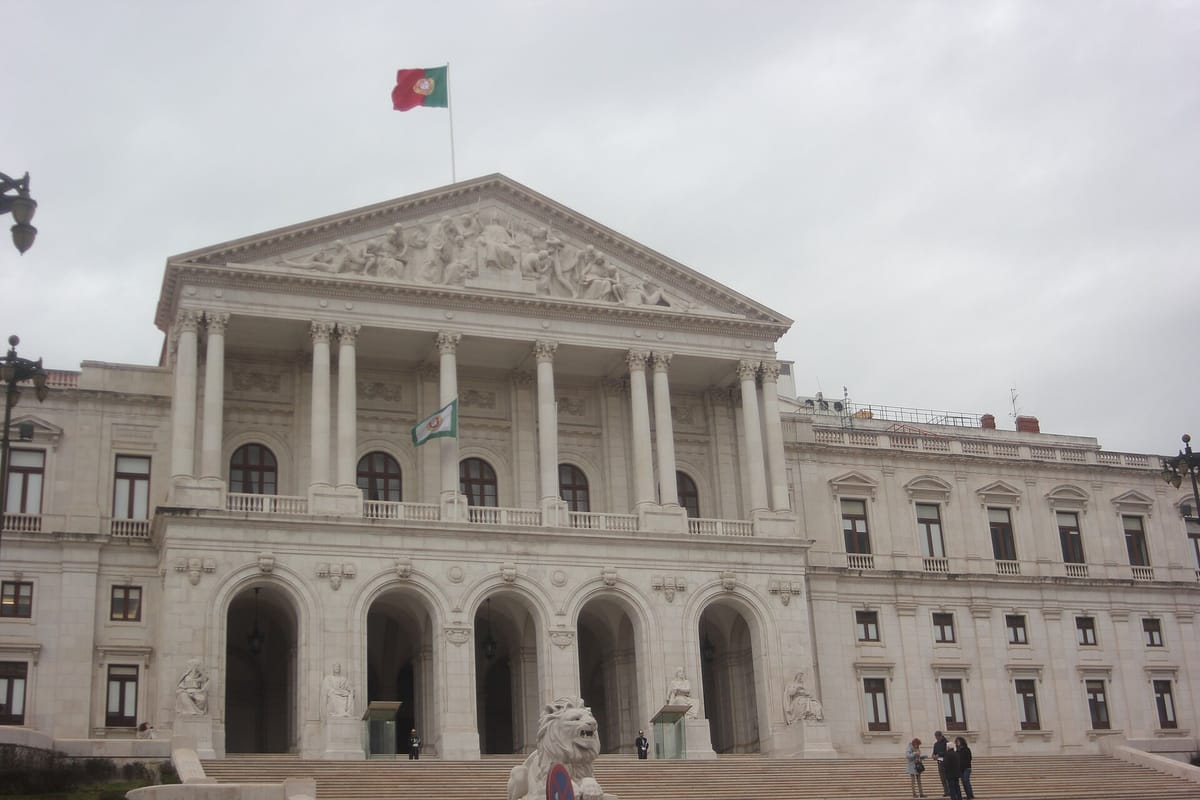
The average Portuguese minister stays in office for about 600 days, below the average in several other European countries, and the people who fill those posts have grown steadily more specialised without the political parties loosening their grip on who gets picked.
That is the headline finding of "Quem Governa Portugal? Perfis ministeriais em perspetiva comparada (1976-2025)", a study published on Monday by the Fundação Francisco Manuel dos Santos and coordinated by the political scientists Marcelo Camerlo and António Costa Pinto. It profiles every Portuguese minister from the first constitutional government to the present, and sets the results against Spain, Italy and Greece.
Speaking to the news agency Lusa, Costa Pinto said the habit of recruiting ministers from outside politics "has established itself", but that the newer and more interesting shift is elsewhere. "What is the most recent difference our study captures? It is that the ministers who come from the parties also have a profile better suited to the portfolio," he said.
Specialists inside the party, not against it
The study is careful not to read this as parties losing ground. "Despite the growing pressures in favour of specialisation, the parties continue to dominate ministerial appointments in Portugal," it says, describing party membership as "an adaptive framework through which Portuguese governments integrate specialisation without giving up political control".
The authors sort five decades of office holders into four types: the outsider, the expert, the political specialist and the career politician. Portugal, they conclude, is distinguished by the dominance of the hybrid political-specialist profile, and by the fact that its supposedly non-party ministers are often better described as semi-independent: people with no formal membership card but recognisable ties to a party.
One of the engines behind the push for qualifications, Costa Pinto said, was accession to the European Community in 1986, which forced governments to hold their own in technical negotiations.
Where the parties refuse to let go
Loyalty still decides who gets which department. Parties may be willing to concede ground, the study finds, but not in areas such as foreign affairs, which involve high-risk decisions where political trust is indispensable. Energy, environment and transport tend to draw experts. Finance sits in a category of its own, a ministry that Costa Pinto said "generally combines political trust with technical trust".
There are party differences too. Across every constitutional government since 1976, the Socialists have leaned towards including more specialists in their cabinets, while the PSD has shown a stronger preference for experienced political operators.
A short career, and what that costs
The 600-day average is one of the study's sharper numbers, and it sits below what several European peers manage. Within that figure there is a split: ministers drawn from party ranks tend to have shorter ministerial careers, either because they move on to other posts or because of internal conflicts, while independents and semi-independents last longer.
Costa Pinto was clear that better credentials do not automatically translate into better policy. Decisions remain hostage to the institutions around them, to parliament and to whether a government holds a majority. "The labour minister may well be a believer in reforming the labour system, in her capacity as a full professor of labour law, but it is the Assembly of the Republic and the social partners who decide," he said.