Portuguese Households Brace for Faster Price Rises Again as Consumer Confidence Falls for a Second Month
More households expect prices to rise faster over the next year than at any time since May, INE's September surveys show, while consumer confidence fell to -22.3 and firms in every sector plan to raise their own prices.
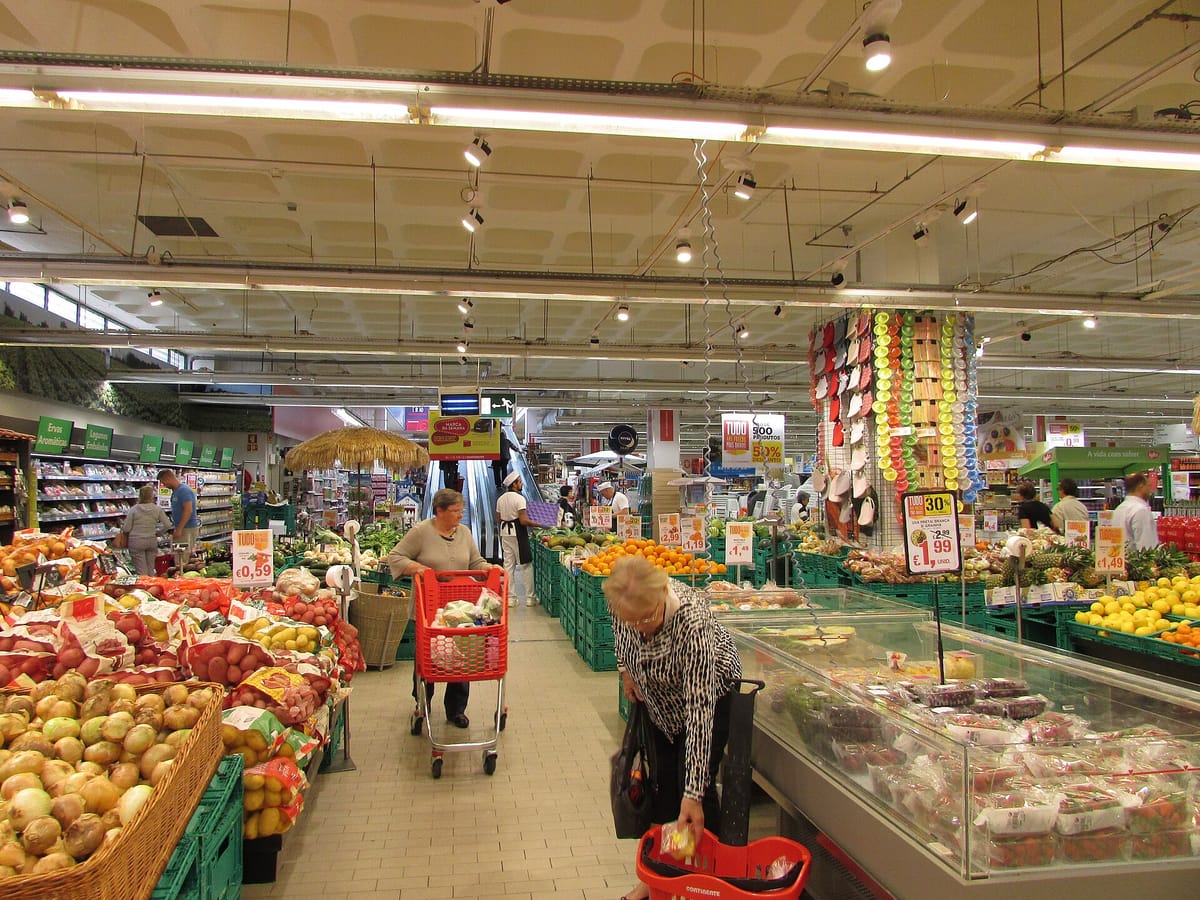
Households in Portugal expect prices to rise faster again. In September, more of them than at any time since May said prices would go up over the next 12 months. At the same time, consumer confidence fell for a second month running, according to the business and consumer surveys published on 29 September by the Instituto Nacional de Estatística (INE, Statistics Portugal).
The consumer confidence indicator fell to -22.3 in September from -20.1 in August, after rising for three months from a low of -29.4 in April. The figures come from INE's data tables and are unadjusted for the season. INE said the fall was driven by gloomier expectations for the country's economy and for household finances over the coming year, and by worse views of how household finances had fared over the past year.
Price expectations turn up again
INE measures expectations as a balance: the share of people expecting prices to rise faster, minus the share expecting them to rise more slowly or to fall, with stronger answers given more weight. For prices over the next 12 months, that balance rose to 49.8 in September, from 41.0 in August and 36.3 in July, INE's tables show. It was the second monthly rise, after four months of decline.
The level is high by recent standards. The balance peaked at 72.1 in March and was still 67.3 in April and 55.1 in May. Outside those three months, the last time it was above September's level was October 2022, at 53.8. A year ago, in September 2025, it stood at 38.3.
People's view of the prices they have already paid is moving the other way. The balance on price changes over the past 12 months eased to 57.1, the fifth monthly fall. INE notes that it fell after April, when it posted the biggest increase since May 2008.
The survey ran from 1 to 15 September, by telephone, with 1,199 responses. It was published the day before INE's flash estimate showed annual inflation rising to 3.6 percent in September.
What households expect
The other answers in INE's tables point the same way. Comparing September with August:
- household finances over the next 12 months: the balance fell to -9.3 from -6.2;
- the country's economy over the next 12 months: down to -39.1 from -33.9;
- unemployment over the next 12 months: up to 27.2 from 24.1, meaning more people expect joblessness to rise;
- the chance of saving money over the next 12 months: down to -21.1 from -17.4.
The one bright spot was big-ticket spending. The balance on plans for major purchases over the next 12 months improved slightly, to -26.7 from -27.5, and INE singled it out as the one answer pulling the other way.
September's confidence reading of -22.3 is below the average of about -18.5 since the series began in 1997, by our calculation from INE's tables. It is also below the -17.1 recorded in September 2025. The euro area indicator, which INE reports seasonally adjusted, stood at -16.5.
Businesses plan to raise prices too
The business surveys gave a mixed picture. Confidence rose in manufacturing and services but fell in retail and wholesale trade and in construction. The economic climate indicator, which sums up the business surveys, slipped to 2.7 from 2.9.
What firms expect to charge was more uniform. Expectations for selling prices over the next three months rose in every sector, INE said: markedly in manufacturing, services and trade, and moderately in construction. In manufacturing the balance went from 9.5 in August to 19.6 in September. In trade it went from 8.1 to 12.4.
What it means for residents
These surveys measure what people and firms expect, not what prices actually do. They are, however, an early signal. This spring, price expectations peaked in March and confidence hit its 2026 low in April, a month later. September is milder than that, but both measures have turned the wrong way again. For anyone setting a household budget for the winter, the surveys suggest that price pressure is not fading yet.
INE publishes October's surveys at the end of this month. They were last covered here for August.