Portugal's Train, Metro and Ferry Operators Agree to Build One Platform So Passengers Can Pay With a Bank Card
CP, the Lisbon and Porto metros, Metro Mondego, the Tagus ferries and Mobi.E have signed a protocol for national ticketing that starts with contactless bank card payment at the validator. No date or budget has been given. Here is where a bank card already works, and what it costs.
Portugal's state-owned train, metro and ferry operators have signed a cooperation protocol to build a single national ticketing platform, and its first job is to let passengers pay at the gate with an ordinary contactless bank card instead of buying a ticket beforehand. The Ministério das Infraestruturas e Habitação (Ministry of Infrastructure and Housing) announced the agreement on 30 September.
Eight bodies signed. Six are companies: CP (Comboios de Portugal, the national railway), Metropolitano de Lisboa, Metro do Porto, Metro Mondego in Coimbra, Transtejo/Soflusa (the Tagus ferries) and Mobi.E, a public company which, according to the ministry, has now been given the task of making ticketing systems work together across the country. The other two are the transport authorities of the Lisbon and Porto metropolitan areas, Transportes Metropolitanos de Lisboa and Transportes Metropolitanos do Porto.
What the protocol says
In its first phase, the ministry says, the project will develop a platform that accepts contactless bank cards "as a means of direct payment at public transport validators", so that a passenger who prefers to can skip the ticket machine and the counter altogether. Mobi.E will coordinate the work, which is meant to produce a shared technical base for ticketing and to allow "new fare solutions" to be developed.
The government gives two further reasons for pooling the operators. Buying payment services together should bring down the commissions and other costs the companies pay on card transactions, and a common base should make it easier to extend modern ticketing to the whole country later. The protocol also covers operational and institutional integration and the publication of real-time travel information.
"Our priority is to win over more and more people to public transport," the Minister of Infrastructure and Housing, Miguel Pinto Luz, said in the statement. "To do that, journeys need to be simpler, faster, more comfortable and more predictable."
The announcement does not give a date for when bank cards will work on any network that does not already accept them, a budget for the platform, or any change to fares. The ministry said only that the protocol was signed "recently", at a meeting of the companies that report to the mobility portfolio.
Where you can already tap a bank card
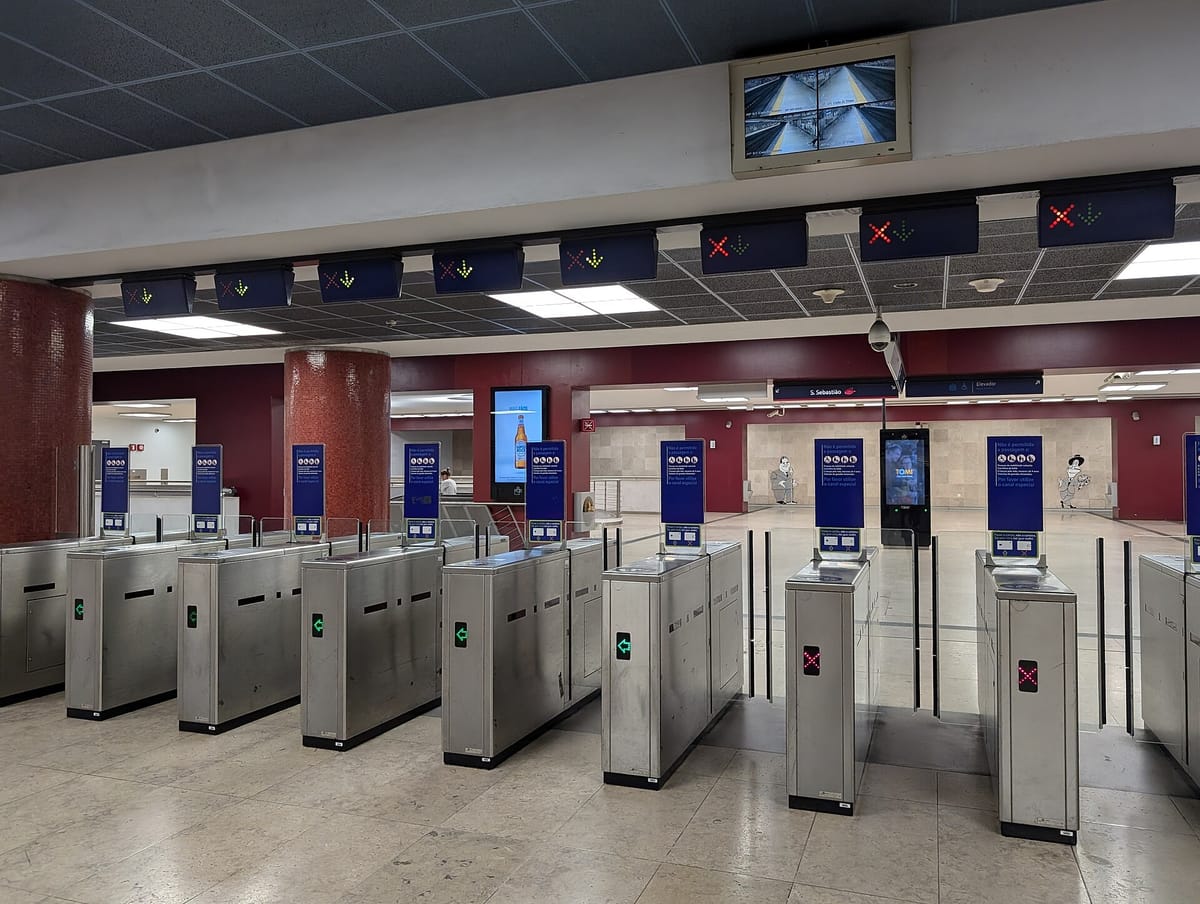
Lisbon's metro is the model the others will have to align with. Metropolitano de Lisboa already accepts contactless Visa, VPAY and Mastercard cards across its whole network, as well as phones and smartwatches, at a fare of 1.92 euros a journey. Its own rules are worth knowing before you try it:
- Tap in and tap out with the same card or device. Entering with a physical card and leaving with your phone counts as a misuse, and the metro says charges caused by that are not refunded.
- One card or device per passenger. You cannot pay for a partner or a child with the same card.
- Take the bank card out of your wallet before tapping. If you also carry a personal navegante card loaded with a valid monthly pass, tapping the bank card by mistake means paying a fare you did not need to, and that charge is not refunded either.
- Your bank may hold 1 euro when you first tap. The metro says this is a check on the card, not the fare, and the real charge is normally processed overnight.
- If inspectors stop you, show the card or device you used. A phone that has run out of battery cannot show the validation.
Paying by bank card is the convenient option, not the cheapest. On the metro's own fare table, a single metro journey paid from a prepaid Zapping balance costs 1.72 euros, against 1.92 euros by bank card, and the full-price navegante Metropolitano pass covering the whole Lisbon metropolitan area costs 40 euros a month. Anyone who commutes most days will still pay less with the pass.
In Porto, the validators are ready but the service is not. Metro do Porto's 2025 annual report says it replaced every validator on the network last year with machines that carry the hardware needed to move to bank card payment. For now, contactless payment there is offered at the new ticket machines, which take bank cards, Apple Pay, Google Pay and MB WAY, and the company planned to replace 86 older machines during 2026. To travel, you still validate an Andante card loaded with the right ticket.
What it means if you live here
For residents who split their week between a train, a metro and a ferry, the practical question is whether one card will eventually cover all three without a separate ticket for each. The protocol points in that direction, but it is a framework, not a timetable. Until the operators announce dates, keep using your navegante or Andante card and pass where you have one, and treat a bank card as a back-up for occasional trips where the operator already accepts it.